Showing posts with label Debra H. Goldstein. Show all posts

Monday, May 18, 2026

When the Groove Comes Back or Being in the Zone


When the Groove Comes Back or Being in the Zone by Debra H. Goldstein

Since I moved to Atlanta on July 4, 2025, I’ve been busy participating in social activities that have allowed me to make new friends and spending quality family time with my little readers who live here. I’ve learned canasta, perfected my Mah Jongg, eaten out more than my waistline needs, worked with a trainer to balance the eating out, babysat, and also attended numerous lectures, musical events, theatrical performances, religious service and study groups, and participated in various volunteer opportunities. What I haven’t been doing, which has created quite a bit of anguish for me, is writing.

Oh, I’ve performed by post writing and other duties for the four blogs I am part of (Writers Who Kill, The Stiletto Gang, Booklovers Bench – Where Readers Are Winners, and my own, It’s Not Always a Mystery). I have faithfully gotten out my monthly newsletter (which you can subscribe to from my website, https://www.DebraHGoldstein.com … while there, you

can also download a free copy of the cookbook Kensington made from my Sarah Blair series – Simple Recipes for the Sometimes Sleuth) and responded to emails from readers. What I haven’t done is write.

Although I have several short stories being published this year, until the beginning of this month, I’d only written one new one since I’ve been in Atlanta. Two weeks ago, I stopped fretting about not writing. I took a week off to simply read for fun. I relaxed. When I decided to rejoin the real world, I saw an open call for a story. It sparked an idea. I spent days researching the background materials I would need to write the story and then I sat in my favorite chair, with show music playing, and wrote. 

The words flowed. I lost track of time. I was in that special zone. When I finished, I put it aside to edit the next day. Several re-readings and revisions later, I submitted the story. I smiled. My groove is back!


Monday, August 18, 2025

When the Words Don't Come by Debra H. Goldstein

 When the Words Don’t Come by Debra H. Goldstein

There are days when I don’t like blogging or adding to my work in progress. Those are the days that a random idea doesn’t pop into my head. I know I need to get words on the page, but whatever I write doesn’t feel right. In the very old days, I probably would have torn the piece of paper out of my electric Smith-Corona and thrown it on the floor, but nowadays, I simply hit delete. 

When I can’t come up with an idea that satisfies me, I have different options open to me. I can take a nap. On my computer, seated in the same position in which I would normally write, I can play card games (solitaire, canasta, or bridge), try my hand at Mah Jongg, read the news, or glance at different social media sites. Most of these don’t spur thoughts in my head, but they are fun. 

Sometimes, out of desperation, I look out the window, surf TV channels, or listen to music. Being truthful, I find these are excellent distractions, but not much fodder for writing. 

It is disappointing when my words don’t flow. Some people would call it writer’s block, but I don’t believe in that. I know that eventually something will come to me. It may not be my best writing, but hopefully with editing and revision, I will be pleased with the final product.

Do you ever live this scenario?


Monday, June 16, 2025

Writing to a Prompt by Debra H. Goldstein

Writing to a Prompt by Debra H. Goldstein


Sometimes, when life overtakes my creative side or I need a break from a project that isn’t flowing the way it should, I opt to write a short story. The word count of the short story can range from 500 to 5000 words, but my sweet spot is closer to 2500-3000 words. If I’m tired or simply not generating new ideas, I look for a submission call with a writing prompt. The prompt may be a word, phrase, or sentence that must be used, or it may be a thematic concept. During the past few months, two such stories of mine were published.


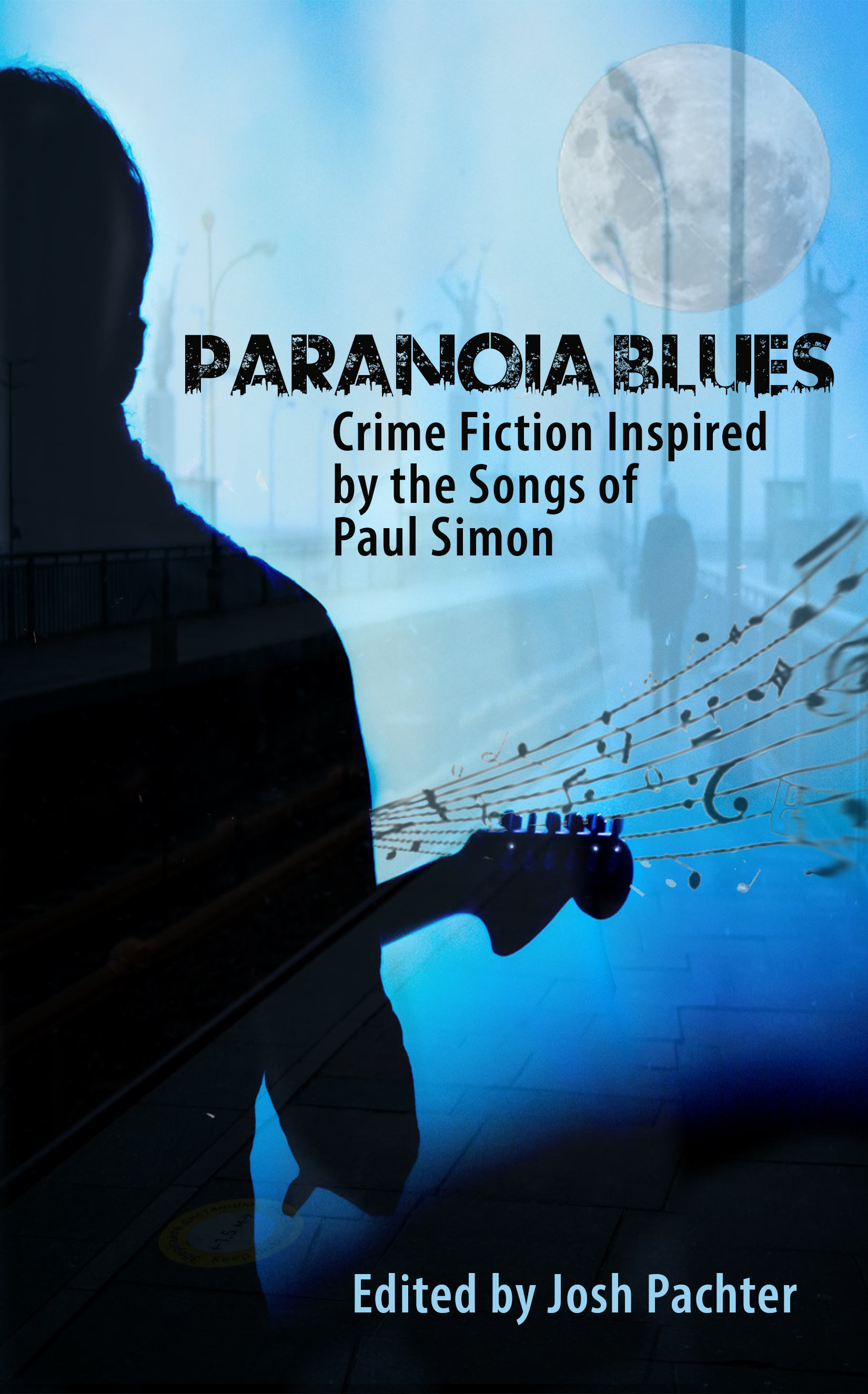
The anthology Paranoia Blues: Crime fiction based on the songs of Paul Simon (edited by Josh Pachter) was released on October 31. The title gives you the clue that each author had to make any Paul Simon song from an assigned album the basis of the story. Which song we chose and how we interpreted it was up to each writer. My album was So Beautiful or So What, which he released in 2011. I carefully listened and read the lyrics of each song on the album and thought of different ways I could develop a story beyond what existed. I narrowed my song choices to two, but I was torn between both. Then, I saw a news story covering a protest involving people living in a tent city near a park. I knew, based upon the lyrics of the title song, where my story needed to go.


My story, also called “So Beautiful or So What,” kept the tent city and park setting, dropped the protest, and changed the perspective to the viewpoint of the homeless – focusing on their interaction to stay alive and reaction when murder invades their world. Although there are paragraphs in the story that track actions mentioned in the song, the world I created goes far beyond the lyrics, but still pays homage to Simon’s work.


Last year, Black Cat Mystery Magazine announced an open call for cozy mystery stories. The use of the word cozy prompted me to know the story had to have an amateur sleuth, be set in a confined space, have no blood, gore, sex, or dirty words on the page, and would need a twist ending. Wanting to distinguish myself from the other stories submitted, I opted to tell my story, “The Girls in Cabin Three
,” through a series of letters or postcards written by a camper to her parents. For fun, I added references that people familiar with the Hello Muddah, Hello Faddah (Camp Granada Song) might recognize and chuckle at. The story was accepted and published in Black Cat Mystery Magazine #12.


In both instances, writing to the prompt gave me a beginning that allowed my creative juices to flow. If you are an author, do you find writing to a prompt helpful or stifling? If you are a reader, do you enjoy anthologies or magazines devoted to one theme?


Monday, April 21, 2025

Those Things That Come in Threes by Debra H. Goldstein


Those Things That Come in Threes by Debra H. Goldstein

As I’ve grown older, when I hear someone is ill or died, I brace myself because of the old superstition that things come in threes. Sadly, often they do. This month though, I’m cheering the rule of three because it is a multiple of good things.

On April 14, the short story anthology, Sleuths Just Wanna Have Fun: Private Eyes in the Materialistic Eighties, was released by Down & Out Books. I was thrilled that it contained my story, “Who Shot J.R.?” and that I’m in such wonderful company in terms of the included authors: Elizabeth Elwood, John M. Floyd, James A. Hearn, Richard Helms, Kathleen Marple Kalb, Tom Milani, Sandra Murphy, Laura Oles, Alan Orloff, William Dylan Powell, Mark Thielman, Joseph S. Walker, and Andrew Welsh-Huggins.


A day later, the print version of Anything But Murder: Larceny and

Lies was published. It is a compilation of the short stories being read on this season’s Mysteries to Die For podcasts hosted by TG and Jack Wolff. The book includes my holocaust related story “Opera Dinner Club.”  The same story, read aloud by Tina and accompanied by Jack’s music and his trying to guess whodunnit, became available on all different podcast sites on April 18.

I also was informed that I will be moderating the “Influencers in the Cozy Community” panel at Malice Domestic on April 25. Technically, this is a fourth good thing, but I’m rolling back my count to make this a first. I can’t wait to find out what the next two good April things will be. 

Do you ever hold to the rule of three for good or bad things?


Tuesday, December 31, 2024

2024 (and 2025) News from Debra H. Goldstein

 2024 (and 2025) News from Debra H. Goldstein

In 2024, my five book Sarah Blair series, about a woman who is more frightened of the kitchen than murder, ended. I was previously orphaned by two publishers. First, after writing 2012 IPPY winning Maze in Blue, a mystery set on the University of Michigan in the 1970’s. Then, following publication of Should Have Played Poker, a Mah Jongg related book about a young lawyer looking for the truth when her mother comes back into her life, gives her a mysterious note, and dies hours later. What I’d learned from being orphaned was that I had to write something new. 

So, I did. Unfortunately, the book I wrote didn’t sell – probably because it belongs in the bottom drawer of my dresser. At that point, finding myself somewhat depressed and needing to provide more caregiving attention to my husband, I concentrated on writing short stories.


Seven short stories appeared in 2024 and eight are already accepted for anthologies and periodicals that will be published in 2025. I’m proud of all my stories, but if you are going to Malice Domestic, I hope you’ll consider making one of your five short story nominations, “You Can’t Kill the Cat,” which appeared in First Comes Love, Then Comes Murder, edited by Teresa Inge and Heather Weidner. It is a perfect cozy story dealing with the impact a cartoon cat has on two marriages. Above and below are graphics the wonderful Gabriel Valjan designed for that story and one for possible Bouchercon Anthony nomination for “Just Four Minutes to Get Even” from Dark of the Day: Eclipse Stories edited by Kaye George.


What I’m most excited about will be available in February! Jay Hartman’s White City Press, a division of Misti Media, LLC, is releasing a collection of my early short stories. Many of them were finalists for awards, including Agatha, Anthony, and Derringers. Keep an eye out for the print and e-book, not to mention the cover reveal. If you like stories that take an indirect look at human nature through crime fiction, I’ll be happy dancing at the opportunity to share these literary crime tales with you.


Monday, October 21, 2024

The Power of Words to Make Me Laugh

 The Power of Words to Make Me Laugh by Debra H. Goldstein

Writers often talk about the power of words to evoke emotions, engage readers, and share ideas. Recently, I’ve taken note of signs that make me chuckle. What could be more emotion evoking, engaging, and idea sharing than words that make one laugh?

On one of the roads I travel, there is a storage unit facility in the middle of nowhere. I don’t know its name, but I am aware of its existence because it puts up a new sign each week that always catches my eye. This week’s sign reads:

Beef Steak is not a good Password

It isn’t Stroganoff 

Did you laugh once you figured it out?

Sometimes signs that started out as one thing become iconic in their own right. For example, on Interstate 65, near Prattville, Alabama, there is one that has a metallic red devil holding a pitchfork. The devil originally was meant to remind people about the Red Devil gasoline chain (bet you’ve never heard of that!), but in the 1980’s, the devil was incorporated into a billboard, which sat on private land, where the devil took up the entire left side of the sign, with its pitchfork pointing at the words that say:

GO TO 

CHURCH

Or the DEVIL will get you. 

For years, people took comfort when they passed that sign, but it was blown down in 2016. Subsequently, people tended to mention it as an Alabama icon. In response, the owner put it back up in 2016, because he enjoyed providing a message for motorists to contemplate.

In prepping this blog, I Googled for other funny signs. Three were particularly funny. In one, a man stands outside Target holding a self-made cardboard sign that reads: “Not Homeless. Wife in Target 2+ hours. Please Help!”  In another, a man with a homemade sign also is featured. His message is simple: “It’s Not Self Checkout If I Need Help Every Time.” Perhaps the funniest, to me, is a high mountain of snow that looks like it was pushed together by a street plow. A small sign hung on it says: “FREE SNOWMAN  some assembly required.”

Are there any signs that you can remember seeing that tickled your funny bone?


Tuesday, September 17, 2024

Making Meaningful Writing Associations

 by Paula Gail Benson

             As writers starting out, we often seek writing groups in our community to learn, network, and develop additional contacts. I’ve mentioned in several posts that when I began getting serious about writing, I traveled with a friend an hour and a half from Columbia, South Carolina, to go to meetings in Charleston because a group met there that offered craft workshops. At the time, it was the only opportunity I had to receive that kind of information and interact with other writers.

             Now, thanks to virtual meeting capabilities, it can be valuable to belong to numerous groups, whether or not they are based in your geographic location. Joseph S. Walker, an incredibly talented writer who has won the Bill Crider Award at the Dallas Bouchercon, twice won the Al Blanchard award, been nominated for an Edgar, and now serves as President of the Short Mystery Fiction Society, became a member of several Sisters in Crime chapters in order to submit stories to the anthologies they sponsored. Not only has his work been published in those books, but also it has appeared in other periodicals and anthologies as well as several volumes of The Best Mystery Stories of the Year.

             Being part of the online Guppies chapter of Sisters in Crime introduced me to a community that respects and encourages short story writers. Through the Guppies’ short story critique group, I received valuable comments on my own work and met folks I now consider close friends. This year, I’ve had stories accepted by Kaye George for two anthologies she edited. Kaye and I also gave a presentation on plotting short stories at a day-long program given in Decatur, Georgia. Another participant in that program was Debra H. Goldstein. Kaye and Debra remain touchstones I rely upon for writing advice. In addition, they are exceptional cheerleaders when support is needed!

             Debra and I belong to the Chesapeake Chapter of Sisters in Crime. Chesapeake has a solid reputation for its anthologies as well as an incredibly experienced and talented membership. It offers monthly programs that give insight into craft and law enforcement procedure.

             A few years ago, I virtually met the President of the Capitol Crimes Chapter of Sisters in Crime based in Sacramento, California, Sonja Hazzard-Webster. We first connected through email and then participated in a virtual meeting held by then Sisters in Crime President Lori Rader-Day. Sonja’s enthusiasm was contagious. We talked about a joint program with Capitol Crimes and the Palmetto Chapter, based in Columbia, S.C. Sadly, Sonja passed away suddenly on June 15, 2020, but the idea of a joint program lived on through the Capitol Crimes presidencies of Penny Manson and Sarah Bresniker and the Palmetto Chapter presidency of Carla Damron and became a reality. Our Killer Workshop, offering both in-person (in California) and virtual options, with Gregg Hurwitz as the keynote, was held on May 14, 2022.

             Since that experience, I’ve continued to be a member of the Capitol Crimes Chapter and am delighted to have been elected to its board. For years, we’ve teased about how we only know each other through our phone and computer screens. But, this year, a few of us attended Killer Nashville and were able to spend time together in person. I commend this group for its dedication in offering valuable programs and retreat opportunities. I’ve also learned a lot from them about mystery writing events that take place on the west coast. I hope one day I’ll be able to meet with them in Sacramento.

             What writing organizations do you belong to and why do you recommend being a member?


Monday, July 15, 2024

How Do You Measure Productivity?

How Do You Measure Productivity? by Debra H. Goldstein

Writers often measure a day’s productivity in terms of how many words are produced, whether edits have been accomplished, or if blogs or other related social media are addressed. It is a great feeling when any of these things are marked off the to-do list. Of course, there’s always more an author can do. But, is this type of measurement always sustainable? More importantly, is it fun?

I don’t think so. 

At times, recharging one’s mental batteries and efficiency necessitates taking a break without feeling guilty. For example, after getting in late from traveling and then needing to be up early for four mornings in a row, I was exhausted on the day before I wrote this blog. Deliberately not setting an alarm, I crashed early. To my amazement, it was almost nine when I woke up. After a quick breakfast, I was about to start my writing day when I decided there were a few things I needed and wanted to do first: throw in a laundry, mail some letters, grab a Starbucks latte, go by the bank, pick up my laundry from the cleaners, spend an hour at the gym, do a full grocery run, switch the laundry, read a good book while a meatloaf baked, talk on the phone with a friend for an hour, and mindlessly watch a few episodes of HGTV’s House Hunters. At that point, I felt content and eager to do some writing.

Even if I hadn’t written a word, I’d have felt that it was a productive day. But, I wrote.

Rather than worrying about word count for a new project, I decided to address some of my July blog obligations. I didn’t plan to write more than one, but as relaxed as I was, I quickly knocked out all of them plus a guest blog. Those finished, I cleaned my desk and planned the next few days of writing projects. 

Although I enjoyed doing nothing during my vacation days, knowing how much I had to catch up when I got home weighed on me to the point that I didn’t have the spark necessary to focus on my works in progress. Taking a day to simply catch up on life’s obligations, with the inclusion of some fun activities, cleared my mind and renewed my desire to write.

Whether one does mundane things like I did, takes time to work in the garden, enjoys family life, or takes an actual vacation, the key is to take time for oneself without being consumed by guilt at not writing (or whatever else you might normally prioritize in your life). 

In the end, there are multiple ways to measure productivity; but, not without taking the time for fun (or as someone once wrote, smelling the roses). 


Monday, June 17, 2024

I'm Not a Magician!

I’m Not a Magician! by Debra H. Goldstein


Recently, I shared a phone conversation with a fellow author who was upset because a reader had left a bad one-star review on Goodreads. The review faulted her cover, the beginning of the story, and the fact that there wasn’t a murder in the first chapter. There was a death in the second chapter, but this reader closed the book before reaching that chapter. My friend acknowledged that the reader’s failure to go beyond the first chapter, but willingness to leave a negative review, had my friend dismayed at having failed her reader and having her star count impacted. 

A few hours after the phone call, I went to get a haircut. While there, I noticed a sign posted in the next hairdresser’s station. It read: “I’m a Beautician, not a Magician.” It made me chuckle.

Later, I thought about that sign in reference to being an author. It might be rewritten as “I’m a Writer, not a Magician.” As a writer, I weave words together to create a plot and characters that I hope will engage readers. I try to write the most cohesive and enjoyable book that I can. My goal is for readers to have fun while escaping into a new world from the one they normally live in. Based upon reviews on Goodreads, Amazon, and in periodicals, I usually succeed; however, there are exceptions. When the few negative reviews are posted, I can be lost in the weeds for days and weeks like my friend, or I can remember, “I’m a Writer, not a Magician.” 

Authors do you agree? Readers, do you cut us slack or do we need to be magicians?


Monday, May 20, 2024

The Pace is Changing - Maybe

The Pace is Changing – Maybe – by Debra H. Goldstein

Recently, I received a birthday card which pictured three people sitting at a fancy dinner party. Above the picture, the caption read: “When we were young, we’d sneak out of our house to go to parties…” Below the picture were the words: “Now we sneak out of parties to go home.” Admitting to myself the truth of this card, I chuckled.

As I write this, I’m still recovering from back surgery that precluded my attendance at many of the conferences I usually attend. I told myself not going was okay because I didn’t have a new book to promote; and, although several of my short stories are slated for publication, they won’t be out until after the current conferences. I consoled myself that I could follow the events respecting the conferences I missed through the posts and pictures friends put on Facebook.

Although I enjoyed the posts, seeing everyone’s fun secondhand was bittersweet. Then, I came upon a post that made me think for a moment. It was put up by a writer I know well and very much admire. The point it made was that the author played hooky from many of the panels and honoree interviews to duck out to explore the host city, have long lunches and dinners with friends, or simply chill with a glass of wine in her room. She noted she still had a great time, but she didn’t feel the need to spend every moment at the high pitch of energy she had done when she was a new author. 

Her comments made me think about some of the behaviors of more established writers that I’d observed at conferences. Many would not be seen for long stretches during the day, or I’d observe them returning late from what had obviously been a dinner with their contemporaries. My past observations and her post made me think about how the birthday card’s message applied to authors. Was it a matter of age? Tied to their having built a following, albeit maybe not a giant one? Being comfortable in one’s own skin? 

It made me contemplate my friends and the goals we’ve recently been sharing with each other. What is it we now want from our careers? 

As I’ve posed the question to people, their joking response is often “money and a New York Times bestseller,” but after laughing, many indicate they are happy where their careers are. They have books they can hold in their hands, they sign autographs, and while they want to write the next breakout novel, most are happy to follow the same trajectory they already are on. A few are beginning to question whether they want to continue writing. They’ve enjoyed the party atmosphere of becoming an author but after assessing the up and down elements of the publishing business, they wonder if sneaking out and going home might sound good. They fear that their writing is predictable, their ideas stale or non-existent, and their desire to be tied to their computers minimal.

Are these passing thoughts or the natural evolution of a writing career? As writers, what do you think? As readers, can you see this dilemma somewhat reflected as you peruse new books and stories by authors you admire?


Monday, February 19, 2024

Keeping the Brand Alive by Debra H. Goldstein

Quiz:

1) What does an author do before any words are ever published? 

2) When a writer’s book debuts, what is one of the most important things to work at while the book is launching?

3) If an author is between works, what should the writer concentrate on (besides writing something new)?

Answers: 1), 2), and 3) = Branding

There are millions of books being published in all different types of genres, so a writer must distinguish his work or her name from all the others. At any stage of the author’s career, branding is crucial. By definition, branding fixates the type of book, the writer’s name, or the genre the author writes in the public/reader’s brain. 

Some say that people need to see or hear something at least seven times for a brand to resonate in one’s braincells. Does that mean to post or advertise everywhere with a picture of the current book? Most books fade into backlists after six months. So, what means can authors use to advertise themselves – to keep their name in someone’s mind?

At one point, blogs were hot. Giveaways helped. Cute pictures or posts of animals or flowers on Facebook or then, Twitter (X), always reach an audience, but do you remember the cat, dog, flower, or the name of the posting author? Reels, as part of one’s story on Instagram, Facebook, and Tik Tok, are hot now, but do they work better for certain genres? Newsletters are considered successful if 50% of readers open them, but what happens if it is constantly the same loyal readers? 


I blog here, at Writers Who Kill, as well as on The Stiletto Gang, Booklovers Bench (where readers are winners), and my own It’s Not Always a Mystery (which usually features well known or upcoming authors). Do you follow any of them besides this one? 

I also have a monthly newsletter that is easy to sign up for. Go to my website (another means of branding) https://www.debrahgoldstein.com and you’ll find a way to sign up for the newsletter and/or blog, as well as my BookBub site on every page. But, if you scroll down on the right of my website’s Homepage, there’s a bonus for signing up for the newsletter. You can download a free copy of Simple Recipes for the Sometimes Sleuth, a cookbook that Kensington put together of the recipes featured in the Sarah Blair mystery series. Who wouldn’t want a cookbook that includes Jell-O in a Can?


These are all ways that I try to keep my brand alive. Whether you are an author or a reader, what do you think works best?


Monday, January 15, 2024

The Dreaded First Blog of 2024

 The Dreaded First Blog of 2024 by Debra H. Goldstein

I hate writing the first blog of a year. There are so many possibilities – all of which feel trite and boring. 

For example, I could address whether I made any New Year’s resolutions and, if I did, which ones I’ve already broken or disregarded. Other options might include my writing plans for the year (unknown), projected travels (does going to a show out-of-town or babysitting count?), speaking engagements (there are a few of those coming up but they aren’t until March or April so why talk about them now?), or conferences I plan to attend (up in the air). If I get desperate, there’s always my health or the weather, but both might change before the blog appears.

Nope, none of these will do. 

In an ironic way, this state of malaise is akin to what many writers feel when staring at a blank page. What words can fill it? Will they have value to a reader? Will they satisfy the writer? Who knows? Who cares? Each writer must try … as must I.

Have you ever felt at a loss of words or thoughts?


Monday, November 20, 2023

Writing and Cooking Aren't Always Chemistry


Writing and Cooking Aren’t Always Chemistry by Debra H. Goldstein

Recently, I tried making hardboiled eggs the way my daughter-in-law does. It was another one of my famous cooking disasters. One was hardboiled and three – well, let’s not talk about them. 

As a child I learned to put the eggs in a pot, cover them with water, boil for twenty minutes, run some cold water over them (which I thought was so I could take them out of the pot), stick them in refrigerator and eat as desired. My daughter-in-law uses a method where she doesn’t put the eggs in until the water is already boiling. She then keeps them in half the time I’ve always done. Unfortunately, she has a third step to finish them that I hadn’t noticed. Perplexed, I asked some of my friends from the Sisters in Crime Guppy Chapter, who know I’m the one who has blown up my own stove, how to make hardboiled eggs. The variety of their answers amazed me:

Try steaming them - I use a double boiler. Bring about 2 inches of water to a rolling boil, place your eggs in the top of the double boiler, cover with a lid and set a timer for 13 minutes. Immediately run cold water over the eggs and peel right away. Easy peeling and perfectly yellow yokes every time. 

I bring the water to a rolling boil, put the eggs in carefully, put the lid on the pan, and turn the burner off. But leave the pan on the electric burner. I leave it there for 30 minutes, then run cold water into the pan until the eggs feel cool. 

Start them in cold water; bring to a boil, cook 8 or 9 minutes at a slow boil. Take them off the stove, immediately drain, and fill the pot with ice water. Let it sit until the eggs are cool. If you have time, refrigerate them.

Noting the above method is classic, this responder added: although I simmer mine 12-15 mins. The trick is to bring them to a boil as quickly as you can, even if it means using a larger pot and burner than you think you need, then plunging them into ice water. The shock separates the protein membrane from the skin, so they’re easy to peel. Keep them cold until you peel them.

I think the key to hard-boiled eggs is finding the right temp and length of time that works on your stove. I put them in cool tap water, set the burner on "6.5" and time them for 19 minutes (boiling usually for about 15 of those). Rinse in cold water and refrigerate.

I was shocked to see the many ways the “cooks” reached the same end – perfectly hardboiled eggs. It made me think about writing and how some authors are pantsers while others are plotters. Some revise and edit as they go along while others dash through the first draft and then begin revisions. It isn’t precise chemistry, but the bottom line is that no matter which method an author uses, the result is the same – a finished story or book. 


Monday, October 16, 2023

The Ebb and Flow of Creativity

The Ebb and Flow of Creativity by Debra H. Goldstein

I’m drained. Exhausted. Worn-out. Tired. And yet, I feel pretty good. This week alone, I’ve knocked out three blogs, wrote one 5000-word story that I like, am toying with revising another short story that hasn’t quite come together yet, and thought of a different way to approach the one more piece of writing I have a commitment to turn in by the end of October.

For me, when my writing is working, I get into the zone. Time flies. I don’t stop for food, e-mails, or anything else until I’m forced to come up for air. It’s wild how different being in the zone is from being frustrated when the right words won’t come. During those times, I willingly allow myself to be distracted. Surely, I won’t lose much time doing another jigsaw puzzle, word game, or cleaning out the closet that hasn’t been touched in three years.

These latter times are also when I ask myself why I write. I question if I have it in me to come up with something that should be read by other people. Am I a fraud or has-been? 

My mood lightens up when the words begin flowing again. Even if they come hesitantly before rushing out, my confidence returns. 

That is, until the next time.

Do you ever experience these feelings? 


Monday, August 21, 2023

Why Did the Chicken or Writer Cross the Road?

Why Did the Chicken or Writer Cross the Road? by Debra H. Goldstein

Why did the chicken cross the road?

To get to the other side.

Why must an author write?

To express and share the thoughts and ideas whirling in his/her head --- and to avoid becoming limited to crossing the road merely to get to the other side.

The spark of creativity isn’t linear. It goes in all directions as a writer tries to reach the eventual end goal. Sometimes, while the chicken makes it across the road, the author fails to reach the other side. Distractions, random thoughts, or simply fear stymie the writer’s progress. How many writers have been one-book wonders because of a perceived inability to meet the level of success of the first book?

Some might compare this kind of behavior to an ostrich burying its head in the sand; however, the reality is that ostriches don’t bury their heads. Unable to fly or build nests in trees, they bend and create a place in the ground for their eggs. What people don’t realize is the speed with which an ostrich can move. Strong legs allow them to propel themselves quickly across great distances. Ostriches may be the butt of numerous jokes; but they have the potential to get to the other side.

The question is simple – are you an ostrich, a chicken, or ???? in terms of writing or trying new things in life?


Monday, July 17, 2023

Traffic Stops – Writing Them and Experiencing Them by Debra H. Goldstein

Recently, I attended the Writers Police Academy. One of the classes I took was “Making a Traffic Stop.” The course covered two types of stops – where it is believed the car being stopped has occupants involved in a felony/crime (ex. Walmart is robbed and everyone sees the robbers run to a pink car and tear out of the parking lot on two tires --- and lo and behold, a similar car is spotted a few minutes later) and the typical traffic stops we all think we know. I was amazed at all the small details I learned that I would never have considered if I were writing a stop scene.


For the felony stop, I was in the command seat of the second car. Our job was to cover the passenger side from a safe distance. As you can see from the picture below, being left-handed, I probably would have shot off the mirror of my police car before I shot the bad guy.


The typical traffic stop proved to be almost as complicated as the felony stop. First, an officer spots something which could range from a light being out, speeding, weaving on the road, a license tag that doesn’t match a car, or something that simply feels fishy. Today, with computers, the tag is run before the officer gets out of the car. The next step is to carefully come up to the stopped car from behind, pausing to leave a handprint on the back of the car. Then, the officer, watching for guns or quick movements, makes direct contact by talking from a safe position still to the rear of the driver’s door. The driver may be asked to put hands out the window or on the steering wheel. The stop proceeds with license, registration, and whatever being obtained by the officer, who remains in a safe position, leaving one hand free if a gun must be drawn and the other taking what is produced. Depending upon the violation, things proceed to a warning, ticket, sobriety test, or whatever.


Why do I tell you all of this? Because if you write about a stop you need to get it right. The same is true if you are stopped. Now, I understand why a few years ago, I freaked out a young cop.


I was driving through a posh neighborhood having just come from a workout. A block after I passed the police station, blue lights came on behind me. I pulled out of the way to let the officer chase the bad guy. To my surprise, he stopped behind me. 


He got out of his car and slowly approached the driver’s side front door. As I asked what I had done, he, I believe, told me to put one hand on the steering wheel and hand him my license with the other. That’s when I remembered I had locked my purse in the trunk while I was working out. 


Nervously, I told the officer, “Oh, just wait a minute,” and I pushed open my door. He backed up, with an odd look on his face, but I brushed past him talking non-stop about my purse being in the trunk. In retrospect, after taking the class, I realize that what I thought was him being flustered as he backed away from the trunk was probably him trying to protect himself if I retrieved a gun instead of my license. I now interpret his puzzled serious mouth-dropping look as being abject fear mixed with confusion followed by relief when all I pulled out of my purse was my license. 

At that point, with both of us standing outside the car, he started to tell me the sticker on my license tag was expired, but I reached into the car again (and he moved further back) to pull out the mail which had the sticker in it and my checkbook to show I’d written the check for the fee well before it had shown up in the mail.


He gave up. After helping me put the sticker on the tag, he let me go. I wonder which of us was more relieved. That’s an element they didn’t go over in class.

Monday, May 15, 2023

Plans, Writing, and Life by Debra H. Goldstein


I don’t believe in writer’s block. To some authors, that’s akin to saying, “I don’t believe in God.” In my case, I’ll claim an affinity with the existence of the latter but hold true to my statement about writer’s block. To me, it isn’t that there are ideas and words flowing in an author’s head, but that life sometimes pushes them to the side.


It’s a matter of “Life is what happens to you while you’re busy making other plans.” The quote is often attributed to John Lennon as being from a “Beautiful Boy” lyric on his last album, Double Fantasy, but was found to have been said or written by other authors and philosophers much earlier. The key is not who uttered it first, but the meaning of the words. No matter how much one plans to write a certain number of words a day or complete a story in time for submission to a contest, the words often don’t get on paper or the computer screen because of life in general. It can be caring for a family member, a pipe bursting, flames coming out of the stove, or a friend needing a shoulder to lean on. The point is that the distraction becomes more important than the planned writing.


By the time one returns to the computer or pad and pen, life may have diluted one’s creative energy. The concepts aren’t blocked; they’re simply not good. The brain doesn’t have the spark necessary to keep the plot twists flowing. How many of you have found that when the tensions of life ease, everything comes into focus and becomes easier?


That’s how things work with me. As I relax, the words pour out – and some of them are even worth saving! How about you – tell me whether the result is seen in your writing, ability to read, or ???


Monday, February 20, 2023

FAMILY

Family by Debra H. Goldstein

Family. The Merriam Webster dictionary defines “family”as being: a group of one or more parents and their children living together as a unit; all the descendants of a common ancestor; or a group of related things. I beg to differ with the dictionary’s definition. The basis for my argument is clear if, during the past eighteen days, you read the Writers Who Kill’s group short story, Broken Hearted Killers.


The twists and turns, which I won’t reveal here, demonstrated the interaction that can be attributed to parents and children, but in a way that went beyond living together as a unit. The story showed how blood relationships and interpersonal relationships create different types of families. It also demonstrated the shades of grey, greed, and misunderstandings that can muddy whether the descendants of a common ancestor truly are family.


More importantly, Broken Hearted Killers, highlighted another type of family that the people behind Merriam Webster’s offerings never considered. It is the family of writers – a group of humans not related things – who came together behind the scenes to offer their talents, wisdom, criticism, and humor to fashion what you had the opportunity to read. Most of us have never met in person. We don’t break bread or regularly have a drink. What we normally do in terms of our writing is done in isolation. Yet, through the Writers Who Kill blog, we share thoughts and ideas with you and encourage each other. Writing the story, we put aside our differences and worked to the goal of producing a coherent piece of work.


It was fun. We threw in red herrings, drove our editors nuts by veering in various conflicting directions, and offered our own interpretation of what family meant in Broken Hearted Killers. We proved what has often been said about writers in general – that we are a supportive family even if we don’t meet any standard definition. Do you have “family” versions in your life that don’t meet the Merriam Webster dictionary’s definitions or is yours a model “family?”

Monday, October 17, 2022

Seasons of Writing

Seasons of Writing by Debra H. Goldstein

My heart goes out to those who lost family, friends, homes, and other possessions to Hurricane Ian. Where I am, in Birmingham, Alabama, there was no rain, wind, or other havoc. Instead, 90–100-degree weather dropped to comfortable 70+ degree days, with slightly cooler nights. The sun shone. The sky was blue. A few leaves showed signs of changing colors. Summer melted into Fall.


The change was subtle. The evolution of writers is much the same. There are days we write with the intensity of a hurricane or the summer heat of passion, while other days our production and abilities become more mellow (and occasionally freeze like Winter). Often, authors are not even aware as a passing season creeps into their writing.


Perhaps the writer is distracted by personal life events. Perhaps it is a matter of burn-out. Perhaps the factor is aging. Or perhaps a wonderful idea or a passion so overwhelms the author that doing anything but write is impossible. It’s unpredictable, but that is the beauty of the writing life. What author would want things to stay stagnant?


Monday, September 19, 2022

Decisions! What a Process!

Decisions! What a Process! by Debra H. Goldstein

I hate making decisions. You might think that’s funny considering all the years I sat on the bench as a judge. The reality is that weighing the law and the facts of a case to issue a ruling was often easier than it is to decide what restaurant to eat at and what to order when I get there. The lack of importance or relevance of where and what I eat is what probably makes that kind of decision harder than those that involved people’s lives.


Making decisions in writing come with a different kind of difficulty. There aren’t cut and dried rules to apply because the tropes of any genre can be bent. Authors, unlike judges, aren’t reacting to an existing fact pattern. Instead, they create the narrative. This is accomplished through characterization, pacing, setting, voice, point of view, and plotting. When all of these things come together perfectly, everything flows allowing any determinations to almost seem predestined. The key is when they don’t merge well.


That’s when the decision-making process comes into play. Which element must be changed? What words should be cut? What needs to be added? What will make the piece work best for readers? These questions are perplexing. Finding answers to them is gut-wrenching.


For example, in my present work in progress, I spent several chapters in the beginning of the book slowly introducing the characters. Minor twists led to a big bang on page 200. That seemed too late, so I cut my favorite funny chapter, merged two chapters, and moved the big twist to page 100. The pace and tension have improved, but something seems to be lacking because of not having the opportunity to know the characters better. I’ve asked the characters for guidance, but unlike most times, their voices are silent. It is frustrating to have the sense that something is off but be unable to pinpoint what the defect is and how to cure it.


Yet, as a writer, I know I need to gather the facts as I did while I was on the bench and, in this case, apply my internal compass to make my own law that will dictate the outcome of the book. I only hope that my decision is not to put it into a drawer.


Authors, have you ever had this conflict? Readers, have you ever wished an author made a different decision about their work?