Showing posts with label #writing. Show all posts

Thursday, May 21, 2026

Who Will Live and Who Will Die? by Marilyn Levinson

 Until recently, I've never given much thought to how I select the murder victims in my mysteries. I don't usually go along with the popular cozy trope of killing off the character everyone loves to hate because part of maintaining suspense is keeping readers wondering who will be the first victim. But I will confess I couldn't wait to do away with my most recent murder victim because he has harmed so many innocent people.

There are many reasons why characters become homicide victims. In some of my books, the murder has occurred before page one. The first victim in Death Overdue, the first book in my Haunted Library series, died fifteen years ago, and the second victim is murdered to prevent him from announcing the killer's identity. In Giving Up the Ghost, my ghost Cameron Leeds wants Gabbie Meyerson to find out who murdered him in the previous year.

Very often a murder victim has no idea why she's been targeted. In Death on Dickens Island,  Missy Faraday's killer hears Missy asking questions about her family background and feels threatened enough to murder her. 

Jealousy is often a reason why a killer offs his or her victim. In A Murderer Among Us, Claire Weill has no idea that her killer's in love with her husband. 

Blackmailers sometimes fall prey to their victims. That's what happens to Ilana Reingold in Checked Out for Murder, the fourth Haunted Library book, when she sees the murderer kill someone and tries to blackmail her.

Lastly, some victims are simply unlucky and are murdered by accident. Which is what happens in Murder a la Christie when poor Sylvia Morris drinks the poisoned refreshment meant for someone else.

A final word: I have killed off a few characters I'd grown to love, but I never murder my sleuth or anyone close to her. 

How do you decide who will be murdered in your mysteries?


Monday, May 18, 2026

When the Groove Comes Back or Being in the Zone


When the Groove Comes Back or Being in the Zone by Debra H. Goldstein

Since I moved to Atlanta on July 4, 2025, I’ve been busy participating in social activities that have allowed me to make new friends and spending quality family time with my little readers who live here. I’ve learned canasta, perfected my Mah Jongg, eaten out more than my waistline needs, worked with a trainer to balance the eating out, babysat, and also attended numerous lectures, musical events, theatrical performances, religious service and study groups, and participated in various volunteer opportunities. What I haven’t been doing, which has created quite a bit of anguish for me, is writing.

Oh, I’ve performed by post writing and other duties for the four blogs I am part of (Writers Who Kill, The Stiletto Gang, Booklovers Bench – Where Readers Are Winners, and my own, It’s Not Always a Mystery). I have faithfully gotten out my monthly newsletter (which you can subscribe to from my website, https://www.DebraHGoldstein.com … while there, you

can also download a free copy of the cookbook Kensington made from my Sarah Blair series – Simple Recipes for the Sometimes Sleuth) and responded to emails from readers. What I haven’t done is write.

Although I have several short stories being published this year, until the beginning of this month, I’d only written one new one since I’ve been in Atlanta. Two weeks ago, I stopped fretting about not writing. I took a week off to simply read for fun. I relaxed. When I decided to rejoin the real world, I saw an open call for a story. It sparked an idea. I spent days researching the background materials I would need to write the story and then I sat in my favorite chair, with show music playing, and wrote. 

The words flowed. I lost track of time. I was in that special zone. When I finished, I put it aside to edit the next day. Several re-readings and revisions later, I submitted the story. I smiled. My groove is back!


Thursday, June 19, 2025

Slowing Down by Marilyn Levinson

When does a writer retire? Some people retire from their jobs at fifty-five. Others at sixty-five. Some at seventy. Some people never retire, and I suspect that most writers fall into this category. After all, there's no one to send us off with a watch and a party and a pension.

Like many writers I know, I started writing as a second career. There are advantages to that. We've learned important life lessons over the years and have become familiar with at least one work place--always useful as a setting. Of course starting later also meant that achieving success or at least some recognition in the publishing world would arrive at an older age.

They say that learning to be a good writer is a process. So is finding your place in your writing world. These past forty years, I've forged many wonderful friendships with fellow writers, editors and publishers. It's no wonder that when I receive notices of upcoming mystery conferences, I'm looking at photos of friends and familiar faces. 

I suppose retirement for a writer comes when he or she stops writing for publication. Maybe the ideas no longer come, or physical ailments interfere with the writing process. Or the burning urge to create has extinguished. Does a writer simply stop cold turkey, or does it happen gradually?

Speaking for myself, I find that I am slowing down. While I'm in general good health, and look younger than my eighty-six years, I have a few chronic conditions that flare up and affect my day-to-day life. There are days when I simply cannot write my usual five hundred or more words. I've learned to respect this, and have already asked for an extension for one of my contracts.

Because my energy level has diminished, I keep in-person events to a minimum. While I never went to many mystery conferences, I always looked forward to Malice every year. But after contacting Covid there two years in a row and becoming more easily tired, I've decided I can no longer attend. In truth, not spending in-person time at Malice with friends and fans is what I miss most.

I am especially grateful that social media allows me to be in constant contact with readers and colleagues. I continue to write books, and I've even started keeping a journal of sorts, which may or may not be for publication.

Dear Writer, have you reached the time in your life when you've begun to slow down? Have you ever considered when would be the right time to retire?


Wednesday, May 21, 2025

Killer Questions - Why We Write Rather Than Doing Something Else


Killer Questions – Why We Write Rather Than Doing Something Else

K.M. Rockwood: My life feels empty if I don’t have at least one story in progress. And there’s no thrill like seeing you work in print and being shared with others.

Heather Weidner: Writing was always an outlet where I got to be as creative as I wanted. 

Martha Reed: That’s easy. It’s the feeling of pure joy I get whenever a story reveals itself and knits together. That’s when I hunch over my keyboard, evilly giggle, and think: “Oh, that’s good.” Plus, I never look at my writing as a job (although I work at it daily like it is one).

Connie Berry: Well, since I retired from my other job, I can't go back even if I wanted to. But writing isn't a job; it's a life. I love the saying, "You're not a writer because you write. You write because you're a writer." So true.

Grace Topping: I spent my daytime job as a writer-editor, so I've been writing nearly my whole life. Some people after that probably wouldn't want to write another thing. But since I had written about some pretty boring technical things, I liked the challenge of using my imagination and trying my hand at fiction. The first thing I had to do was overcome the feeling of being self-conscious that people would think I was my main character. 

Paula G. Benson: I get to create a world I understand, a place that’s familiar and comforting. My characters may have struggles, but they can find their way through to resolution.

James M. Jackson: Two things, both of which are selfish. I very much enjoy people telling me they like reading my stories, and I am continually learning new things. If either of those stopped happening, I'd stop writing.

Sarah Burr: My characters and my readers. I cherish the time I spend with my characters and am passionate about sharing stories with people—many of whom I've never met (or hadn't met before writing). Connecting with those who truly appreciate the worlds I create is incredibly rewarding.

Annette Dashofy: Because it’s really the only job I feel qualified to hold.

Kait Carson: It’s where I feel most at home. 

Lori Roberts Herbst: Taming the creative urge, I suppose. That or attempting to quiet all the voices chattering in my head.

Margaret Hamilton: To quote my mother: "When are you going to stop wasting time and do something with your writing?" Writing for me is like breathing.

Korina Moss: It gives me purpose. And I adore the readers and fellow authors I’ve met and the friends I’ve made in the mystery writing community.

Debra H. Goldstein: Because it brings me joy.

Nancy Eady: I can't seem to NOT write, no matter how hard I try to completely let it go.

Mary Dutta: I keep coming back because I have more stories to tell.

Molly MacRae: I love everything about stories and books.

Shari Randall: At this point in my life, I can't imagine not writing.


Sunday, January 12, 2025

COZY MYSTERY WRITING TIPS: THE BODY by Korina Moss


Let’s talk murder. Every cozy mystery has one, but the question of when the body should be discovered is arguable. 

By and large, readers of cozy mysteries like to try to figure out the mystery along with your protagonist. If a murder doesn’t happen by page 50 in your manuscript, readers can get impatient. For this reason, some writers open with their protagonist finding the victim’s body. This gets the reader immediately curious as to what’s happened, so it seems like the perfect solution. I’m going to tell you why I advocate for holding off for a few chapters. 


Although the mystery is extremely important to a cozy mystery book, the coziness and the characters are just as important. For a sustainable series, they may actually be more important to readers. So, let’s take the time to set your scene first. Let’s start getting to know at least your main character (MC). This doesn’t mean you should start with a slew of backstory. (You can drop backstory like breadcrumbs throughout the book.) Rather, the best way to get to know your MC is through her interactions with other characters, especially your core secondary characters. This will demonstrate your MC’s personality, your cozy theme (her place of business or hobby), and the initial stakes. 

Initial stakes? Yes, it helps the tension to have something extra at stake beside solving the murder. Is there an event your MC wants to carry off without a hitch? Is there a person she’s trying to impress? Perhaps something your MC has been working toward that MUST go right… and then a wrench is thrown in when a body is found. Having more at stake is always a good thing. 

But let’s get back to the body. 

If you take one to three chapters to introduce your setting, what is initially at stake, and your most important characters, readers are immediately invested when your MC discovers the body, and the finger of suspicion is pointed at her or someone close to her. By waiting until the end of chapter three to discover the body, readers know and (hopefully) already like your protagonist and her friends. They might even love her cozy business and see themselves living in her town. They know something personal to her is at stake that now will be more difficult (if not impossible) to accomplish. All this happens the moment she finds the body and it allows your readers to instantly root for her. Readers connect to your book more strongly if they are rooting for your main character rather than merely being curious about the body she’s discovered.

The initial stakes help to keep your readers interested before the murder takes place, but you should also use these chapters to “set up” the murder, which means introducing the victim while they’re alive and one or more of your suspects. Therefore, when the body is discovered, your MC may already have a theory about motive and some possible suspects. The stakes are now raised, and no time is lost in beginning the investigation! It’s a slower build with a bigger payoff. 

Author’s Note: 

It’s always a slippery slope to tell writers what they “should” do, because books can successfully tell a story in lots of different ways. Most writing rules are merely suggestions and the tips I offer are no different. My editorial tips are based on the expectations—in my experience—of my publishing editor at Macmillan, my literary agent, and readers of cozy mysteries. My goal is to help writers make their cozy mystery the best it can be, but it’s okay that not every tip resonates with every writer. 


KORINA MOSS is the author of the Cheese Shop Mystery series set in the Sonoma Valley, including the Agatha Award winner for Best First Novel, Cheddar Off Dead and the Agatha Award finalist for Best Contemporary Novel, Case of the Bleus. Her books have been featured in USA Today, PARADE Magazine, Woman’s World, and Writer’s Digest. To learn more about her books and editing services, or to subscribe to her free monthly #teamcheese newsletter, visit her website korinamossauthor.com.


Virtual Book Club Alert! My second Cheese Shop Mystery, Gone For Gouda, is the January book for Little Bites Book Club. This takes place on Instagram Live and everyone is invited. Go to allison_vic on Monday, January 27th at 8PM EST/7PM CST. Click on her IG Live profile to watch and/or comment during the discussion. Keep up with her Little Bites Book Club on Instagram.


Sunday, August 11, 2024

WHAT DRIVES YOUR CHARACTERS?

 By Korina Moss


What drives your fictional characters? No, I’m talking literally. What kind of cars do they drive? It’s a simple enough question, but for most writers, there’s nothing standard or automatic about it. The kind of car a person chooses can say quite a bit about them. 

The protagonist of my Cheese Shop Mystery series, Willa Bauer, drives a used second-generation CR-V (a car that came out between 2002-2006). It’s practical, reliable, and not fussy—all qualities that Willa possesses and likes in others. She bought it used years ago, which shows her practicality and her focus on saving her money to open a cheese shop. It’s also quite old, so she probably ought to think about getting a replacement, but she’s going to drive it until the wheels fall off (figuratively, of course). This shows that her life balance may be a little off-kilter sometimes, and that she’s a risk taker who perhaps ought to be more careful. 


All this characterization in just the mention of a car? Not by itself—it’s simply one of the building blocks of your character. More than gobs of backstory, corroborating who they are through the choices they make, as well as their actions and reactions, helps to create fully formed characters to whom readers can connect.  


Writers, tell me the type of car one of your characters drives. (Or do they bike or skateboard, like Mrs. Schultz and Archie, two of my secondary characters?) Readers, what do you think the car you drive says about you?  

PREORDER NOW

COMING OCTOBER 22ND


KORINA MOSS is the author of the Cheese Shop Mystery series set in the Sonoma Valley, including the Agatha Award winner for Best First Novel, Cheddar Off Dead, and the Agatha Award finalist for Best Contemporary Novel, Case of the Bleus. Her books have been featured in USA Today, PARADE Magazine, Woman’s World, AARP, and Fresh Fiction. To learn more, visit her website korinamossauthor.com where you can subscribe to her free monthly #teamcheese newsletter. Follow on Facebook, Instagram, and TikTok


Thursday, July 25, 2024

How Long Does It Take to Write a Novel? by Connie Berry


One of the questions I’m frequently asked is “How long does it take to write a novel?” I could answer “Ten years,” because that’s how long I tinkered with my debut mystery, A Dream of Death, before it appeared in print. 

True confession: I’m a serial reviser. Without a deadline, I could revise a book until the Second Coming. If possible, I’d follow my readers home from the bookstore with a red pencil. But now I have deadlines. The problem is telling my publisher how long I realistically need to finish a manuscript.

Some writers can turn out two or even three mysteries a year. I’m amazed by that because that kind of discipline has never been my gift. I usually think in terms of a year per novel. To me, that’s ideal—but not always possible. I published my first two mysteries in 2019 because when I got my contract, I had one finished manuscript and another partially complete. I  wouldn’t do that again because the two novels competed against each other for publicity and awards, and a debut novel always garners the most attention. Publishing two books in one year also meant I had absolutely nothing out in 2020. I felt like there was a party going on and I hadn’t received an invitation.

Publishers have schedules, and getting a book to your editor in time to make a deadline might mean shortening the writing process. Is that possible? I ask myself. Would it be better to take my time to produce the best book I can write—or should I buckle down, get my butt in that chair, and make the deadline, trusting that my skills, though rushed, won't leave me?

I wish I had answers! What advice would you give?

How long does it take you to write a novel? Have you ever been rushed by a deadline? 

Thursday, June 27, 2024

Publicity: What's Worth It? My Top Ten Tips


I’ve been reading a lot online lately about publicity. Everyone’s talking about it. What they want to know is simple: what works and what doesn’t? In other words, what’s worth it and what is simply a waste of time and money?

Full disclosure: publicity can be confusing, and I’m no expert. Few of us have the skills of a graphic artist, expertise in marketing strategies, or an unlimited budget. And yet every author, whether traditionally published or self-published, is expected to mount a publicity campaign. That means most of us are playing it by ear—trying anything and everything, without really knowing which of our efforts actually results in more sales. I’ve heard this called the “spaghetti approach” to publicity. Throw everything at the wall and see what sticks.

The possibilities seem endless. Should a new author have a website, a newsletter, accounts on Facebook, X, and Instagram? Do paid ads work? Or reels? And Pinterest—will creating a board of images related to your book push sales? And what about conferences? For many authors, the cost of flights, hotels, and meals will wipe out any profits they make from book sales. With notable exceptions, most of us aren’t getting rich.

The bottom line for me is exposure. First you have to write a good book. No amount of effort and money will turn a mediocre book into a best-seller. But even a wonderful book isn’t going anywhere unless people know it exists. That’s been my working theory about publicity from Day One. Get my name and my book out there so people know about it.

The hard truth is this takes time.

Here are my top ten recommendations in no particular order:

1. Write the best book you can.

Take time to learn your craft. You will need a professional editor. In my opinion, this is the one place where the old adage about spending money to make money holds true. Good developmental editors aren’t cheap, but they are invaluable.

2. Put up an author website and Facebook page.

Today this is pretty simple, even for non-technical people like me. You can choose a free theme and personalize it. Maybe get a tech-minded kid or friend to help you at first. Start very simple. You can always add.

3. Start a newsletter and make it personal.

At first your subscribers will be your friends and family. That’s fine. But do bring a sign-up sheet to every event you attend and give people a chance to sign up. The most important part is to keep it personal. Instead of “buy my book, buy my book,” tell your followers an interesting story that relates to what you’re writing. Give your readers content that’s worth their time to read. I give away a free, exclusive short story every year.

4. Don’t waste your money on paid schemes.

You will undoubtedly receive all kinds of offers, promising to put your book in every motel room in the country or blast an email to hundreds of thousands of eager readers. In my opinion, most of these are a waste of time. Nothing is that simple. If you find one that works, let me know!

5. Say yes to as many opportunities as you can.

We’ve heard about performers “paying their dues.” The same thing is true for authors. Getting your name and your book noticed does take time and effort. Begin building a fan base and keep at it. Speak at your local library or book club. Join a panel at a local or regional writing conference. Write articles for publications. Just say yes. Know that publicity is work.

6. Develop connections with other authors.

It’s called networking, and it’s definitely worth it. Listening to other ideas spurs creativity. You might find a possible collaborator. You might find a critique group to join or beta readers who will give you much-needed feedback. You might even meet an agent or an acquiring editor. One of the best places to network is a writers’ conference. Go to as many as you can afford, and while there, make the most of your time. Talk to people. Ask questions. If you’re shy, remember that the secret is not to be interesting but to be interested.

7. Join a professional writers’ group.

One of the best things I did was join Sisters in Crime, Mystery Writers of America, and the Crime Writers Association (UK). That’s where you can connect with other writers, take classes and webinars to help you improve your craft, ask questions, and learn about opportunities such as open submissions. The costs are minimal and the benefits high.

8. Support other authors.

Follow them on Facebook. Feature their latest releases on your own Facebook page and in your newsletter. Attend their events when you can. Read their books and leave a (good) review on Amazon and Goodreads. One piece of advice given to me by my agent: if you can’t leave a five-star review, don’t leave one at all. If you support others, they will support you. Maybe you could team up with another author at an event or trade newsletter shout-outs. Double your efforts.

9. Do the things that come naturally to you.

I like Facebook so that’s where I have my main social media outlet. You might prefer X or Instagram. That’s fine. I also like writing my monthly newsletter, and I have a really high open rate. That means people are actually reading it. Doing something you dislike probably isn’t going to work anyway, so try everything and see what comes naturally.

10. Be patient.

For authors, what has worked for you?

For readers, where do you find new authors?


Sunday, May 12, 2024

A TOUGH LESSON ABOUT SERIES CHARACTERS

By Korina Moss


I love writing the Cheese Shop Mystery series. Having more than one book allows me to keep the mystery at the forefront, while also growing my characters and their relationships. As the series progresses, I also get to introduce readers to more people and places in my fictional Sonoma Valley town of Yarrow Glen. I love populating Yarrow Glen with new shops and fun side characters. However, this is where it gets tricky. 

Those who have been reading my series from the beginning know my core four characters who make up the Team Cheese sleuthing group: my cheesemonger/cheese shop owner protagonist, Willa; her best friend and neighbor, Baz; and her Curds & Whey cheese shop crew, Archie and Mrs. Schultz. They appear in every book. When new characters and possible suspects are introduced with each book, some of them stick around as “regulars”: Roman from the Meadery, the octogenarian Melon sisters, Lou from the market and his dad, Cyrus (who Daisy Melon has the hots for), Sharice and Ginger from the used bookstore, Hope from the bakery… and on and on. Most of these characters played an important role in the plot in whichever book they were first introduced, but I like to bring them back in subsequent books so the town feels alive and real. 

While this might be great for series readers who’ve been slowly introduced to more and more side characters with each book, for a reader whose first introduction to my series is, for example, Case of the Bleus (book 4), each character is a brand-new person they have to visualize, remember, and understand how they’re connected to the others. It’s easy for a TV series (think Gilmore Girls) to throw in your favorites for a scene or two, but in a book, a reader can get confused or frustrated by too many characters.

This especially became an issue when I was writing book 5, Fondue or Die. This is the first book which primarily takes place outside of Yarrow Glen. For reasons having to do with the plot and progressing Willa’s complicated relationship with Detective Heath, I had to set the murder somewhere outside Heath’s jurisdiction. Hence, I came up with the Dairy Days festival in Lockwood, an adjacent town to Yarrow Glen. Willa and Archie have a cheese booth at the festival, and handyman Baz and Mrs. Schultz, with her background in teaching drama, are helping with the Miss Dairy pageant—the focus of the murder mystery. 

As I was outlining the book, this setup worked great. I had my victim and the six suspects, and all four Team Cheese members had reason to be at Dairy Days. But I also had new peripheral characters from Lockwood, pageant characters, plus a new chief of police. Uh oh, the character list was already bulging at the seams! When I started to sprinkle in our Yarrow Glen regulars who were attending the festival, well, my list pretty much burst. It wasn’t until after I finished writing the book that I fully realized it would be way too many characters for readers to keep track of. 

A lot of writers enjoy “killing off their darlings.” Luckily, none of my beloved regulars ever get killed off, but I did have to get tough with who made the cut for Fondue or Die. It all came down to whether they were essential to advancing the plot. Of course, all four members of Team Cheese are there. Detective Heath and Shep help out, as does A. J., the editor of the Glen Gazette. And I introduce a new Yarrow Glen shopkeeper and another character who might become a regular. (I can’t help myself!) It was tough to do, but it streamlined the mystery, concentrated on our Team Cheese sleuthing group, and gave Detective Heath more time on the page (and with Willa) than he’s ever had before. Overall, it was definitely necessary and made for a better book.

As I’m writing book 6, we’re back in Yarrow Glen, and I’ve brought in some important people from Willa’s past. Of course, there’s a murder and new characters who become suspects. I think it’s inevitable for your character list to grow with the number of books in your series. I’m keeping an eye on how many characters make an appearance in this one, so I can make the changes as I’m drafting it instead of after the book is written. Being ruthless about which ones get a place in each book is still hard for me. (I love the folks in Yarrow Glen!) But I know it’s a necessary lesson learned. 

Readers: Are you disappointed when your personal favorites from a series are omitted in some of the books? Writers: Have you had to wrestle with too many characters? 


KORINA MOSS is the author of the Cheese Shop Mystery series (St. Martin’s Press) set in the Sonoma Valley, including the Agatha Award winner for Best First Novel, Cheddar Off Dead and the Agatha Award finalist for Best Contemporary Novel, Case of the Bleus. Her books have been featured in PARADE Magazine, Woman’s World, AARP, and Fresh Fiction. To learn more, visit her website korinamossauthor.com


Saturday, October 7, 2023

In Other Words by Mary Dutta

Like all writers, I love words. A new favorite is a Korean one I recently learned--umchina. Its literal translation is “mother’s friend’s son,” but it means something much more. It refers to the hypothetical perfect child to whom a mother is always comparing her own offspring. Her friend’s son is so academically high-achieving, so good at his sport, so respectful of his parents. You get the idea. The way in which a word or phrase like this can so perfectly encompass a larger concept sent me searching the world for other examples.

The French expression l’esprit de l’escalier translates literally as “stairwell wit.” It means the clever retort you think of only after it’s too late. Perhaps when you’re heading down the stairs on your way out. The phrase is French, but the experience is universal.

I’m not the only one enamored of such words. Grammy-nominated singer Halsey has a song called Ya’aburnee, an Arabic word meaning “you bury me.” Its larger meaning is the hope that a loved one will outlive you, so you never have to suffer living without them. That’s a lot of emotion packed into one word.

Emotion also plays a role in one of my favorite examples--the German word kummerspeck. That’s “grief bacon” in English. They aren’t talking about some sort of post-funeral repast, but rather the excess weight gained from emotional eating. Another common experience. 

Some words’ meanings are more easily understood than others, at least to those of us who have spent some time in the Northeast. The Icelandic gluggavedur translates to “window-weather,” alluding to weather that’s nice to look at through a window but not so nice to actually experience outside. 

Such words and their metaphorical meanings sometimes overlap in different languages. The Italian attaccabottoni literally means “button attacher.” It also refers, however, to someone who attaches themself to you and won’t stop talking. In English, we would say that person buttonholed us.

All these words and phrases are both specific to their cultures and universal in their significance. People everywhere have parents, experience emotions, etc. Writers strive to capture those human experiences, and sometimes they are lucky enough to find just the right words with which to do it.

Have you discovered words or phrases that perfectly encapsulate a feeling? 

Monday, May 15, 2023

Plans, Writing, and Life by Debra H. Goldstein


I don’t believe in writer’s block. To some authors, that’s akin to saying, “I don’t believe in God.” In my case, I’ll claim an affinity with the existence of the latter but hold true to my statement about writer’s block. To me, it isn’t that there are ideas and words flowing in an author’s head, but that life sometimes pushes them to the side.


It’s a matter of “Life is what happens to you while you’re busy making other plans.” The quote is often attributed to John Lennon as being from a “Beautiful Boy” lyric on his last album, Double Fantasy, but was found to have been said or written by other authors and philosophers much earlier. The key is not who uttered it first, but the meaning of the words. No matter how much one plans to write a certain number of words a day or complete a story in time for submission to a contest, the words often don’t get on paper or the computer screen because of life in general. It can be caring for a family member, a pipe bursting, flames coming out of the stove, or a friend needing a shoulder to lean on. The point is that the distraction becomes more important than the planned writing.


By the time one returns to the computer or pad and pen, life may have diluted one’s creative energy. The concepts aren’t blocked; they’re simply not good. The brain doesn’t have the spark necessary to keep the plot twists flowing. How many of you have found that when the tensions of life ease, everything comes into focus and becomes easier?


That’s how things work with me. As I relax, the words pour out – and some of them are even worth saving! How about you – tell me whether the result is seen in your writing, ability to read, or ???


Sunday, April 9, 2023

PODCAST NERVES AND HOW I COMBAT THEM


by Korina Moss

Happy Easter and Passover to all those who celebrate! 

I recently celebrated the release of the third book in my Cheese Shop Mystery series, CURDS OF PREY. I enjoyed all the buzz and excitement on that day and the days leading up to it. With each book in the series, I’ve been getting more publicity opportunities, such as written interviews and guest blog posts. I’ve also done more podcast/YouTube interviews in the last two months than I had in the last two years. I don’t know how you feel about public speaking, but I’m not used to it (Hello! I’m a writer!), so it was nerve-wracking to know I’d have to talk about myself and my books on camera. 

As live appearances began to fill my calendar, I wanted to be able to look forward to them instead of being anxious about them. My stress comes from thinking I’m going to lose my focus or stumble over my words or draw a blank or say too much or… You get the gist. So how to combat that fear? I keep the following in mind. 

1. You will not literally die from embarrassment.  

It was a lesson I learned at last year’s Malice Domestic convention when I introduced my first book, CHEDDAR OFF DEAD, at the New Authors’ Breakfast, an in-person event. Several things factored into why I was flustered, but I’ll just say that my five minutes in front of an audience of authors I admire felt like five hours when I couldn’t even properly describe my own book. Which leads me to my second recommendation…


2. Prepare, prepare, prepare, and then go with the flow.  

It’s better to over-prepare than to under-prepare. Many podcasters will give you the topics they plan to discuss or even a list of questions they may ask, and it always makes me feel better to run through my possible answers aloud. But another thing you have to be prepared for is going where the conversation takes you, even if it’s not what you practiced beforehand. Before that embarrassing New Author appearance, I thought, how hard can it be to talk about my book? I know it cover-to-cover and I’ve talked about it before with friends and family, even acquaintances in social situations. I thought I’d do fine “off the cuff.” The difference is that in social situations, you don’t have to be as concise as when you’re speaking to an audience about a specific topic. Think about what you really want potential readers to know when you introduce your book to them. Can you describe it in a few sentences? Nowadays, if I find myself rambling instead of getting to the point, I’ll stop and simply say, “I’m getting off course. Cheese. It’s got cheese.” Luckily for me, that usually does the trick. Which leads me to my next recommendation…

3. Humor is good and so is vulnerability. 

It’s okay not to sound perfect. In fact, admitting to a flub often breaks the ice. You’re not giving a TED Talk (and if you are, I am definitely not the person to come to). The advice of Elise Hart Kipness, an author and fellow Sisters in Crime – CT member who used to be a broadcast journalist, stuck with me: If you lose your train of thought or you realize you’ve gotten off track, just be real and say so in the moment. The podcast host will almost always bail you out. Which leads me to my next recommendation…


4. Pretend you’re having a conversation in your living room with a friend.  

This might be a tall order since you still have to prepare and be relatively concise. However, at least the audience isn’t in front of you, staring at you, and you don’t have to pretend they’re in their underwear. (Am I aging myself with that old piece of advice?) Before doing Liz Mugavero’s Get Writing podcast, I was surprised that I wasn’t nervous until I realized it was because she was a friend. It wasn’t that she was any nicer than any of the other hosts I’ve encountered. (In fact, they’re all exceedingly kind and I was previously acquainted with several of them.) It was because I was excited to chat with her about writing. It made me change how I perceive these interviews going forward. Now I try not to think of them as interviews or even call them interviews. I think of them as chats and it makes me approach them differently. 

With each upcoming appearance, I keep all these simple things in mind, and now any nervous energy I might still have is founded in excitement. For the times I still stumble or say “um” too often or anything else I wish I hadn’t done, I only have to remind myself of recommendation #1. Hey, I’m still alive to talk about it. 

If you’d like to listen to or watch any of my recent podcasts, click on the above photos, which will take you to their site, or listen on your favorite platform. You can aways find my updated news & events on my author website at korinamossauthor.com

Writers: Do you enjoy or think you’ll enjoy doing live interviews? Readers: How do you feel about public speaking?


Thursday, January 26, 2023

The Imposter Syndrome by Connie Berry


Almost every author I know has it—the feeling, deep down, that whatever success they’ve achieved in their writing career won’t last; that the book they’re working on now will never come together; and that their next book will never be as good as their last one.

In every book I’ve written, there has come a time (usually late at night in the dark) when I think, “Nope. This time I can’t pull it off. I’ve written myself into a corner. I’ll have to give up.” Fortunately (so far), I haven’t given up. I’ve soldiered on, counting on my unconscious, creative brain to offer suggestions, fill in plot holes, and give me renewed hope.

January has been an encouraging month for me—mentions on several “Best Of” or “Favorites of 2022” lists. And then an Edgar nomination. Believe me, I’m thrilled. But that old imposter syndrome suggests it’s all been a fluke. I’m trying hard not to listen.

If you’re plagued by the imposter syndrome, I have some encouragement and a practical suggestion.

·       Encouragement: You can pull it off. Yes, you can. You’ve done it before. You can do it again. Stop fretting and get to work.

·       Suggestion: When plot holes loom and everything seems hopeless, make a list of possible solutions, the crazier and more off-the-wall the better. If familiarity breeds contempt, toss out the familiar. In my experience, desperation breeds creativity.

Have you experienced the imposter syndrome? How do you battle against it? 

Thursday, September 23, 2021

If Trees Could Talk by Connie Berry


Twenty-one years ago when my husband and I bought our virgin forest land in rural Ohio, we fell in love with this huge old oak tree on the property. Because we didn’t want the construction of our house to damage the tree, we hired an arborist to make recommendations. He measured the trunk’s girth and told us our tree was approximately 250 years old. Think of the history that tree has witnessed during its long life. If it could talk, what tales would it tell?

We’re taking good care of the tree in hopes it will see another century or two. It’s certainly possible.

In 1700, the poet John Dryden published Palamon and Arcite, based on The Knight’s Tale by Geoffrey Chaucer. In that poem, Dryden wrote this:

 The monarch oak, the patriarch of the trees, Shoots rising up, and spreads by slow degrees. Three centuries he grows; and three he stays, Supreme in state; and in three more decays.

A nine-hundred-year lifespan is impressive.


Britain is rightly famous for its ancient oaks. The largest native tree, the oak has come to symbolize the very essence of Great Britain. Oaks can reach almost 150 feet—equal to a fifteen-story building—and can attain a girth of more than 45 feet. Unfortunately, oaks are prone to fungal rot which creates hollow cavities. Here’s a photo of me taken several years ago near Lower Slaughter in the Cotswolds. This oak was a relative youngster. The giant Cowthorpe Oak in Yorkshire was already venerable in 1600 when William Shakespeare described it in As You Like It:

An oak whose boughs were mossed with age, And high top bald with dry antiquity. 

The Cowthorpe Oak (now gone) was said to once have held seventy people within its hollow cavity, including children perched on shoulders. Now all that remains is a stump, but acorns from that tree have been planted all over Britain and in such far-away places as New Zealand.

So far, ancient trees have played no part in the Kate Hamilton Mysteries. I really think that should change! Now all I have to do is come up with a plot.

Have you ever planted a tree? An old Chinese proverb says, “The best time to plant a tree is twenty years ago. The second best time is now.”

Do you have a favorite tree in your personal history—maybe a climbing tree in your childhood or one of the giant redwoods? Tell us about it.

Thursday, June 17, 2021

A Few Benefits of the Writing Life by Marilyn Levinson

Writing mystery novels requires time, dedication, and problem-solving. We authors spend a good deal of time alone as we work on a manuscript. But there's a sense of satisfaction when we finally reach The End. After a few bouts of editing we have a finished product in our hands . . . along with some other benefits.

1. I'm constantly learning about new topics. Sometimes I'm no further than half a sentence into a new chapter when I realize I need to research what I'm about to write. And so I turn to Google and read up on the topic. It could be what to serve at a wedding breakfast; what's involved when a building undergoes renovations; what are the laws of adoption in a particular state; or a slow-working poison that's accessible to the public. (Remember, this is for a mystery.)

2. My non-writing friends think I'm a computer whiz though I'm not. All I do is sorta keep up-to-date on social media. I have to, in order to promote my books. I'm on Facebook, Twitter, LinkedIn and Pinterest. Not so much on Instagram and not at all on TikTok. But I send out newsletters, do Author Takeovers, participate on conference panels, take part in listservs, speak at book clubs. I blog, have virtual tours, am interviewed on web-radio and webcasts. I'm always learning what's new out there when it comes to communicating with readers. And there's always something new to master, be it a new version of Facebook or some new venue.

3. My mind is constantly challenged. That includes being savvy about new venues of selling my books. Two of my books are with a new company called Scream that sells e-versions of the books, chapter by chapter via coins. Coins? There's quite a learning curve, but I'm sure I'll master it.

4. Friendship and camaraderie. A strong sense of camaraderie exists among mystery writers. Writers are generous people and we help our fellow wordsmiths. It's reassuring to know I'm only an email away from having any writing-related question answered. I've met some of my writing friends at conferences; some I've met online and may never meet in person. Regardless, the bond is forged. 

One of my greatest joys is hearing from readers. When they let me know they love my books and can't wait to read the next one, I'm spurred on to write the next one because bringing pleasure to one's readers is what we writers do.

5. Writing keeps me occupied. During COVID, so many of my non-writing friends would tell me they were bored. And say how lucky I was to have a new book to write and be involved online with all the people in my writing life. Though writing is a solitary occupation, these days we're also writing emails, Facebook comments, and blogs--all forms of communication. I suppose it's a form of socialization, which mental health experts say is important. And all that plotting and editing and promoting help keep our minds alert.


Thursday, February 18, 2021

The Benefits of Being a Writer by Marilyn Levinson

Writing mysteries is wonderful for my health. Well, sure, I do a lot of sitting around, but I counter the bad effects of that by getting up periodically and walking downstairs for a glass of water. (I bet you thought I was going to say for a cookie.) The thing is writing books keeps me on my toes in more ways than one.

Being a mystery writer is good for my mind. I need to figure out a plot involving a murder or two and people my book with several suspects--all of whom have secrets, reasons to hate the victim(s) and have the opportunity to have done him or her in without being too obvious.

I get to contact bloggers, Facebook group administrators, and podcasters to ask them to fit me in their schedules where I can talk about my latest book. I'm learning how to podcast, Zoom with book clubs and readers, take part in a virtual conference--none of which I'd done a year ago.

I try to be up on the latest marketing tools and master them--or at least find someone who can help me set up appealing backgrounds for Instagram and Twitter posts.

I'm constantly doing research because every book requires different knowledge--from demolishing a building, knowing the latest food fads, to unique methods of committing murder.

Every day I hone my social skills via social media. I  communicate with readers and fellow writers and help my colleagues promote their latest books.

I write constantly in addition to writing my work in progress: hundreds of emails, my bi-monthly newsletter, Facebook posts, blogs and comments on blog posts. 

Constant work, yes, but aside from finishing a book, all of the activities necessary to my writing life help keep my mind active and me socialized. Health benefits in the Time of COVID. 


Monday, February 15, 2021

Construction vs. Writing


Construction vs. Writing by Debra H. Goldstein

Most of you know my husband and I had the brilliant idea to build a new house during the pandemic. Although we still need a mirror or picture over the fireplace and there is an unplugged lamp sitting on our dresser, there are no more things to unpack.

Dragging the last empty box to the street, I felt a weight leave my shoulders. The sensation of relief and joy was the same one I get when I hit send on a book or short story. It is a sense of accomplishment coupled with the freedom to do whatever I want without worrying about needing more words or meeting a deadline.

When we picked our lot last May, we had several to choose from. Now all except one have a


completed or in some stage of building house. It is only a matter of time before the last foundation is poured because the builder staked the lot this week.

His red stakes are comparable to the outline or planning stages of an author’s new work. Like the contractor, a writer lays a foundation and then frames the book or story with chapters or scenes. During the next three to four months, the construction crew will transform a skeletal wooden frame into a finished home. Through equally careful crafting, the writer’s piece will go from a few words to the point where “The End” is typed.

The builder hopes the home will be loved and cherished by its new owner. The writer prays for the same things from readers. In the meantime, for both, the process begins anew.

Which one do you think is less nerve wracking?


Monday, January 18, 2021

My Author Vacation


My Author Vacation by Debra H. Goldstein

Sometimes, authors take vacations. Not in the sense of a trip to Florida, California or Europe, but an at home mental break.

During the past week, I took one of those stay-at-home mentally checked out vacations. After pushing and meeting several deadlines, I deliberately forgot about writing. Instead, I focused on catching up with weeks of episodic television, books on my TBR pile, and daydreaming. Pure fun, but now, the itch to write is returning. I’m feeling relaxed and energized – a perfect combination to start a new project.

Writers often get so engrossed in the mundane that they forget to take care of themselves. Whether by overeating, not exercising, or simply worrying about the words that aren’t flowing, they stress themselves out. This potentially begins a vicious circle where one concentrates on the word count but ignores the most important factor behind a decent story or book.

Sometimes, in order to be our best, we need to step back and “smell the roses.” My method is to take mental break. What’s yours?  


Monday, October 12, 2020

A Chat with Becky Clark

by Shari Randall

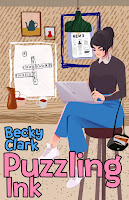
Please welcome Becky Clark to Writers Who Kill. She’s the author of the sassy Dunne Diehl mysteries, the Mystery Writer series, and the new Crossword Puzzle series. The first crossword mystery is PUZZLING INK and it launches on November 3rd.


Becky is giving an ebook to one lucky commenter! I’ll post the winner at the top of this blog on Oct. 13, 2020, at 9 a.m. ET. 


Congratulations, Melissa! You are the winner of Becky Clark's

giveaway. She will contact you at the email you posted.

Happy reading!


1 DOWN: DEATH BY HOMICIDE
 
Quinn Carr wishes her life could be more like a crossword puzzle: neat, orderly, and perfectly arranged. At least her passion for puzzles, flair for words—and mild case of OCD—have landed her a gig creating crosswords for the local paper. But if she ever hopes to move out of her parents’ house, she can’t give up her day job as a waitress. She needs the tips. But when a customer ends up dead at her table—face down in biscuits and gravy—Quinn needs to get a clue to find whodunit . . .
 
6 LETTERS, STARTS WITH “M”
 
It turns out that solving a murder is a lot harder than a creating a crossword. Quinn has plenty of suspects—up, down, and across.  One of them is her boss, the owner of the diner who shares a culinary past with the victim. Two of them are ex-wives, her boss’s and the victim’s. A third complication is the Chief of Police who refuses to allow much investigation, preferring the pretense their town has no crime. To solve this mystery, Quinn has to think outside the boxes—before the killer gets the last word . . . 


Becky, welcome to Writers Who Kill! Your new series features Quinn Carr, a crossword constructor. I love crossword puzzles, too! We’re cruciverbalists!


I’m so excited to be here and I love, love, LOVE that you know that word, Shari! I put it in one of the puzzles I constructed recently, and many of my crossword-enthusiast testers didn’t know it. But that is one of the things I like about solving crosswords … learning new words!


Why crossword puzzles (and no you can’t say, why not?)


I would never say that! In fact, I’m very glad you asked this. My dad is why crosswords. I grew up in a big family (eight kids, two parents, several dogs), all of whom are big readers and talkers. We love words and games—especially word games. I know some people think that solving crosswords is a group activity, but they are wrong. It’s one of the few pursuits that should always be solitary, imho. Dad believed the same. I remember him silently working on the newspaper crossword when I was a kid. Finally, my curiosity got the better of me and I asked him about it. He explained it to me, gave me some tips he’d learned along the way as well as a book of crosswords of my own, and I was hooked. My dad wasn’t one to gush, but I knew he was proud when I started doing puzzles in ink. So that’s how the puzzle part comes in. But when I was mulling about another cozy idea to pitch to my agent, I knew my main character Quinn would be dealing with her Obsessive-Compulsive Disorder. What better hobby could there possibly be for someone with organizational OCD than constructing crosswords? Those perfectly straight lines, that beautiful symmetry, only one right answer. Nirvana!


Of course, that meant I had to figure out how to construct my own puzzles, which, if you’ll allow me to whine a bit, IS CRAZY HARD! Dad didn’t live long enough to work any of the puzzles I’ve constructed or to read Puzzling Ink, but I think it would have tickled him. 


Tell us a bit more about Quinn.


Like I said, she has some OCD to contend with and she creates the crosswords for the local paper, which she has done secretly since she was in high school. (She already felt nerdy enough, she didn’t need kids knowing that too.) She always wanted to be a police officer, but when she was halfway through the hiring process, her OCD reared up and smacked her hard. After trying to regroup on her own in Denver for several years, she finally had to move back home with her parents in Chestnut Station, out on the Colorado prairie. She got a pity job at the local diner, and keeps creating puzzles in secret, which comes in handy because the police chief in town hates to admit there is any crime there so he either sweeps it under the rug, or just tosses the easiest person in jail. But the chief is an avid cruciverbalist—there’s that word again—and Quinn is able to sway his investigation (or lack thereof) by the subliminal clues she sticks in the puzzles just for him. 


The world of cozy mysteries is full of characters with unusual names. The main character of your Mystery Writer series has one of my favorites: Charlemagne Russo. Where did the inspiration for that name come from?


I’m so glad you like Charlee. I spend quite a bit of time on the names in my books. I’m always trying to find names that are memorable, lyrical, have some deeper meaning (even if it’s only deep to me), a little bit off the beaten path, and don’t share any of the alphabet with any other characters. At least to begin their names, obviously there are only 26 letters and if … oh, well, you know what I mean. It’s especially important to me for the main characters who will be spending time with readers over the course of several books. Even though there will only be two books in the Dunne Diehl series, that name comes from Cassidy Dunne and Dan Diehl and never fails to make me laugh. I guess two books was a done deal!


Plotter? Pantser? Something else?


Definitely plotter. But my theory is that every writer is a plotter. I think the difference is that some writers plot in their heads, and other have to use paper, and some do a bit of both. I’ve tried just sitting down and seeing what happens, but that is such a waste of time for me. I spin my wheels getting more and more frustrated, not knowing where to start or where to go or what to do. I hate that feeling so I had to figure out a way to create a process that guarantees I can write novels with the smallest amount of angst. Plus, my agent wanted me to write at least two books a year. I hadn’t done that before, so I needed to figure out my process in a hurry!


You’re also the author of a terrific writing book called Eight Weeks to a Complete Novel. What’s your number one tip for writers?


Eight Weeks to a Complete Novel is the story of that process I created for myself. It’s simple, really … just finding an outline template that makes sense to you, and applying some time management tips. The hard part is cobbling together ideas from so many ways of outlining—mine is a hodgepodge of several different ideas that make sense to me—and assessing your writing strengths and weaknesses to take advantage of them. Then, of course, having the self-discipline to just buckle down to do it.


By far the easiest and most useful tip when drafting your novel is to never stop. Only move forward. No editing, no going back. If you have an hour to write, then by golly, you WRITE for an hour. If you can’t think of the right word, then you put brackets around those boring words. My manuscripts are full of “he was [nice]” … “the sky was the color of [blue]” … “the coffee smelled [bad].” Those words get fixed in editing. You never want to slow down the momentum of your writing. Each time you change tasks to look up a word, you leave your creative happy place and it takes precious time to get back to it. When you’re finished with the first draft and you go back to describe the color of that sky, you’re going to know so much more about your story and you can foreshadow that peacock coming up in chapter seven, or that the coffee is going to smell like Clem’s boots … but you didn’t even know who Clem was until you wrote to the end.   


Tell us more about the new Crossword Puzzle series.


Well, the first one—Puzzling Ink—launches November 3rd and I couldn’t be more excited! In this one we meet Quinn and her parents, Georgeanne and Dan, both loving, involved parents who are understandably worried about their boomerang adult daughter. Georgeanne is fun to write because her thing is cooking, even though she makes some spectacularly weird food. As Puzzling Ink opens, she’s making cupcakes with red, white, and blue frosting for the 4th of July festival. What’s so weird about that, you might ask. Nothing, except they’re cumin cupcakes and the red frosting is from paprika, the white is miso, and the blue is cream of mushroom soup with food coloring. As a joke, when I sent the manuscript to my editor, I included a recipe for one of the treats Georgeanne makes. The joke was on me, though. She thought it was so funny, now I have to do it every time! (If you want to follow my blog tour, I’ll be sharing one of the recipes at Mystery Lovers’ Kitchen on October 23rd.)


Quinn’s bestie is Rico who she grew up with in Chestnut Station and who now is second-in-command on the police force. He does most of the work, since the police chief won’t, and it’s Quinn’s secret mission in life to oust the chief and get Rico promoted. It’s Rico’s secret mission in life to get Quinn back to the police academy.


Quinn works in the diner for Jake, who leaves her alone one night to handle everything. Her regular customers, The Retireds, hang out there constantly, making unreasonable demands on her. Jethro, one of the town dogs, hangs out in front of the diner all day. Before she can close up, she’s got to shoo everyone out and rouse the drunk from the back booth. Unfortunately, he didn’t just pass out in his biscuits and gravy … he’s dead.


The second book in the series is PUNNING WITH SCISSORS (May 2021), and the third is FATAL SOLUTIONS (Nov 2021). 


Launch activities will all be virtual this year with a blog tour, bookstore appearances, book club appearances, and I’m doing something probably absolutely crazy this year … a 24-hour launch party! I’m hosting it with alternating hours at two different Facebook groups, COZY MYSTERY CREW, and my private reader group BECKY’S BOOK BUDDIES. There will be lots of fun and prizes but it’s not a live event so nobody will get thrown into Facebook jail because they posted too much or too fast. People can comment at their leisure, and winners will be chosen the next day, after everyone has had a good night’s sleep. One of the cool prizes I found is an absolutely adorable chiffon crossword infinity scarf. I kept one for myself and will give one away. 


Besides books and swag, I’m thinking about giving away a couple of purses I’ve made from old books. Not exactly a crossword theme, although I think I have one made from a dictionary.


So I’m excited about the launch, and am trying to make it fun during this pandemic when folks want a bit of escape from real life. Join Cozy Mystery Crew and Becky’s Book Buddies if you want to get in on the launch fun. (Don’t forget to answer the questions that will open the secret door!) Visit BeckyClarkBooks.com and subscribe to my “So Seldom It’s Shameful” emails for all the details … I give stuff away there too! (All the links are below)


What’s next for you?


Book #3 in the Mystery Writer’s Mysteries—METAPHOR FOR MURDER—will be released in December to go with FICTION CAN BE MURDER and FOUL PLAY ON WORDS. That’s the series with Charlemagne Russo who is a mystery writer and keeps getting real-life mysteries falling in her lap when all she wants to do is write her books and eat grilled cheese sandwiches. 


Before that, though, I’m updating and sprucing up my Lazy Low Cal Cookbook … portion-controlled, easy recipes for lazy or new cooks, or ones who, like me, were packing on pounds like they were preparing for the next Ice Age. I decided to revamp it because Georgeanne uses my Black Bean Brownie recipe and gives me a shout-out in PUNNING WITH SCISSORS.


And then I have a standalone I want to get started on, a bit darker than I normally write, so we’ll see how that goes. Even dark stuff needs humor, so I’m not too worried about freaking out my readers. Not too much, anyway. And I have another cozy series I’m chomping at the bit to get busy on.


All that is why I need a system to get my books written and pushed out into the world! I’m not getting any younger, amirite??


Here are all the links you need to come play in my sandbox with me …

• Amazon … https://www.amazon.com/-/e/B004NQO14I

• My website to subscribe … https://beckyclarkbooks.com/

• Cozy Mystery Crew … to hang out with a dozen fabulous cozy authors including Shari Randall … https://www.facebook.com/groups/cozymysterycrew/

• Becky’s Book Buddies … where it’s fun, like Facebook used to be … https://www.facebook.com/groups/beckysbookbuddies

• Goodreads …  https://www.goodreads.com/author/show/4730815.Becky_Clark

• BookBub … https://www.bookbub.com/profile/becky-clark

• And my Costco club card number ….. oh wait.  


Don’t forget to comment to be entered to win an ebook from Becky! I’ll post the winner tomorrow morning on this blog. Do you enjoy crossword puzzles?