After a long career writing crime fiction, spanning decades, short story author Josh Pachter switched gears and wrote his first novel for younger readers, First Week Free at the Roomy Toilet. Another big change for Josh—he wrote it for young readers. It was a pleasure talking to Josh about his novel and its upcoming release on September 24, 2024.
Some years ago, my brother’s daughter Aly asked me, “Uncle Josh, how come you only write stories for grownups? Why don’t you ever write a story for kids?” I was about to give her one of those condescending fake replies that grownups often fob off on children, when I thought Why should I lie to my niece? So I told her the truth: “I guess I never thought about it.” And she looked up at me and said, “Well, I bet you’re thinking about it now!”
Sure enough, I was, and First Week Free at the Roomy Toilet was the result. Level Best Books offered me a three-book contract, but I’d just retired from a fifty-year career in education and wanted to take a break from meeting deadlines, so I signed for just the one book. I’m working on a second adventure for June Knight, though … slowly but surely.
At the urging of her agent, June Knight, the face of the Yummy Nibbles dog food commercials, sues her parents for emancipation, purely for publicity. What inspired you to write June’s story?
Every month, I do the cryptic crossword at the back of Harper’s Magazine. Cryptics involve a lot of intricate wordplay, so I’ve gotten used to thinking in wordplay terms. At some point I saw a “Room To Let” sign out in the world and realized that a bit of graffiti would turn that into “Roomy ToiLet”—and June’s story evolved from that observation.
Meanwhile, one of my all-time favorite books is The Westing Game by Ellen Raskin. I hope that First Week Free captures some of the spirit of that book, though the plot and characters are all very different.
June’s agent Morty is a fun character and provides a nice dash of humor. Do you often include humor or comic relief in your stories?
I’m glad you found Morty fun and funny. I like to laugh, and in my day-to-day life I’m a sucker for corny jokes and puns. I don’t consciously try to “write funny,” though, because I think humor relies so much on gestures and tone of voice that I have no idea how to capture it using nothing but words on a page or a screen. As I wrote Morty’s dialogue, I had Mel Brooks’ Miracle Max from The Princess Bride in mind, and that character—played in the film by Billy Crystal—was so hilarious that it was inevitable for Morty to be a fun, funny character.
With the setting in a rooming house, the book almost has the feel of a different age, yet it is a very much up-to-date story. What did the rooming house setting provide your story?
Mrs. Smedleigh’s boarding house gave me the opportunity to put a number of characters in close proximity, each with a very different personality and backstory. Also, “closed-circle” mysteries like Agatha Christie’s And Then There Were None have always fascinated me, and the private world of the boarding house allowed me to play with that concept.
First Week Free at the Roomy Toilet has a fun twist at the end. How much of this story did you plan, or did it come to you as you wrote it?
For my short fiction, I generally have the whole plot worked out in my head before I begin to write. For First Week Free, I roughed out a chapter-by-chapter outline on paper and even drew a detailed map of the boarding house. As I did the actual writing, though, I came to some realizations that weren’t part of my outline, so some of the multiple twists at the end of the book came from pantsing rather than plotting.
You have the distinction of having short stories published in Ellery Queen’s Mystery Magazine and Alfred Hitchcock’s Mystery Magazine in several decades. Please tell us about that.
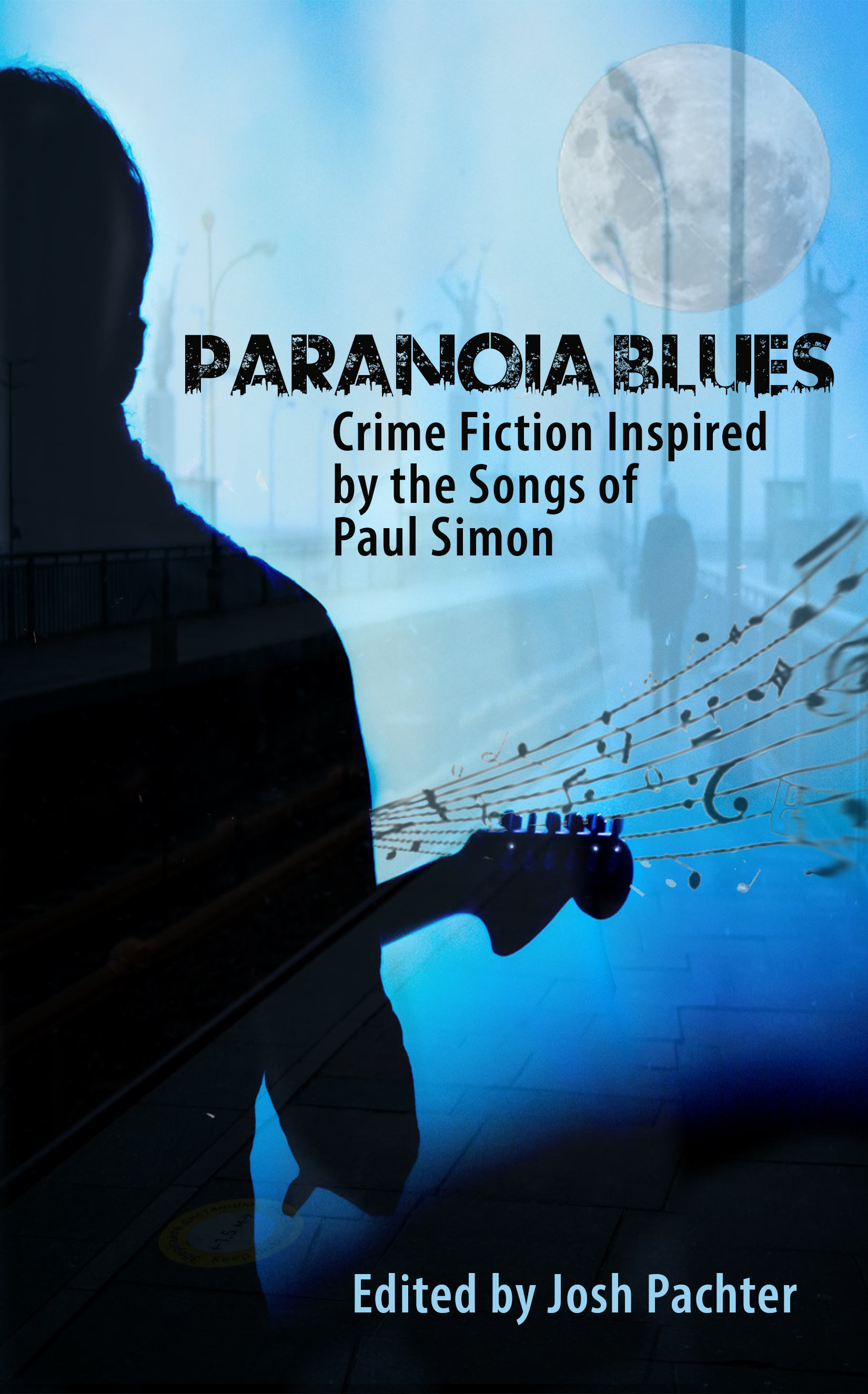
I sold my first short story to EQMM in 1968, when I was sixteen years old, which made me the second-youngest person ever to appear in that paragon of publications. (The youngest was James Yaffe, who in the 1940s sold them a story he wrote when he was only fifteen.) In 2009, I became the first (and remain the only) person to appear in EQMM’s “Department of First Stories” twice, with a story I wrote collaboratively with my daughter, Rebecca K. Jones (whose third courtroom novel, Staying the Course, comes out from Bella Books this fall and is available now for pre-order). I first sold to AHMM in 1972, and my stories still occasionally appear there, but I’m a much more active contributor to EQMM.You’ve contributed to and edited a number of anthologies, including stories inspired by the songs of different performers, for example, Only the Good Die Young: Crime Fiction Inspired by the Songs of Billy Joel. What is the appeal of these music inspired anthologies?
To my regret, I don’t play any musical instruments, and my singing voice would clear a room in seconds flat. I love listening to music, though, especially to singer/songwriters and the rock ’n’ roll bands of my g-g-generation. I kind of fell into editing my first “inspired by” anthology, The Beat of Black Wings: Crime Fiction Inspired by the Songs of Joni Mitchell—long story; ask me sometime when you see me—but I had so much fun putting it together that I decided to do another one (The Great Filling Station Holdup: Crime Fiction Inspired by the Songs of Jimmy Buffett), and it just kind of snowballed from there. My seventh (Friend of the Devil: Crime Fiction Inspired by the Songs of the Grateful Dead) will be out this fall, and numbers eight (Every Day a Little Death: Crime Fiction Inspired by the Songs of Stephen Sondheim) and nine (Cryin’ Shame: Crime Fiction Inspired by the Songs of Lyle Lovett) are scheduled for publication in 2025.

Your bibliography shows an amazing list of publications. Do you ever dust off older ones or rewrite a story to bring it up to date?
Not usually, no, but there’ve been a couple of exceptions, one of which is First Week Free at the Roomy Toilet. I originally wrote it more than a decade ago, but although I’d sold more than fifty short stories by then I had absolutely no idea how to sell a novel, let alone one aimed at kids, so the manuscript lingered on my hard drive for a long time. When I heard that Level Best Books was starting Level Elevate, an imprint for younger readers, I opened the file and reread it and thought it was worth submitting—but first I updated it, trading June’s iPod, for example, in for an iPhone.
One other exception is “Invitation to a Murder,” which appeared in EQMM way back in 1972. It was the only story I ever dreamed: I woke up in the middle of the night with the idea fully formed and scribbled it down, then went back to sleep. When I got up the next morning and picked up my notebook, I expected to find illegible gibberish, but a workable idea was there—and it made real-world sense, not just dream sense. Over the next nine months, I wrote at least a dozen drafts, but I just couldn’t seem to get it exactly right. I finally gave up, sent what I had to EQMM editor Frederic Dannay and asked him for his advice—and he sent me a contract and published the story. It’s been reprinted more often than anything else I’ve ever written, and every time I get asked for reprint permission, I tinker with it. I still don’t think it’s quite right, but I believe I’m getting closer….
You are well known for your short stories, but your first novel, Dutch Threat, was recently released. What motivated you to write a novel after a long career writing short stories?

Dutch Threat is set in Amsterdam. From what I understand, you have lived there and visit often. In addition, you have also translated short stories and novels from Dutch into English. Please tell us about that.
Yes, I lived in Amsterdam for several years during the late 1970s and early ’80s, and although you don’t really need to speak Dutch to get along in The Netherlands, I didn’t think it was fair to ask the people around me to speak my language instead of their own, so I learned me enough Dutch to get along. In the mid-’80s, I was asked to translate two of Janwillem van de Wetering’s short stories from Dutch to English for EQMM, and one of them—“There Goes Ravelaar!”—wound up an Edgar finalist. Twenty years later, when Janet Hutchings decided to launch the magazine’s “Passport to Crime” department, featuring a translated story in every issue, she asked me to find a story by a Dutch author for her. I did, and then I found another one … and by now I’ve done dozens of translations of stories by both Dutch and Flemish crime writers. I’ve also translated comic books, memoirs, and three crime novels (René Appel’s The Amsterdam Lawyer and Bavo Dhooge’s Styx and Santa Monica).
You’ve recently traveled extensively through Japan. Did your travels inspire you to write stories in new settings?
My wife Laurie and I are avid travelers, and I almost always wind up setting a story in the places we visit. I do in fact have a Japan story in the September/October issue of EQMM, and there’s another one coming out next year in a British anthology I don’t think I’m allowed to comment on just yet. The EQMM story, oddly enough, was written before Laurie and I spent a month in Japan. It’s called “The Wind Phone,” and I wrote it after doing extensive online research. (The anthology story was written after we got back from our trip, and it’s based largely on things we experienced during our time in Tokyo. Stay tuned….)
Is there a publication that your stories have yet to be included in that is on your bucket list?
Hmm. I’d love to see my work included in either or both of the two annual “Year’s Best” collections, one edited by Otto Penzler and the other by Steph Cha. I had stories in the 1985 and 1987 editions of The Year’s Best Mystery and Suspense Stories, edited by Edward D. Hoch, but that was a long time ago. It’d be great if Otto and/or Steph were to consider my fiction worthy of inclusion in their books.
You have received numerous awards and accolades. Which one gives you the most satisfaction?
Well, I don’t know about “numerous,” Grace, but thanks! Things I’ve written, edited, and/or translated have been finalists for the Edgar, Anthony, Agatha, Lefty, Thriller, Derringer, Macavity, and EQMM Reader awards, and have won several Derringers. I was deeply honored in 2020 to receive the Short Mystery Fiction Society’s Golden Derringer for Lifetime Achievement, especially since that award is named after my old friend Ed Hoch. But I think the most satisfaction to date came in 2019, when I finished second in the EQMM Reader Award balloting for a story called “50.” That story was published in the magazine’s November/December 2018 issue, exactly half a century after my first appearance in EQMM, and it features the protagonist of that first story, now half a century older. “50” was a deeply personal story for me, and the fact that it resonated with readers was extremely gratifying.What is the most valuable thing you’ve learned since you started writing?
This is probably not what you’re looking for, but the most valuable thing I’ve learned since I started writing has nothing to do with writing. In the years since my first publication, I learned how to be a good dad and a good husband, and those lessons have been more valuable than anything else I’ve ever learned in my life.
What is next for you? Can we expect any more novels?
As I said earlier, I’m slowly working on a second adventure for June Knight, and I’ve had readers ask me for another book about Jack Farmer and Jet Schilders, the protagonists of Dutch Threat. Those are back-burner projects, though. In the near future, look for a bunch of new short stories coming out in 2024 and 2025, new translations in EQMM and Black Cat Mystery Magazine, and new anthologies.
Thank you, Josh.
For more information about Josh and his numerous stories, check out his webpage: www.joshpachter.com. First Week Free at the Roomy Toilet is available for preorder at https://www.amazon.com/dp/B0DH7V5J9P.
Grace Topping is the author of the Laura Bishop Mysteries Series.