Showing posts with label writers police academy. Show all posts

Monday, July 17, 2023

Traffic Stops – Writing Them and Experiencing Them by Debra H. Goldstein

Recently, I attended the Writers Police Academy. One of the classes I took was “Making a Traffic Stop.” The course covered two types of stops – where it is believed the car being stopped has occupants involved in a felony/crime (ex. Walmart is robbed and everyone sees the robbers run to a pink car and tear out of the parking lot on two tires --- and lo and behold, a similar car is spotted a few minutes later) and the typical traffic stops we all think we know. I was amazed at all the small details I learned that I would never have considered if I were writing a stop scene.


For the felony stop, I was in the command seat of the second car. Our job was to cover the passenger side from a safe distance. As you can see from the picture below, being left-handed, I probably would have shot off the mirror of my police car before I shot the bad guy.


The typical traffic stop proved to be almost as complicated as the felony stop. First, an officer spots something which could range from a light being out, speeding, weaving on the road, a license tag that doesn’t match a car, or something that simply feels fishy. Today, with computers, the tag is run before the officer gets out of the car. The next step is to carefully come up to the stopped car from behind, pausing to leave a handprint on the back of the car. Then, the officer, watching for guns or quick movements, makes direct contact by talking from a safe position still to the rear of the driver’s door. The driver may be asked to put hands out the window or on the steering wheel. The stop proceeds with license, registration, and whatever being obtained by the officer, who remains in a safe position, leaving one hand free if a gun must be drawn and the other taking what is produced. Depending upon the violation, things proceed to a warning, ticket, sobriety test, or whatever.


Why do I tell you all of this? Because if you write about a stop you need to get it right. The same is true if you are stopped. Now, I understand why a few years ago, I freaked out a young cop.


I was driving through a posh neighborhood having just come from a workout. A block after I passed the police station, blue lights came on behind me. I pulled out of the way to let the officer chase the bad guy. To my surprise, he stopped behind me. 


He got out of his car and slowly approached the driver’s side front door. As I asked what I had done, he, I believe, told me to put one hand on the steering wheel and hand him my license with the other. That’s when I remembered I had locked my purse in the trunk while I was working out. 


Nervously, I told the officer, “Oh, just wait a minute,” and I pushed open my door. He backed up, with an odd look on his face, but I brushed past him talking non-stop about my purse being in the trunk. In retrospect, after taking the class, I realize that what I thought was him being flustered as he backed away from the trunk was probably him trying to protect himself if I retrieved a gun instead of my license. I now interpret his puzzled serious mouth-dropping look as being abject fear mixed with confusion followed by relief when all I pulled out of my purse was my license. 

At that point, with both of us standing outside the car, he started to tell me the sticker on my license tag was expired, but I reached into the car again (and he moved further back) to pull out the mail which had the sticker in it and my checkbook to show I’d written the check for the fee well before it had shown up in the mail.


He gave up. After helping me put the sticker on the tag, he let me go. I wonder which of us was more relieved. That’s an element they didn’t go over in class.

Sunday, August 4, 2019

Research, research, research!


First thanks to Annette for having me here at Writers Who Kill! So glad to be back.

As a literature major, I did a lot of research in college, most of it pretty boring (use of foil symbology in Shakespearean plays anyone?). When I graduated, I thought I’d left all of that behind me.

Then I started writing novels.

There’s a lot of research that goes into “making it up.” After all, unless you are writing speculative fiction or pure sci-fi/fantasy, you want things to be like real life, right? I mean, if you say your state cop got into a Lamborghini, someone somewhere is going to call you on it. Trust me. Been there, done that.

Unless you’ve created a fictional town and your cops just happen to drive Lambos, but I digress.

It’s pretty logical that historical fiction requires a lot of research. What were the dress styles in the late 1800s? When did Henry Ford create the assembly line? When were telephones commonly available in homes? What was the hourly rate for a line worker at Bethlehem Steel in the 1940s (I had to research that one)? How much was bus fare in Buffalo, NY in 1942 (had to do that one, too)?

By the way, it might be challenging to find it all, but trust me. The internet knows just about everything.

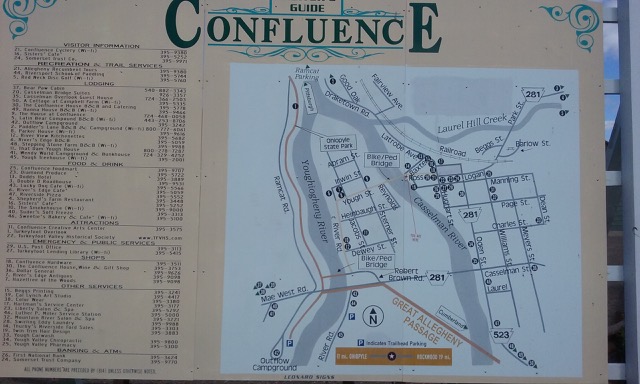
But even though I write contemporary fiction (meaning it takes place in current times), there’s still a lot of research. Take maps. I don’t write a fictional location, so maps are my best friend. What’s the cross street by the Fayette County courthouse? Google Maps to the rescue. I’ve spent more time there than I care to admit.
 
I spend a lot of time looking at this map
when Jim Duncan is at home
.

There’s also talking to people. After all, I’m not a public defense lawyer nor am I a cop…but I do write them, so I’d better get it right. I have two reliable sources for each on speed dial. The conversations usually go something like this:

Me: I’ve written blah-blah-blah. Would that happen?
Them: Not so much.
Me: Well, I need blah-blah-blah to happen. How would that work?
Them: Well, you could do it like this <insert long explanation>

It sounds kind of boring, but both these guys have great stories, so it’s not.

I make site visits to the Laurel Highlands frequently. This keeps me up to date on places and how the area feels/smells/looks in each season.
 
The interior of the very-real Lucky Dog Café,
Jim and Sally’s favorite Confluence eatery

And sometimes, well, the research gets just plain fun. Back in 2014, I attended Writers Police Academy, which is filled with law enforcement demonstrations, all of which are run by real cops. I mean come on. Watching SWAT blow off a door in an explosive breach demonstration? Who doesn’t like a good boom first thing in the morning?

All of it in the name of writing a better book.

So if you’re thinking of writing a novel and you won’t have to do any research because you get to “make it up,” think again. To quote Aislyn McAllister, “If I’d known about the research involved in this job, I might have chosen a different line of work.”

Nah.

About Heaven Has No Rage

State Trooper Jim Duncan's quiet overnight shift turns deadly when fire destroys a ski lodge at a local resort and the first responders find a man's body inside.
What starts as a suspicious accident quickly becomes sinister when the autopsy proves the victim is not the man who rented the cabin. Jim’s left with three questions. Who is John Doe? Why was he at the ski lodge? And who hated him enough to kill him?

Assistant Public Defender Sally Castle, still reeling after the events of several months ago, tries to bury her feelings of guilt and fear in her work. When an anonymous note from a secret admirer arrives at the courthouse, she brushes it off as an empty threat. As the missives, each one darker than the last, continue to arrive at her office as well as her home, Sally’s forced to review all the possibilities. Is the letter-writer a person from her legal past? Or is the threat closer to home?

As the questions multiply, Jim and Sally are thrown into a race to find a murderer as well as a stalker...before Sally ends up facing more than an unwanted pen pal.

Bio

Liz Milliron is the author of The Laurel Highlands Mysteries series about a Pennsylvania State Trooper and a Fayette County assistant public defender in the scenic Laurel Highlands. The first in the series, Root of All Evil, was released in August 2018. Liz’s short fiction has appeared in multiple anthologies, including Murder Most Historical and the Anthony-award-winning Blood on the Bayou. She is a past president of the Pittsburgh chapter of Sisters in Crime, as well as a member of Pennwriters and International Thriller Writers. She lives outside Pittsburgh with her husband, two teens, and a retired-racer greyhound.


Monday, March 11, 2019

Citizens’ Police Academy

by Shari Randall

Have you ever felt like you wanted – no, needed – to do something different, something outside your comfort zone? I decided to finally take a class I’ve been thinking about for a long time: The Citizens Police Academy. I don’t have any major characters who are full-fledged police officers, but if I decide to write one, I want to get the details right. Plus, a peek behind the badge, a look at real life CSI? Sign me up!
The first class met last week in Waterford, CT. My fellow classmates included people from all walks of life. Several were retired and were curious about a profession they had once considered. I sat between a young man doing a police internship as part of his college course and a proud couple whose daughter was at the Police Academy.
One woman runs a massage parlor and is concerned about the growing human trafficking issue, which affects people’s perception of her long-running business.
Several young guys (yes, the class skewed heavily male) were considering a career change into law enforcement. There was also a guy from NPR taking the class as research for a radio piece.
The officers laughed when I said I was a writer doing research. They said they’re okay with being in a book as long as I change their names.
Done. 
The class runs for ten, three-hour sessions with officers volunteering their time after a long day on duty. The program is funded by the Waterford Rotary Club, which wants people to see and appreciate what police officers face every day.
Both of our instructors had former military experience. As they outlined everything the course would cover, I felt a wave of admiration for the professionals who have to undergo constant training and retraining in so many different facets of their work. I also felt exhausted just thinking of all the topics that we'd cover in class:

Structure and operations
Recruiting, Training, Life at the Police Academy
Motor Vehicle Enforcement and Patrol (we get to go on a ride along!)
Use of Force – Taser Demonstration, Baton Use (Hands On), OC Spray – we were warned that we should dress comfortably but trust me, I do not want to be near a taser!
Driving under the Influence
Juvenile Crime
Profiling
Human Trafficking
Accident Investigation
Criminal Investigation
Traffic Complaints
Offensive Tactics
K9 Demo
Firearms/Weapons
Domestic Violence
CPR/Narcan

The officers were clear, enthusiastic, and businesslike.
They’re also hilarious. The chief walked us through a timeline of Waterford’s police history, including slides of their police vehicles over the years. A fleet of 1980s era Volvos with police lights flashed onscreen.
The department took a lot of ribbing for having the luxury car, but the Chief said that because Volvo wanted to break into the police market, the cars were (excuse the expression) “a steal” and they were sturdy, came with a bumper to bumper warranty, and had dual turbo engines.
Despite their boxy appearance, the cars were fast. The brakes, however were underpowered for such a juiced up engine. “That car was a rocket with bad brakes,” he said, wistfully. 


We had a tour of the police station: a stop at the armory; the sally port where we were able to get into a police interceptor;  gym; roll call room; break room (with deep brown man cave-worthy couches and recliners); detective’s room (there was an open package of Girl Scout Thin Mints on the table); and a locked library. The room was lined with empty shelves except for two, which held high school yearbooks and a copy of Black’s Law Dictionary. 
When we toured the holding cells, the intercom crackled. We were told to move down a corridor because an officer was bringing someone in.
We shared glances. This was real.
I’ll keep you posted. The first thing I learned? There is no room for a purse in a police cruiser.
Have you ever done a citizens police academy?

Tuesday, March 27, 2018

Learning the Tricks of Other People's Trades


Write what you know, they say. So I decided to write about a woman who inherits a gun shop that caters to Civil War reenactors. And I decided that her partner in both romance and crime solving should be a former SWAT sniper who lives in a Buckhead high-rise and drives a Ferrari.

In other words, things I know nothing about.

It might not have been the smartest decision writer-wise, but it did require me to get very good at research very quickly. And I discovered that unlike the research I accomplished using books and the internet, to truly understand my protagonists, I needed to get out of my office.

In other words, right out of my comfort zone and into the fire.

To write someone familiar with a variety of firearms, I had to get myself to the gun range. As it turns out, I’m a pretty good shot—I passed my basic handgun safety course with flying colors. My experience in the Firearms Training Simulator, however, was a different story. I signed up for a session through the Writers Police Academy, a three-day immersive experience at an actual police training facility. My instructor explained very well what was going to happen—the lights would dim, and a scenario would be projected on the screen in front of me. I would be playing the role of a police officer responding to the call, and my Bluetooth-rigged pneumatic firearm would track where I “shot.”

Simple enough, right? So I thought. Sixty seconds later, my trigger-happy, over-adrenalized self had shot up a virtual airport terminal trying to subdue one active shooter. I “killed” the bad guy…and a TSA agent, a businessman, and a honeymoon couple. I learned that this is typical, that people untrained in managing the endocrine overload of such a high-stress situation lose their targeting ability. Their hands shake, and their vision tunnels. It even happens to good shots like me, and it meant that in a real-world situation, I would have been a menace, not a hero. Being a “good guy with a gun” takes an immense amount of regular, hands-on training. I am grateful to the law enforcement officers and other professionals who take on that task.

I performed better in the Academy’s mock SWAT raid. My profile photo here at Writers Who Kill was taken right before my workshop on dynamic entries—that’s me over there on the left in my all-black running outfit and my bright orange plastic rifle. We learned how to clear rooms in a building using two-person teams, breaking off from the stack, working corner to corner to minimize blind spots. I was doing pretty well too…but then I turned my back on what I thought was a neutralized threat, and I ended up dead. Doornail dead.

(Side note: this is the incident that inspired the opening scene of Necessary Ends, my latest book in the Tai Randolph series—you can read that first chapter here). 

In other workshops, I practiced proper handcuffing techniques, wore a fully tricked-out duty belt, and watched a fire and rescue team work a simulated car crash with multiple casualties. I learned about mantracking, underwater crime scene evidence recovery, and canine units. Not only have I come away smarter, I’ve developed a deep appreciation for the first responders whose job it is to run toward danger. I heard one police chief say of making such calls, “We’re meeting people on what is probably the worst day of their lives. But for us, it’s just another Wednesday.”

I remember this every time I sit down to the page, that one of our duties as mystery writers is to be true to the real world. It’s why we research, so that our fictional prose rings with authenticity. But our stories should also illuminate the real-life stories of the people who live those Wednesdays, in all their mundanity and horror and complexity. Our fiction may not always be factual, but it should always be true. And so…. back to the research I go.

*     *     * 
Tina Whittle writes the Tai Randolph mysteries for Poisoned Pen Press. The sixth book in this Atlanta-based series—Necessary Ends—is scheduled for release April 3rd. Tina is a proud member of Sisters in Crime and serves as both a chapter officer and national board member. Visit her website to follow her on social media, sign up for her newsletter, or read additional scenes and short stories: www.tinawhittle.com.