Showing posts with label Cheese Shop Mysteries. Show all posts

Sunday, July 12, 2026

AUTHOR BRANDING: WAS MINE A MISTAKE?

by Korina Moss 

Branding. It’s a word that I’m sure writers have heard after they’ve signed their first publishing contract or are writing their first novel. As an author, you want to stand out from the crowded field, which means you have to do more than market your book, you have to market yourself. This is where branding comes in. Branding helps readers identify you, helps them to feel a connection with you and your books, and lets them know what they might expect from your writing. 

Consistency is the key to branding. Ideally, you want to be easily identified. You should attempt to maintain a consistent look on all your social media, your website, and in your newsletter. You can do this by choosing a color palette (ideally similar to your books), color tone, fonts, and even creating your own logo. 

The background of my website has 
a huge cheeseboard

For instance, if you use bright jewel tones as your signature colors, readers will know to stop and look for you when those colors show up on their timeline. They’re more likely not to miss an event you’re attending or when you have a preorder sale. 

Is there’s something from your genre that readers can associate with you? If you write British cozy mysteries, perhaps you could make a quick “good morning” reel every Monday morning while drinking a cup of tea. If a dog or cat is featured in your mysteries, you’ll want to feature your own dog or cat on your platforms.

Is there something featured in your series that will make you stand out? Lucy Burdette (the pen name for Roberta Isleib) has a long-running Key West Food Critic Mystery series. She also happens to spend most of the year in Key West, so much of her social media features her life in Key West. We get to see the places she mentions in her books, and we get a little peek into her life too. It’s definitely a plus to set your series in the area where you live, even if it’s a fictional town. 

Lucy Burdette's IG post with a photo of the
Key West restaurant from a snippet from her book. 

When I was deciding how to brand myself before my Cheese Shop Mystery series came out, I had to consider what I wanted my identity to be. I’d hoped I would have a long and varied career, so although cheese was the obvious branding choice, going all in with it might not be a smart move in the long run. Ultimately, I decided to heed a variation of the advice editors give to new writers when starting a series: Don’t save anything for later. I was writing a Cheese Shop Mystery series, and I wanted to stand out and be noticed. I decided not to worry about later and go all in on cheese.

Wearing my cheese earrings
my publicist gave me

I named my newsletter subscribers Team Cheese and used the hashtag #teamcheese in most of my social media posts until eventually, most reviewers and bloggers who mentioned me on social media also used the hashtag. My first year at the Malice Domestic fan convention after my book had released the month before (and I’d already been branding myself for many months), I was regularly called “the cheese lady” by readers when they’d forgotten my name. It was ok—they knew my book! I've received wonderful cheese-related gifts from readers. I can’t tell you how many cheese memes, funny cheese reels, and cheese board posts I still get tagged in and messaged to me. And the message always says, “I saw this and thought of you.” It was exactly what I wanted—when cozy mystery readers see cheese, they think of me.


My St. Martin's editor and me in my cheese shirt
at Malice Domestic

I was shocked when my first book and I were well known enough in the mystery community to be nominated for an Agatha Award for Best First Novel, and two more books were nominated for Best Contemporary Novel the following two years. I’ve had a lot of great opportunities and decent sales. 


However, now that my Cheese Shop Mystery series has ended, do I still want to be known as the cheese lady? Probably not. Oops. I still go to events and sell my books, and I don’t have another series coming out imminently, so I’m backing away slowly from the cheese. I still post on National Cheese Day (and all the variations of it), but I’ve changed my newsletter sign-off from “Cheers to Cheese” to “Keep it Cozy.” I’ve left the Mystery Lovers’ Kitchen blogging group where recipes and cheese played a big role and focused on my author role in the Facebook group Cozy Mystery Crew. Every three weeks, I spend a day with our members, where we chat about what’s going on in my life and theirs. Cheese isn’t totally off the table (pun intended), but it takes a backseat now when I speak about my life and my books. 

In a way, I’m back to step one in deciding how to brand myself. It’s not exactly where I want to be, but on the other hand, I can’t deny that my strategy worked in the moment. 

You get to decide what’s right for you, but you can’t go wrong with these simple steps for starting your branding journey:

1. Take time to decide how you want to define yourself. Try to identify your point of difference, the thing that sets you apart from other authors in your genre. What kind of vibe do you want to give off?

2. Build your presence – Start with two platforms and decide how many you can handle. (They take more time than you think.) Create a website. Join online groups and organizations in your genre to interact with readers and writers in a personal way, not as a salesperson. Get to know your target audience, which will help you make decisions about your branding. 

3. Be consistent – Use the same profile photo across all author platforms. On social media, your website, and your newsletter, consider using the same color palette, fonts, type of music, illustration elements, and perhaps even a logo. Consistency will lead to recognition.


Readers: Think of your favorite author. What elements make up their brand? How does it match up with their book(s)?

KORINA MOSS is the author of the Cheese Shop Mystery series, which includes the winner of the Agatha Award for Best First Novel, as well as two novels short-listed for Best Contemporary Novel. Listed as one of USA Today’s “Best Cozy Mystery Series,” her books have also been featured in PARADE Magazine, Woman’s World, and Writer’s Digest. Korina is also a freelance developmental editor specializing in cozy mysteries. To learn more or subscribe to her free seasonal newsletter, visit her website korinamossauthor.com.


Sunday, June 14, 2026

HOW TO INSPIRE READER LOYALTY

by Korina Moss

A photo posted by Dana, a loyal reader of mine 

Reader loyalty. Every author hopes for it. Cozy mystery authors count on it for their careers. One way to foster loyal readership is through marketing, but that’s putting the cart before the horse. First, you must write a series that inspires reader loyalty. 

Cozy mysteries are intended to be a standalone series. Writing a standalone means you have to focus on writing the best self-contained story you can. But writing standalones within a series means you also have to consider the books you'll be writing next. Ultimately, you want a connection among your books and a progression of your characters. These two things will help to elevate your series and inspire reader loyalty. How to do this? Here are 5 things to keep in mind that may help:

1. Give your protagonist a character arc throughout the series. 

Cozy mysteries are comfort reads, so although we want to write a three-dimensional protagonist (which likely means she’ll have some flaws and challenges), you need to put a light touch on them. Your protagonist must be likable from the beginning, and therefore, her issues can’t be so heavy or need such redemption that the reader isn’t riding with her from the start. With this in mind, you can introduce an arc that gets resolved in book one and then a bigger arc that runs throughout the series, or you can introduce an arc and show your protagonist’s growth incrementally throughout each book. Either way, don’t hit the reader over the head with lessons learned. Character arcs should also apply to your core series characters (those who help your protagonist sleuth and show up in every book). Think about what changes they might go through within each book. What small differences will readers be able to see in your core characters between book 1 and your later books? 

2. Keep in mind the time between when the books take place. 

Does your first book take place in the spring and the second book take place the following fall? Then you need to keep in mind when you write that second book that 6 months have passed for your characters. If your protagonist has just moved into her new apartment in book 1, she’s not going to be unpacking boxes at the start of book 2 if it takes place 6 months later. (Unless she’s like me, lol.) If two characters start dating in book 1, then you have to consider that they’ve now spent six months dating at the start of book 2. If your sleuth and the detective have been awkwardly flirting in book 1, and in book 2, you have them acting exactly the same, you need to mention why their status has remained the same. Have they avoided each other since the last murder investigation? Only seen each other in passing? Are both horribly shy? There should be a reason why their relationship is in the same place. Things will have happened in those months between books that readers didn’t get to see. Make sure each book simply acknowledges that. 

3. Make some community characters recurring.

If you introduce characters who play an important role in your book and they’re part of the community, readers are going to want to see them again and know what they're up to now. It’s a great way to make the town feel alive and slowly grow it. However, not every character can be in every book. They still have to serve a purpose to the mystery. You don’t want too many names and characters for your readers to have to remember. But using these recurring secondary and tertiary characters not only adds color, they help to make your characters feel like they actually live off the page. 

4. Keep the relationships between characters growing and changing.

In real life, romantic relationships and friendships change and grow. Especially if your protagonist starts out in a new town (like Willa does in my Cheese Shop series), you’ll want to show the progression of her friendships and the romantic relationships from book to book. This will have to be done a bit more slowly than in real life, but there are always ways to show growth and for relationships to get tripped up. I age my characters, but not every series does. I understand why and it may not be important to readers to see them age. However, I think if my characters are going to grow and their lives are going to change, and I'm writing different seasons and holidays and shop anniversaries, then my characters should also get older. 

5. Ground your setting.

You want your reader to have a good image in their head of your setting. One way to do this is to have a strong handle yourself on what your town looks like, what’s there, and where the places are located. It will keep you from making mistakes and also allow you to paint a better picture of your setting for the reader. Make note of the shops or locations that play a role in your books. You’ll want to show many of them again in future books, even if it’s just a mention of walking past them. If your protagonist has 3 places she always goes to—for example, her home, the local cafĂ©, and the shop she runs—you want to describe not only these three places, but where they exist within the town. It will give your reader some idea of the size of the town, if it’s walkable, if your protagonist lives in a rural location, etc. Your setting is like those recurring characters I mentioned earlier—your readers want to be reminded that those places still exist even if they don’t play a role in that particular book. 


Readers become loyal to a series when they love the characters, the town, and the cozy feel. They like to feel like they’re returning to “old friends” in a place they’d love to live (minus those pesky murders). You want to make these things as real as possible for them. A progressing arc of your protagonist and core characters and their relationships not only makes them more realistic, it also gives your readers something to be invested in and look forward to. Connecting the books with many of the same community characters and town businesses leads to a comforting familiarity for your readers. I hope these five tips will help your series become one readers will want to revisit again and again. 


Readers: What makes you return to a series and become a loyal reader? 


KORINA MOSS is the author of the Cheese Shop Mystery series, which includes the winner of the Agatha Award for Best First Novel, as well as two novels short-listed for Best Contemporary Novel. Listed as one of USA Today’s “Best Cozy Mystery Series,” her books have also been featured in PARADE Magazine, Woman’s World, and Writer’s Digest. Korina is also a freelance developmental editor specializing in cozy mysteries. To learn more or subscribe to her free seasonal newsletter, visit her website korinamossauthor.com.


Sunday, February 8, 2026

BIG CHANGES COMING TO THE BOOKS YOU BUY

by Korina Moss

The way some of us read books will be different in the coming year. Two days ago, I read an article in The New York Times about the demise of the mass market paperback. Mass market paperbacks are the smaller paperbacks that sell between $7.99 and $9.99. If you’re a cozy mystery or romance reader, you’re especially familiar with these. But now, publishers have decided to do away with mass market paperbacks, and bookstores will no longer carry them. Anything that would’ve been sold as mass market will soon be in trade paperback size, which will cost between $15.99 and $21.99, which means you’ll have to increase your book budget.

Mass markets of my Cheese Shop Mystery 
(and trade paperback of the Spanish translation of 
Cheddar Off Dead)

Almost all cozy mysteries, like my Cheese Shop Mystery series, are published in mass market, because our books are almost always part of a series and our readers are loyal. Like readers of romance novels, our readers are known to devour several books a month (sometimes more), and the mass market price point allows for it. Along with cozy mysteries and romance, other genres, like thrillers, mysteries, and science fiction, will also feel the effects of doing away with the smaller, less expensive printed copy in favor of trade paperback.

There are several reasons for this decision, one being the introduction of the e-book. According to the NY Times article, “… In the United States, about 103 million mass markets were sold in 2006, the year before the Kindle was introduced. Last year, readers bought fewer than 18 million of them.” Although “physical books still account for about 75 percent of book sales,” mass market paperbacks took a hit. Over the past decade, 10,000 fewer mass market books were published. 

My 5th book, Fondue or Die, on the shelf at
Barnes & Noble with the other mass market cozy mysteries

As a writer and reader of cozy mysteries, this makes me wonder how they will fare. If it’s true, as The NY Times states, that “It wasn’t publishers leading away from mass markets. It was readers,” then it’s up to us. Will cozy mystery readers shell out an extra $6 or more for the pricier trade paperback cozy mystery? Will they accept the new format and higher prices and continue to purchase as many of their beloved books? Or will the cozy mystery genre ultimately pay the price?

If you’d like to read the full New York Times article, click here: So Long to Cheap Books You Could Fit in Your Pocket

Readers: How will this affect your book buying? 


KORINA MOSS is the author of the Cheese Shop Mystery series, which includes the winner of the Agatha Award for Best First Novel, as well as two novels short-listed for Best Contemporary Novel. Listed as one of USA Today’s “Best Cozy Mystery Series,” her books have also been featured in PARADE Magazine, Woman’s World, and Writer’s Digest. Korina is also a freelance developmental editor specializing in cozy mysteries. To learn more or subscribe to her free monthly newsletter, visit her website korinamossauthor.com.


Korina is also a freelance developmental editor specializing in cozy and traditional mysteries. Using her experience writing her award-winning series for a Big 5 publisher, she has the inside track on what editors, agents, and readers are looking for in a cozy mystery.  Whether you're a new writer hoping to be traditionally or independently published, or you're an established writer wanting some guidance with a manuscript, she can help you strengthen your book. You can find more information on her website and contact her at korinamossauthor@gmail.com

Sunday, January 11, 2026

TO PROLOGUE OR NOT TO PROLOGUE

 by Korina Moss

The choice of whether a book should begin with a prologue is often a heated debate. A prologue can be used for several reasons: to provide essential background information in order to set up the central conflict, as is often used in fantasy books; to provide a glimpse into the antagonist’s mind, sometimes used in thrillers; or to reveal information that the protagonist doesn’t yet know, sometimes used in suspense novels. Of course, there are other times one might use a prologue -- as with every “rule” in fiction writing, the reasons are not cut and dry. But should a prologue ever be used in a cozy mystery?

I’m never going to say never. However, the one reason not to use a prologue, which has come across my editing desk, is as a replacement for a slow first chapter. Some writers want to use it as a way to hook the reader with simply an exciting scene, knowing they've filled chapter one with backstory and introductions, and the plot train hasn’t left the station. Although you need to take time to introduce your main characters and set up the initial stakes and the discovery of a murder, this should be done while still moving the plot forward. A prologue can be used for many reasons, but it's not a substitute for keeping your readers entertained in chapter one. 

Readers: Do you like prologues? Writers: Do you like to use them? 

KORINA MOSS is the author of the Cheese Shop Mystery series, which includes the winner of the Agatha Award for Best First Novel, as well as two novels short-listed for Best Contemporary Novel. Listed as one of USA Today’s “Best Cozy Mystery Series,” her books have also been featured in PARADE Magazine, Woman’s World, and Writer’s Digest. Korina is also a freelance developmental editor specializing in cozy mysteries. To learn more or subscribe to her free monthly newsletter, visit her website korinamossauthor.com.


Sunday, October 12, 2025

PREPARING FOR YOUR FIRST FESTIVAL AS AN AUTHOR

One of the ways to market yourself and your books is to do in-person signings. For most authors, it’s one of the more fun parts of the job. You get to meet and talk with readers and sell your books. Since I’m traditionally published, most of my events have been connected with a bookseller, which is easy for me—I just show up to the event. However, this past weekend, I was lucky enough to be invited to be a vendor at the 10th annual Little Falls Cheese Festival in Little Falls, New York. This is a very large festival—people came from as far as Wisconsin and Texas, and the estimate for this year’s attendance was between16,000 and 17,000 people. It was my first time selling my books on my own at an event, so I wanted to share with you some things to consider, depending on the type of your event.

For the outdoor event, I needed: 

Canopy tent 

Tables and chairs 

Cash box 

Smaller bills for the cash box to make change

A square reader for credit cards and/or Venmo 

Signage for pricing, your bio, and list of books for sale 

Signage may also include a banner 

Signage may also include a large display board of one of your books 

Other signs to draw people in, i.e., “Get Your Book Signed by the Author”

Book holders to display your books 

Tablecloth

Your books

Pens to sign books

Bookmarks or other swag

You might also want to have a notepad where they can write down their email address to subscribe to your newsletter. However, because this was such a large festival and my booth was often crowded with people, I opted to just offer my bookmark, which includes my website. I also slipped a bookmark into each book I sold.  

Give your books a whole-dollar flat price with tax already included. You don’t want to be dealing with figuring tax or handing back a bunch of coins. Make it as easy as possible for people to whip out their cash and buy a book! I opted to charge a higher price for credit card sales, which covered the fees and also incentivized customers to use cash. 

People will ask what your book is about, so have a short pitch ready. Mine was as simple as, “It’s a cozy mystery where my protagonist is a cheesemonger who owns a cheese shop and solves murders in her spare time (as one does).” I could tell they basically wanted to know why an author was at a cheese festival, so that gave them an answer. But my cheese pun titles pretty much sold themselves. 

Think about your own comfort. Plan for weather. We got lucky with a warm, sunny day, but weather can vary, especially when you have to get there early to set up and be there all day. We brought a blanket for the chilly morning and dressed in layers. Splurge for cushioned chairs. You’ll be sitting most of the day. Remember to bring plenty of water and (not too messy) food for yourself. You don’t want to have to leave your booth to stand in a food truck line for lunch. 


If you have someone willing to help you set up and deal with sales while you sign and converse with readers, take someone with you! My sister came with me, and I literally could not have done it without her help. Plus, it was a lot more fun to share the day with her. 

Decide how many books to take. Since this was my first time at this event, I wasn't sure how many books I should buy for it. Honestly, I didn’t think enough about it. I’d bought most of my books (at a discount) a year or more ago and hadn’t been to many self-sell events, so I was anxious to finally get rid of them. The last thing I wanted to do was buy a ton more and come home with a bunch of them. Most likely you’ll be doing future events where you can use those books, but since my series is complete and most of my events include a bookseller who supplies the books, I didn’t want too many left over. 

I ended up taking 120 books, which wasn’t enough. The festival ran from 10AM – 5PM, and I sold out by 1:00. I'm certain I could have sold at least 50 more books. I wish I had taken more, but another thing to plan on is a learning curve when it’s your first time attending an event.  

Consider which events to participate in. Figure how much it will cost you (don’t forget the possible cost of the booth space) and how many books you’d have to sell to make a profit. You want it to be worth it and know (as much as you can) what you’re getting into. Part of the reason this one was so successful for me is that not only is it a very popular event, it’s a cheese festival. So, my Cheese Shop Mysteries fit right into the theme. They only allow cheese-related vendors, so every vendor had artisan cheeses they made or sold in their shop, or they had items related to cheese or dairy. My books not only had a target audience for their cheese theme, but unlike the cheese sellers, I had no competition. 

Even with my expenses, I still made a nice profit, and I had a lot of fun. I got to visit a new town—Little Falls, NY—which is very much like the quaint small towns we cozy mystery authors write about (minus the murders), and I met so many wonderful people. The festival was exceptionally well organized and a great experience, all around. There’s nothing better than meeting readers excited to read your books! Chatting about mysteries and cheese all day? Sign me up for next year! 

If you want to know more about this year's  Little Falls Cheese Festival, The Daily Post has a great article and video! 

Writers: At what kinds of events have you sold & signed your books? 

Readers: At what kinds of events have you met an author and bought their book? 


KORINA MOSS is the author of the Cheese Shop Mystery, which includes the winner of the Agatha Award for Best First Novel, as well as two novels short-listed for Best Contemporary Novel. Listed as one of USA Today’s “Best Cozy Mystery Series,” her books have also been featured in PARADE Magazine, Woman’s World, and Writer’s Digest. 

Korina is also a freelance developmental editor specializing in cozy mysteries. To learn more or subscribe to her free monthly newsletter, visit her website korinamossauthor.com.


Sunday, November 10, 2024

TEN TIPS FOR KEEPING MURDER COZY

by Korina Moss

Readers' expectations of a cozy mystery is right there in the title--they want a good mystery and they want it to be cozy. Readers often write to tell me how books in my cozy Cheese Shop Mystery series have comforted them during difficult times. Some might think that's odd to say about books that revolve around a murder. That's the challenge of writing cozy mysteries -- keeping them cozy. It's a balancing act between death vs. comfort and fast-paced suspense vs. a calming force. So how do you keep a book about murder cozy? Here are some tips:

1. Keep the murder off the page. This is one of the basic rules of a cozy mystery. Readers don’t want to see the murder happen, nor do they want all the gory details about the body. Giving readers nightmares isn’t cozy.

2. Make the victim unlikable. The reader will be able to shift more easily from the murder to the investigation (the mystery) if the reader (and your protagonist) isn’t bogged down with being terribly sad about the victim.  

3. Revolve the mystery around your cozy theme. The first thing I always think about when starting a new Cheese Shop Mystery is cheese, and how I can center the mystery within my cheese theme. Not only does this deliver what readers expect from the series title, but it also allows for scenes that provide the comfort and familiarity that your readers have grown to love. 

4. Don’t make all the suspects villains. Some writers make the mistake of making every suspect unlikable, thinking that equates to “suspicious.” But who wants to read an entire book with a bunch of characters you don’t like? Part of what makes a cozy mystery “cozy” is that readers want to be in your book. They want to hang out in your fictional town with your characters, and by default that includes the suspects. Don’t make them all greedy, horrible blowhards.

5. Make your readers root for your main character(s). Readers say that the main reason they become loyal to a series is because of the core group of series characters. They like feeling like the characters are old friends they come back to with each book, so you want to give them some depth. Yes, readers will root for them to solve the mystery, but adding an underdog quality—something readers can relate to and root for—will have them invested in your protagonist and sidekicks even after the mystery is solved. 

6. Make your main characters root for each other. I believe in characters having flaws that they work on throughout the arc of the series, however, for readers to feel comforted by your main characters, your protagonist and sidekicks have to have overwhelmingly positive traits like loyalty, empathy, and being supportive and encouraging to one another.

7. Include a community event. Incorporating community events is cozy element and allows your idyllic small town and its side characters to shine. While your main characters are investigating, make sure something cozy is also going on – a festival, a farmer’s market, a community dance, etc. and then intertwine it with the mystery, even tangentially, so you’re not pausing the plot. Everything that goes into a mystery must move the plot forward, but don’t forget to include the vibrancy and coziness of your town. 

8. Add humor. Humor is super important to a cozy mystery to lighten the tone and keep it cozy. Mildly sarcastic inner dialogue or some fun banter among characters goes a long way. 

9. Don’t delve into heavy topics. Believe me, it’s difficult to come up with fresh motives after writing several books, but it’s worth the extra effort to make sure they’re not super dark and heavy. It’s a line some cozy writers straddle, but we try not to trigger anybody in our books. What crosses the line is for every writer to determine for themselves, but topics definitely off limits are abuse against children or animals and sexual abuse.  

10. Don’t kill off a series regular. Some writers love to kill off readers’ favorite characters, but that’s a no-no in cozy mysteries. In order for readers to feel a sense of comfort, they have to feel a sense of security. In the world of cozies, there is justice. They have to know that the characters they’ve come to know and love won’t be the ones killed. In my upcoming sixth book, Bait and Swiss, I needed to kill someone from the local newspaper. There was a reporter that makes a brief appearance in just about every book in the series, and I considered making her the victim. Even though readers don’t know too much about her, she was still a recurring character and a part of the community. However, the more I thought about making her the victim, the more I thought this was a bad idea. When I asked my editor’s advice, she agreed I shouldn’t make her the victim. It's a matter of developing trust with the readers and then keeping that trust. 

If you want to write a cozy mystery series whose readers will clamor for the next book to come out, remember to keep it cozy. I hope these tips help. 

Readers: What cozy element is important to you in a cozy mystery? 


KORINA MOSS is the author of the Cheese Shop Mystery series set in the Sonoma Valley, including the Agatha Award winner for Best First Novel, Cheddar Off Dead and the Agatha Award finalist for Best Contemporary Novel, Case of the Bleus. Her books have been featured in USA Today, PARADE Magazine, Woman’s World, and Writer's Digest. To learn more or subscribe to her free monthly #teamcheese newsletter, visit her website korinamossauthor.com.


Sunday, July 14, 2024

WHAT DOES A PUBLISHING HOUSE EDITOR DO?

 By Korina Moss


Before I became a published author of the Cheese Shop Mystery series, I had only a vague idea of what a publishing house editor does. I’m sure I still don’t know all their roles, but I do know what my relationship with my editor is regarding my series. Take into account when reading this that not all editors are the same and not all publishing houses are the same. In this post, when I refer to an editor, I’m basing it on what I know about the role of editors in my larger publishing house (Macmillan Publishing). This may be very different than what editors do in smaller independent houses. It’s also different than a freelance editor you might hire to help you with your manuscript before you send it out for querying or self-publishing. I’m also aware that I’m simplifying the roles of a publishing house editor and likely leaving out many other important duties their job entails.

One of the roles of an editor is to read and evaluate manuscripts sent to them by agents. If an editor loves your manuscript and thinks it’s marketable and will fit their house, they will bring it to the acquisitions team to discuss whether to make an offer. In larger houses such as the one I'm with (Macmillan Publishing), it is never the decision of just one person.

Once you sign a contract with the publisher, your editor is the project manager for that book or series. It’s their job to shepherd that book to completion. They are in charge of making a lot of decisions about the book, such as the direction of the marketing team, the cover art, possibly the title, and keeping track of the production schedule. I've heard from my author friends that their editors have given them varying degrees of involvement with these parts of the book process. In my case, my editor has asked my input on the cover art, and we’ve bounced around cheese pun titles. All the book jackets in a series should be cohesive, so the designers are also involved in the titles and cover art decisions. People often judge a book by its cover, so I’m happy to leave it up to the professionals. However, with each book, my editor asks for a short summary from me about things that might be germane to the cover, such as plot points, locations, season, etc., so they can align the cover design with my story.    

Once I hand in my manuscript, my editor will go over it and do what's called a developmental edit. This is different than line editing, which is fixing grammar, word choice, punctuation, etc., which is taken care of by a separate editor, the copy editor. A developmental edit means she makes suggestions for changes to the content, such as the pacing, characterization, inconsistencies, etc. A misnomer is that an editor makes changes to your manuscript or demands the author make changes. In my experience, that has never been the case. What an editor will do is point out where she thinks the trouble spots are, and then leaves you to decide if you agree and make the appropriate changes or not. Because I write a series, she also keeps tabs on past books. For example, in my third book, Curds of Prey, she thought my original ending was too similar to one I'd just done in Gone For Gouda. I hadn’t been happy with the ending either, for other reasons, but I had to get it in by the deadline. Since several weeks had passed since then and knowing my editor thought the ending was lackluster as well, I was able to read the manuscript with fresh eyes and come up with a much better ending. Among all the other things my editor does, she’s made me a better writer. 

Last but certainly not least, an editor champions their authors’ books, presenting them to the publishing team, who determines things like promotion and, if applicable, the lifespan of the series. 

To sum up, a publishing house editor is a manager, a teacher, and your biggest cheerleader. 

For you yet-to-be published or self-published writers, is what an editor does different than what you thought? For traditionally published writers, is this different than your experience with your editor?  


KORINA MOSS is the author of the Cheese Shop Mystery series set in the Sonoma Valley, including the Agatha Award winner for Best First Novel, Cheddar Off Dead and the Agatha Award finalist for Best Contemporary Novel, Case of the Bleus. Her books have been featured in USA Today, PARADE Magazine, Woman’s World, AARP, and Fresh Fiction. Book 5 in the series, Fondue or Die, arrives on October 22nd. To learn more or sign up for her free monthly newsletter, visit her website at korinamossauthor.com.  

You can preorder Korina's next book, Fondue or Die, for 25% off online at Barnes & Noble with code PREORDER25 now through July 17th with a free or premium B&N membership. 

Sunday, June 9, 2024

CONNECTING THROUGH BOOK CLUBS by Korina Moss

Sonia with an i & Laura Reads sharing books

Isn't it funny that the solitary act of reading can offer so much connection? If you see someone on the subway reading a book you couldn’t put down, or someone at a party who's raving about a novel you loved, don’t you feel almost compelled to say something to them? When you’ve finished a great book, don’t you want to find someone to talk about it with? Or at least post about it on Facebook or Instagram? 

If you think about it, we're just continuing what our parents started when we bonded over a shared emotional connection to stories they read to us as babies and toddlers. So it’s no wonder book clubs have stood the test of time. You can join Reese Witherspoon's Book Club or connect closer to home through your library, bookstore, or with friends or family. You can even find virtual reading sprints, readalongs, and buddy reads on booktube, which are the bookish channels on Youtube. Some of my favorites booktube channels are: The Beachbum Bookworm, Books with Amy Marie, Sonia with an i, and Laura Reads

Christie Capers co-founders,
Janet Lomba & Eileen Pearce
Some book clubs are genre-specific, others aren’t. In the early 2000s, I was in a fun book club with friends with varied reading interests. I read many great books through that book club that I wouldn’t have picked up on my own. In later years when I was focused on reading and writing cozy mysteries, I joined a well-established library book club focused on cozies called The Christie Capers (named after Agatha Christie). I not only read a lot of good books, some of the friends I made there have managed to outlast the long-running book club.   

Now that I'm a published mystery writer, books from my Cheese Shop Mystery series have been chosen for several monthly book clubs, where I participated virtually. It's a wonderful experience from the author's side too! I've been the featured author at Katy Budget Books in Houston, Texas; the Gatesville, TX Public Library book club run by Luci Hannson Zahray (also known as the Poison Lady); and  The Killer Coffee Club, led by Nikki Bonanni at the Barnes & Noble in Rochester, New York. 

My Cheese Shop mysteries were also chosen for many online book clubs, such as Facebook's The Cozy Mystery Once a Month Book Club, Instagram's Little Bites Book Club, and YouTube's Cozy Escape. It's always fun to feel their enthusiasm about my books, hear their opinions, and answer their insightful questions. 

Adrienne, B&N Enfield staff member
I'm looking forward to my next book club event in just two weeks. My first Cheese Shop Mystery, Cheddar Off Dead, has been chosen by the Barnes & Noble in Enfield, Connecticut as their June book club pick. Since I live in CT, I’ll be joining them in person for a casual get together snacking on cheese, sipping special beverages, and chatting about the book. I’ll also be signing all four books in my series afterward. If you’re near Enfield, I hope you’ll join us on Thursday June 27th at 7:00 PM in the B&N cafĂ©. 

Have you ever belonged to a book club? 


KORINA MOSS is the author of the Cheese Shop Mystery series set in the Sonoma Valley, including the Agatha Award winner for Best First Novel, Cheddar Off Dead and the Agatha Award finalist for Best Contemporary Novel, Case of the Bleus. Her books have been featured in USA Today, PARADE Magazine, Woman’s World, AARP, and Fresh Fiction. To learn more, visit her website korinamossauthor.com


Sunday, May 12, 2024

A TOUGH LESSON ABOUT SERIES CHARACTERS

By Korina Moss


I love writing the Cheese Shop Mystery series. Having more than one book allows me to keep the mystery at the forefront, while also growing my characters and their relationships. As the series progresses, I also get to introduce readers to more people and places in my fictional Sonoma Valley town of Yarrow Glen. I love populating Yarrow Glen with new shops and fun side characters. However, this is where it gets tricky. 

Those who have been reading my series from the beginning know my core four characters who make up the Team Cheese sleuthing group: my cheesemonger/cheese shop owner protagonist, Willa; her best friend and neighbor, Baz; and her Curds & Whey cheese shop crew, Archie and Mrs. Schultz. They appear in every book. When new characters and possible suspects are introduced with each book, some of them stick around as “regulars”: Roman from the Meadery, the octogenarian Melon sisters, Lou from the market and his dad, Cyrus (who Daisy Melon has the hots for), Sharice and Ginger from the used bookstore, Hope from the bakery… and on and on. Most of these characters played an important role in the plot in whichever book they were first introduced, but I like to bring them back in subsequent books so the town feels alive and real. 

While this might be great for series readers who’ve been slowly introduced to more and more side characters with each book, for a reader whose first introduction to my series is, for example, Case of the Bleus (book 4), each character is a brand-new person they have to visualize, remember, and understand how they’re connected to the others. It’s easy for a TV series (think Gilmore Girls) to throw in your favorites for a scene or two, but in a book, a reader can get confused or frustrated by too many characters.

This especially became an issue when I was writing book 5, Fondue or Die. This is the first book which primarily takes place outside of Yarrow Glen. For reasons having to do with the plot and progressing Willa’s complicated relationship with Detective Heath, I had to set the murder somewhere outside Heath’s jurisdiction. Hence, I came up with the Dairy Days festival in Lockwood, an adjacent town to Yarrow Glen. Willa and Archie have a cheese booth at the festival, and handyman Baz and Mrs. Schultz, with her background in teaching drama, are helping with the Miss Dairy pageant—the focus of the murder mystery. 

As I was outlining the book, this setup worked great. I had my victim and the six suspects, and all four Team Cheese members had reason to be at Dairy Days. But I also had new peripheral characters from Lockwood, pageant characters, plus a new chief of police. Uh oh, the character list was already bulging at the seams! When I started to sprinkle in our Yarrow Glen regulars who were attending the festival, well, my list pretty much burst. It wasn’t until after I finished writing the book that I fully realized it would be way too many characters for readers to keep track of. 

A lot of writers enjoy “killing off their darlings.” Luckily, none of my beloved regulars ever get killed off, but I did have to get tough with who made the cut for Fondue or Die. It all came down to whether they were essential to advancing the plot. Of course, all four members of Team Cheese are there. Detective Heath and Shep help out, as does A. J., the editor of the Glen Gazette. And I introduce a new Yarrow Glen shopkeeper and another character who might become a regular. (I can’t help myself!) It was tough to do, but it streamlined the mystery, concentrated on our Team Cheese sleuthing group, and gave Detective Heath more time on the page (and with Willa) than he’s ever had before. Overall, it was definitely necessary and made for a better book.

As I’m writing book 6, we’re back in Yarrow Glen, and I’ve brought in some important people from Willa’s past. Of course, there’s a murder and new characters who become suspects. I think it’s inevitable for your character list to grow with the number of books in your series. I’m keeping an eye on how many characters make an appearance in this one, so I can make the changes as I’m drafting it instead of after the book is written. Being ruthless about which ones get a place in each book is still hard for me. (I love the folks in Yarrow Glen!) But I know it’s a necessary lesson learned. 

Readers: Are you disappointed when your personal favorites from a series are omitted in some of the books? Writers: Have you had to wrestle with too many characters? 


KORINA MOSS is the author of the Cheese Shop Mystery series (St. Martin’s Press) set in the Sonoma Valley, including the Agatha Award winner for Best First Novel, Cheddar Off Dead and the Agatha Award finalist for Best Contemporary Novel, Case of the Bleus. Her books have been featured in PARADE Magazine, Woman’s World, AARP, and Fresh Fiction. To learn more, visit her website korinamossauthor.com


Sunday, March 10, 2024

HOW I GET COMFORTABLE OUT OF MY COMFORT ZONE

 by Korina Moss

Out of my comfort zone:
Giving my Agatha Award acceptance speech
in front of hundreds of people

Remember when “comfort zone” became a buzz word and we were constantly encouraged to step out of it? Those self-help gurus were relentless, but I wasn’t buying it. What’s wrong with being comfortable? It’s a synonym of cozy, and as the writer of the Cheese Shop Mystery series, we all know how I feel about the word cozy. Thus, I’ve never been a fan of stepping out of my comfort zone, however life has been consistently kicking me out of it over the last several years. Becoming a published author is like immersion therapy for discomfort. I’m left with no choice but to lean into it, whether it’s doing podcast interviews, speaking at events, mentoring writers, or sharing recipes. Yes, I said sharing recipes. 

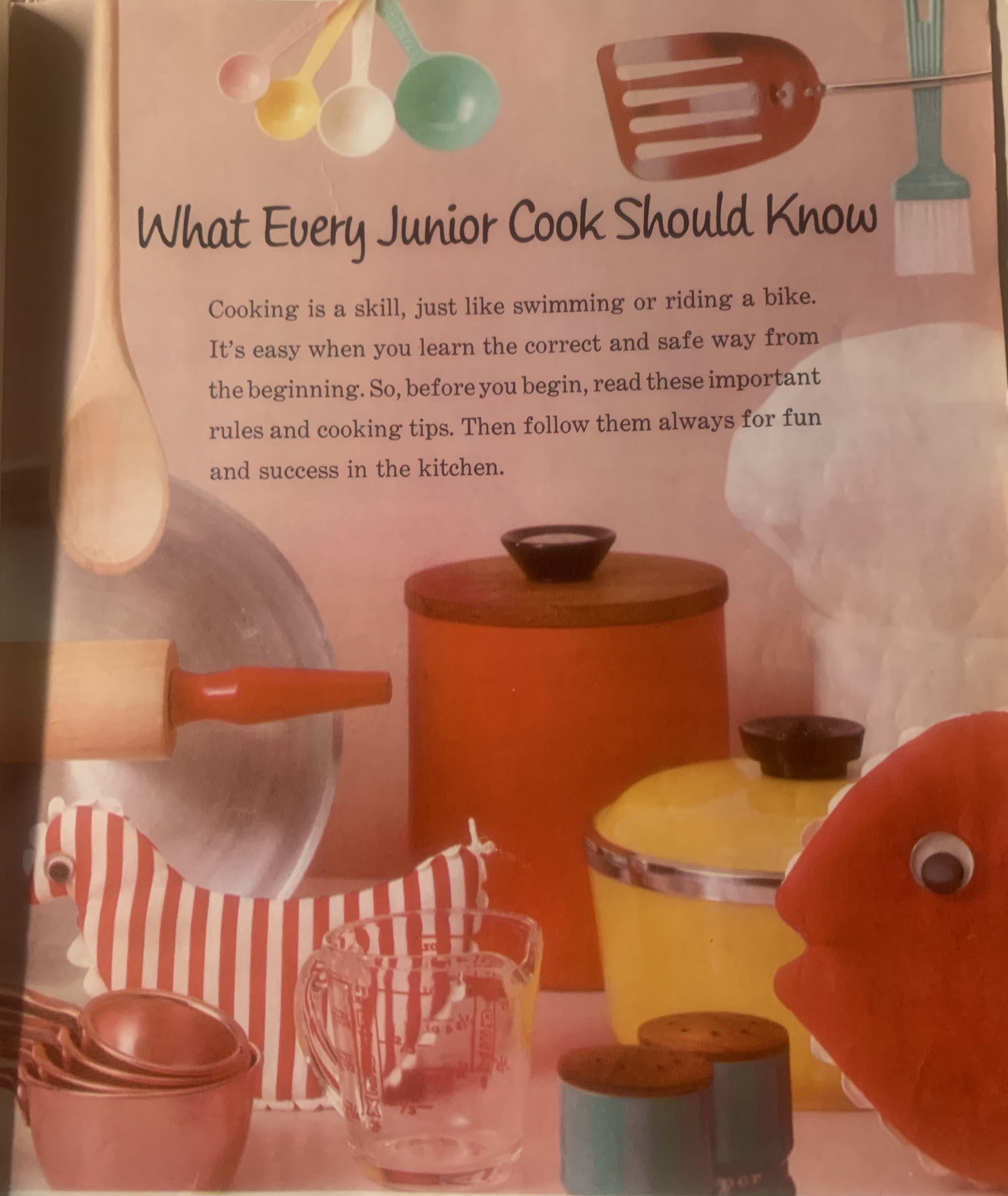
I may have to dig into my copy of
Betty Crocker's New
Boys and Girls Cookbook

I’ve always been a passable cook, but it’s never been something I cared to take too much time doing. I’m a food enthusiast, but I’m happy to let someone else do the cooking. Now that I’m single and my son is away at college, I only cook for myself—which is to say, I don’t cook. I throw things together. I am the queen of the one-bowl meal. I used to bake often and well, but again, as a household of one, baking is a roundly dangerous prospect. So, when I was recently invited to become a member of the wonderful blog, Mystery Lovers’ Kitchen, my first thought was uh-oh. The twelve members are fantastic culinary cozy authors who share recipes they cook themselves, which include photos and step-by-step instructions. Obviously, you gotta cook. I was honored to be considered to join their group and I wasn’t about to pass that up. I mean, have you seen the Mystery Lovers’ Kitchen authors? Leslie Budewitz, Maddie Day, Meg Cochran, Leslie Karst, Libby Klein, Lucy Burdette, Maya Corrigan, V.M. Burns, Vicki Delany, Cleo Coyle, and our own Writers Who Kill member, Molly MacRae.  

After my initial panic, I did what I always do when life kicks me out of my comfort zone. First, I find something that makes me feel even a little bit qualified to do this uncomfortable thing. The only way to break down fear is to hit it with logic. Ok, so what are my qualifications for this? I, too, am a culinary cozy author. I’ve learned a great deal about cheese while doing research for my Cheese Shop mysteries, and cheesy recipes are included in my books. I love watching cooking shows and cooking and baking competition shows. In fact, Loretta, the flamboyant betta fish in my series, is a big fan of Food Network’s Chopped

After making myself feel slightly more comfortable with my qualifications, the next step is to ask what I can bring to this experience that will highlight my strengths. It’s a reminder that I don’t have to be just like everyone else, which takes most of the pressure off. What can I bring to the blog? Surely, some Mystery Lovers’ Kitchen readers are single, like me, so perhaps simpler recipes-for-one are something they’d like to see more of. Another strength? Cheese, which—let’s face it—is practically a superpower. 

My superpower

The last step is to think about the purpose of the experience. Why do people read Mystery Lovers’ Kitchen? Because of their shared love and appreciation of food. Do I share that purpose too? Absolutely. I admitted in my extended author bio that I've been on my own Eat, Pray, Love journey, however I seem to have stalled at the Eat phase. 

After doing these three exercises, I usually find I’m not as far out of my comfort zone as I thought. And invariably, once I actually do this new thing, it becomes not only more comfortable, but enjoyable. Whether it involves becoming a better public speaker, gaining practical experience, or allowing myself to be more present in a daily activity like cooking, it also turns into a growth opportunity. I will probably always feel discomfort at facing new experiences, but I can comfortably say the rewards are worth it. 

Readers: Have you had experiences venturing out of your comfort zone? How do you handle it?

The delicious croque monsieur 
from Cheddar Off Dead

My first post for Mystery Lovers’ Kitchen is Monday, March 11th, where I’ll be making a recipe from my first Cheese Shop Mystery, Cheddar Off Dead—a croque monsieur sandwich that’s easier to make than to pronounce!


KORINA MOSS is the author of the Cheese Shop Mystery series (St. Martin’s Press) set in the Sonoma Valley, including the Agatha Award winner for Best First Novel, CHEDDAR OFF DEAD, and the most recently Agatha-nominated Best Contemporary Novel, CASE OF THE BLEUS. Her books have been featured in PARADE Magazine, Woman’s World, AARP, and Fresh Fiction. To learn more, visit her website korinamossauthor.com


Wednesday, September 27, 2023

An Interview With Korina Moss

by Grace Topping

In Case of the Bleus, the latest book in her Cheese Shop Mystery Series, Korina Moss delivers another exciting book filled with more adventures for Willa Bauer and descriptions of various cheeses that will prompt you to make a trip to your local cheese shop. As an added bonus, she includes recipes using those cheeses. It was a pleasure talking to Korina about her series and all things cheese.


Case of the Bleus


Cheesemongers from across the Northwest have come to the Sonoma Valley for the Northwest Cheese Invitational. As owner of the local cheese shop, Curds & Whey, Willa Bauer loves it. The event showcases custom cheese creations, and it’s the perfect time to gather with old colleagues to honor her former boss, the late and grate cheese legend, Max Dumas. He was famous for journeying into the wild bleu yonder to where he aged his award-winning custom Church Bleu. Only Max knew the recipe and location to his beloved cheese, and many are eager to have these revealed at his will reading.

But instead of naming someone to inherit his cheese and its secrets, Max stuns everyone with one cryptic clue. When a fellow cheesemonger dies under mysterious circumstances––the woman they all thought would get the secrets to Max's prized possession––everyone falls under suspicion. Willa adores Church Bleu as much as the next cheese connoisseur, but it’s not to die for. Is a killer trying to get away with murder...and the cheese?


www.korinamossauthor.com


A big welcome to Korina Moss, who is a member of our Writers Who Kill family.


In Case of the Bleus, cheesemonger Max Dumas dies without revealing the secret formulation of his award-winning Church Bleu cheese and where it’s aged. Do cheesemakers go to great lengths to keep their recipes a secret?


I don’t think they go to the lengths that Max did, but I do think they all have their ways of making their own custom cheeses special. There are so many factors in how a cheese gets its flavor and texture (from the type of grass the cows/goats/sheep graze on to the length, location, and temperature of where the cheese is aged, and everything in between), that I think it would be hard to replicate it exactly, anyway. 

Your book becomes a bit of a treasure hunt when it’s discovered that Max only left clues about his Church Bleu cheese. What is the biggest challenge you face developing the plot for your books? 


Making sure all the pieces fit together at the end so that the mystery is indeed a mystery for the reader for as long as possible. Writing a mystery is such a dance – each piece of information, whether it be a red herring or a clue you want the reader to overlook—has to be done at the right time in the right way. Otherwise, it’s either confusing or too obvious. But that mystery plot has to be woven around characters that readers are invested in, so I also have to make sure I grow my characters and their relationships while still moving the plot forward. It’s a difficult dance. 


With all of the cheeses you’ve tasted while doing research, do you have a favorite, or have you become rather tired of cheese? What about one that you absolutely didn’t like?


Tired of cheese? Never! There are so many different cheeses, I can’t imagine getting tired of it. It’s a new experience every time you try a different cheese, and then another new experience if you pair that cheese with an accompaniment. I have several favorites, but the list keeps growing every time I try new cheese. The three that come to mind are Brabander Gouda, MontbrĂş’s Curat de BĂşfala, and the inspiration for Case of the Bleus, Rogue River Blue. One that I didn’t care for was Alp Blossom, which is the cheese that opens book 3, Curds of Prey. It’s a showy, beautiful cheese covered in herbs and flowers (which is why my protagonist Willa chose it for a wedding shower cheese bar), but all those herbs give it a very grassy, earthy flavor that I wasn’t so fond of. I appreciated the complexity of it with each bite, but with all the cheeses out there, it’s not one I feel the need to revisit. 


With your first book, Cheddar Off Dead, winning an Agatha Award and receiving other recognition, do you find it a challenge to start another book, wondering if it will measure up to it?


Luckily, I’d already written several of the Cheese Shop Mysteries by the time I received the Agatha Award last April for Cheddar Off Dead, so I wasn’t intimidated by the wonderful award. Having said that, I do feel a lot of pressure to try to make each book better than the last. Many readers said Curds of Prey was their favorite thus far, which thrilled me, of course. But it also adds extra pressure for Case of the Bleus. My personal favorite is book 2, Gone For Gouda, so you never quite know how your work will be received. 

Your books are available in paperback, e-book, and in audio. How was it hearing your work performed by your narrator? Did you have any input to the audiobook production?


I love listening to Erin Moon perform my books. It’s the next best thing to having them on the screen (which I’m hoping will happen someday). I appreciate her interpretation of the characters and how she really understands them. If my dialogue is meant to be sarcastic, she always knows to play it that way. Her performance heightens the humorous scenes and the tension of the action. She hasn’t made a false move. I think even if readers have already read the paperback or e-book copies, they should also listen to the audio. It’s a new way to experience the stories. 


Meeting deadlines can be a challenge for many writers. I understand that you’ve gone on writing retreats to enable you to focus solely on writing. Care to tell us about some of them? Any upcoming retreats planned?


When I’m under a lot of pressure from a deadline, it can be debilitating to my writing. Sometimes I need a change of scenery to kickstart my process or as an excuse to ignore my daily tasks and concentrate solely on writing. I’ve taken myself to a tiny house in the Catskills, an Airbnb with a lake view, and last winter I went on a week-long solo cruise. On the cruise, I wasn’t under the pressure of a deadline, but I was feeling burnt out. Being by myself on a laid-back cruise on the open sea freed up my creativity. I outlined book 5, which I’m currently writing, and also did some freewriting for a book in a different genre that I’ve been toying with for a while. I could’ve used another few weeks on that ship, but the week I did have was wonderfully restorative. I’d love to do an annual writing retreat cruise and invite other writers along.

Now that you have four books in the series, how is it balancing writing more books and having to do book promotion? 


It’s a difficult balance. I find myself wanting to cross off the things on my list that are due first, but then I realize too much time has passed where I haven’t worked on my book – the very reason for all that marketing. Unlike some authors, I enjoy marketing very much. I love interacting with readers, whether it be in a Zoom book club, in a Facebook group, or in person. Most of my time is spent alone, writing. Hearing from readers reminds me why I care so much about what I’m putting onto the page.


I see that you are scheduled to attend the Cozy Mystery Fete in Mechanicsburg, Pennsylvania on October 14. That’s a new gathering for me. Can you tell us about the fete?


I’m very excited about this and am so happy to have been invited. There will be 15 cozy mystery authors attending this all-day fĂŞte. It’s more than just readers buying our books and getting them signed, although there will be that too. We’ll get the chance to interact with our readers, we’ll do Q&As and roundtable chats. There’ll be freebies and swag, like recipe cards from those of us who have culinary cozies. The fee is $5 if you register ahead of time, and $10 at the door. This gets you in all day with refreshments. If you’re a cozy mystery fan, it’s worth making a special trip to attend, even staying overnight. Here’s more information: Mechanicsburg Cozy Mystery Fete


Do you make a lot of author appearances? Or have a favorite mystery conference you attend?


You asked about balance before and because my books have been coming out every six months, I find I haven’t had as much time for in-person author appearances as I would like. I have been on panels and book signings at libraries, and I have another Murder Mystery and Cheese Pairing event with Spread Cheese Co. and Wesleyan RJ Julia Bookstore in Middletown, CT coming up. I do a lot of appearances online—podcasts and YouTube interviews—through Facebook Live or Zoom. If people follow my FB author page, my private Team Cheese FB group page, or subscribe to my monthly newsletter through my website, they’ll be notified when and where I’m appearing. Of course, I love going to Malice Domestic, which is a fan convention that takes place in April in Bethesda, MD. I highly recommend it for fans of mysteries and writers, alike. This November, I’ll be on a panel at Crime Bake, a three-day mystery writers conference that takes place near Boston, MA.   


In addition to your books, you’ve had short stories in the Crime Travel and Death by Cupcake anthologies. Which do you find more challenging to write, novels or short stories?


I find short stories extremely challenging. I’m in awe of short story writers like Barb Goffman and Art Taylor, who make it look easy with how prolific they are. I rarely write short stories, but I feel challenged and proud when I’m able to (sort of) pull one off. My story in Crime Travel, “On the Boardwalk,” was especially challenging because of the theme. 

What’s next for Willa and her crew?


Right now, I’m working on book 5, the title is still to be announced. It takes place at the Dairy Days festival in a nearby town to Yarrow Glen. When a murder occurs, Detective Heath isn’t on the case—it’s not in his jurisdiction. But when danger lurks, involving Willa and her crew, for the first time Detective Heath puts down his badge and teams up with Willa to solve the case together. 


What is the most valuable thing you’ve learned since you started writing?


It’s a bigger responsibility to be an author than I realized. Just recently, I received a message from a reader who binged my series while she was in the pediatric ICU as her daughter was recovering from surgery. She said my books gave her a sense of comfort during a time when life was kind of scary. I’ve received a handful of messages like this before—readers who were recovering from knee surgery or heart surgery or reading to their moms in the hospital. You can’t underestimate how your books may affect someone. I take that responsibility very seriously. 


Thank you, Korina


To learn more about Korina and her books, visit her at www.korinamossauthor.com


Bio


Korina Moss is the author of the Cheese Shop cozy mystery series set in Sonoma Valley, including the Agatha Award winner of the Best First Novel, Cheddar Off Dead. Her books have been featured in Parade MagazineWoman’s World MagazineAARP Magazine, and Fresh Fiction. She loves creating quirky characters who live in idyllic small towns. She grew up on a healthy dose of Nancy Drew and Agatha Christie novels, which developed her passion for solving mysteries and eventually writing her own. She lives in a small New England town with its own share of quirky characters. Korina is a member of Sisters in Crime and Mystery Writers of America. She blogs on Writers Who Kill.


Grace Topping is the author of the Laura Bishop Mystery Series.