Showing posts with label The Writer's Life. Show all posts

Saturday, January 15, 2022

Writing and Surprise by Sharon Dean

I love the surprise that happens when I write. Surprise can help writers with a murderer. Who kills? Why do they kill? Where do they kill? How do they kill? Even if the plot doesn’t involve a murder, surprise can help.


When I began writing my most recent novel, I needed to have something stolen. I heard a segment on NPR about “The Wicked Bible.” Published in 1631, the Bible contained a typo, something anyone who writes fears appearing in their published work. The seventh commandment reads “Thou shalt commit adultery.” I had the perfect object. I researched how much a “Wicked Bible” was worth––less than I thought. Others must have heard the NPR piece or read a piece in The New Yorker or The Guardian about the typo because the cost had skyrocketed by the time I was reading page proofs. Several months ago, the Bible also appeared as a Jeopardy question. Surprise gave me a perfect object and a title that might be enticing.
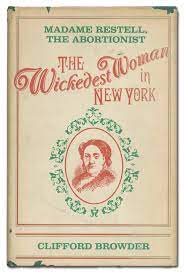


Writing The Wicked Bible, I was able to reprise another surprise I had when I wrote Death of the Keynote Speaker. A woman named Madame Restell lived in nineteenth-century New York and was dubbed “The Wickedest Woman in New York” because she ran a boarding house that disguised her work as an abortionist. The Bible with a typo and an abortionist helped me develop a plot.


Surprise can also help with setting. In my forthcoming novel Calderwood Cove  (June 2022), I researched some details about its setting in Maine. I knew the area well, but I didn’t know that coastal Maine is filled with oyster farms or that oysters might carry something called Vibrio poison. They figure into both the plot and the setting.


Surprise sometimes helps me develop characters’ personalities. Connie Lewis, the protagonist I’m working on now is driving from West Coast to East Coast. She reflects on things I discovered about some of the places she stops. In Kalispell, Montana, she discovers the Conrad Mansion. Charles Conrad had the mansion built in 1892. He’d grown up on a southern plantation where his family owned slaves, fought on the Confederate side in the Civil War, and helped to bring what he considered culture to Montana. My protagonist reflects on whose culture and on whose backs the mansion was built. Surprises I’ve been discovering are helping me to develop Connie as an eighty-year-old woman attuned to social and racial hierarchies.

 

From bluegrass festivals in Oregon to huckleberry ice cream in Montana to oysters in Maine, surprise helps me to become a better writer. It keeps my interest. I hope it does the same for my readers. How many of us, after all, know that a writer can kill a character by having her eat something called Mad Honey. You can look that one up and likely be as surprised as I was.


Biography


Sharon L. Dean grew up in Massachusetts where she was immersed in the literature of New England. She earned undergraduate and graduate degrees at the University of New Hampshire, a state she lived and taught in before moving to Oregon. Although she has given up writing scholarly books that require footnotes, she incorporates much of her academic research as background in her mysteries. She is the author of three Susan Warner mysteries and of a literary novel titled Leaving Freedom. Her new series features librarian and reluctant sleuth Deborah Strong. In The Barn, Deborah solves a thirty-year-old cold case. The Wicked Bible brings Deborah to a college campus and a search for who stole a Bible and a letter from the library’s archives. The third in the series, Calderwood Cove, forthcoming in 2022, will bring her to the coast of Maine and a murder. Dean continues to write about New England while she is discovering the beauty of the West.
 

Saturday, March 26, 2016

Nice Girls Do by Kait Carson


I’ve been on a high-speed merry-go-round lately. Those of you who know me, or follow me, are probably aware that my newest book, Death by Sunken Treasure, released on Tuesday. For most of this month, I’ve been everywhere. Seriously, I had to take vacation from the day job to deal with the demands. Twenty-four blogs, interviews, personal appearances, radio shows, and stpodcasts since March 1, nearly one a day. (Isn’t that a vitamin? I need one.) Yes, I have been busy. And it’s fun. And it’s exhausting. And it’s wonderful to get comments from readers and answer their questions. Do you sense a but coming here? You should.

My parents were older when I came along. (Surprise! It’s a girl!). Their beliefs and mores came from an entirely different time and place. Women didn’t work. If a woman did work, she needed to be a teacher or a nurse. Have a profession that she could fall back on after she had her children. (That one used to give me the creeps. I had an image of shelf after shelf filled with infants each with a nametag just waiting for the perfect moment.) And she had her name in the paper three times in her life. When she was presented to society, when she married, when she died. Nice girls did not promote themselves.

Oh yes they do! Marketing is a part of writing. For me, and most of us from what I’ve been told, it’s the hardest part. When I published my first book, I thought that if I wrote it, they would come. Don’t ask how I thought “they” would know, or even who “they” were. No matter, “they” would show up and love my book, and I would be able to live a quiet life in my office churning out book after book to my adoring fans. What was I thinking?

Death by Blue Water came out in November of 2014. It was gangbusters release, I had a great company do a wonderful, fun, Facebook opening, and I probably did five blogs and maybe two interviews. Then, my work done, I dug into writing Death by Sunken Treasure, the second book of the series. Death by Blue Water, the first of the series, quietly faded below the surface leaving hardly a ripple. (The Death by Blue Water e-book is available right now for Kindle, Nook , etc. for a limited time for $0.99. It could use a little love if anyone is interested.)

The release procedure for Death by Sunken Treasure is an entirely different animal. I have a wonderful company, Escape with Dollycas, who has arranged a fabulous blog tour for me. I hired a publicist, PJ Nunn of BreakThrough Promotions, a public relations company, to keep my name out there and to arrange bookings for me. She’s doing a great job.

It’s taken some getting used to this constant barrage of posts and tweets from me about what I’m doing next. I’m comfortable talking about me on Writers Who Kill. We’re family here. The topics that populate these multiple blogs range from my books, critters, writing style, and writing protocols to the history of cozy mysteries and other topics. The blogs are about everything except me. And I’m comfortable writing about all of that. Hopefully people are interested in reading about it. It took a while, but I realized that I wanted to know my favorite authors better. It’s not an imposition; it’s a reaching out of friendship, welcoming readers into the writer’s life. It’s okay to promote yourself and your books. Nice girls do.

Writers, how do you deal with the marketing aspect of this profession? Do you enjoy it? Readers, what do you find interesting about blog posts and author appearances? Or do you wish we would all just be quiet and write the next book?

Saturday, November 7, 2015

Six Reasons Writers Should Watch TV by Sam Bohrman


In On Writing Stephen King proclaimed that writers should not watch TV. His reasoning: it’s time that could be spent writing. Or reading. He’s pro-reading, obviously. His advice makes sense, but I’m going to take a more moderate position. Here are my reasons TV is okay for writers:  

1. First of all, I’d like to point out that  Stephen King didn’t have Netflix when he made up the no TV rule. He didn’t even have the option of watching a show without Corn Flake ads and laugh tracks. Could he have said no to Game of Thrones? Netflix has made TV watching so much more efficient and pleasant.

2. If I skipped late night TV, I’d never see my husband. It’s basically the only experience we share besides kids and being derelict in basic home and yard maintenance. At least if we watch TV we can say that we propped ourselves on the couch and stared in the same direction for twenty minutes to an hour. If I completely give up TV for writing, we might not have anything to say to each other as we grow old. He’ll prattle on about how “The Walking Dead isn’t really about zombies. It’s about people.” And I’ll be like, “What people, who cares?”    

3. It’s not just my husband. Americans watch something like ten hours of TV a day. Obviously, that’s not the exact number, but it is outlandishly high. If I went completely Walden Pond on the world, I would miss a lot of common experiences with the people I’m hoping to entertain. You never know, maybe watching Game of Thrones will help me harness the zeitgeist and reflect it back to readers in a way that will make people stop what they’re doing for a moment and say, “Whoa.” Probably not, but either way, GoT is a pretty good show.

4. TV is a great proving ground for creative ideas. Writers can sit back and watch what works and what doesn’t and hopefully use that knowledge to improve their writing. Last year, Season 1 of True Detective was a big hit in the writing community. The writing and  acting were brilliant. I watched Season 2 recently. It wasn’t as good, but its failures were instructive. It had so many subplots that I begin to lose interest. Complicated plotting is great up to a point, but when things get too muddled it’s time to snip a few threads. Season 2 also hammered home another point. It nonchalantly threw away some of the show’s really effective branding. Besides a new cast, it had new theme music, a new setting, new everything. As a viewer, I missed the old show. In an effective mystery series, you can’t play fast and loose with successful branding. it’s important to immerse the reader quickly into the world they’ve come to love rather than expecting them to roll with you. Most of the time, they won’t.

5. TV can be inspiring. If you watch in an engaged way, or at least process what you saw the next morning, you can think, “That’s cool, but what if it happened this way!?” I have one idea I’ve been turning over in my head based on an old movie.

6. Sometimes by the end of the day, all that’s left of me is a glazed stare and a heartbeat. Better to watch TV than spend an hour writing a few horrible sentences that I end up deleting the next day.

Bonus Reason! You can multitask in front of TV. I’m spellchecking this post in front of an episode of iZombie right now. My husband is sitting next to me staring at his iPad. I guess we’re not bonding (reason number 2 TV is good), but we are doing a lot of things at once. Actually, I’m converting this bonus reason to a warning. Don’t multitask. Watching TV in a useful way is all about getting in and out. A writer should watch TV as if performing a special ops military operation---Get in and get out. Stay focused. Don’t get killed.

Shortly after graduating from law school, Samantha Bohrman had three children and began writing books. She never looked back, but she suspects her husband has. You can often find her wandering the aisles of Target buying ingredients for tacos (because her kids won’t eat anything else) and staging a murder scene in the produce section (in her head). Her first mystery, Ruby’s Misadventures with Reality, is out now. You can find her at www.sambohrman.com or follow her @sambohrman.

Saturday, October 24, 2015

Travels with Gary by Kait Carson

My husband was a military brat. Army on his father’s side, Air Force on his mother’s. His Mom was a WAC in WWII, and she stayed in. Of course, in WWII, the Air Force was actually the Army Air Corps, then the US Army Air Force and finally after WWII, the Air Force, so the two agencies kindly posted the family together. Yes, for those who wonder, his mother outranked his father! The point of all of this? The boy moved. Every two years, he, his brothers, and sister were on the road. Pennsylvania, Arizona, Texas, California, you name it, they moved there.

Then the boy grew up and was drafted into the Marines. He got to see Viet Nam. Not a duty post he talks much about. He stayed in, was able to finish his degree at Temple University and was stationed in Key West. While he was there, he was offered a choice of assignments to work on some special projects. He decided to join the Air Force. The boy travelled, Korea, Massachusetts, Turkey, Alabama, New Hampshire, Maine. You get the picture. Then he retired.

We met and married. And we started moving, Florida, Maine, the Keys, central Florida….Really, wouldn’t you think he’d have had enough? Nope. Now we are returning to Maine. No real timeline, but the Florida house is going on the market and when it sells, we pack up home, hearth, cats, and maybe some birds and off we go. (Don’t be concerned, the birds are tropical, a Macaw and a Cockatoo, they wouldn’t survive Maine so we will re-home them. The Conure may be able to come. It will be a decision made by our Florida vet with our Maine vet.)

During all of these marital moves, I’ve managed to get the packing thing down pat. I’ve pared down, decided what’s really important (it’s pricy to move from South Florida to Maine) and learned to say goodbye to some things that I thought would matter. Over the weekend, I was going through my book collection, again. When we lived in South Florida I had a room of bookshelves, and the books were double stacked. This is in the days before Kindle. I pared that down before our move to Maine. Most of the paperbacks went, many of the duplicate books (paper and hardbound) and some books I knew I would never read again. I did the same thing when we moved from Maine to the Keys. Only this time, I was ruthless. Kindle had arrived, so all those books I was carting around in hard back, I bought in the Kindle format. Not really the huge expense it sounds like, a lot were public domain. Those I kept were gifts, autographed books, and craft books.

Craft books? Really? Yes, an entire bookcase of writing craft books. Almost all of the Writer’s Guide series. A ton of how to write a novel in a weekend books, even more about how to get happily published. You get the picture. So, in preparation of this move, I began looking these books over. That’s when it hit me. I’ve been writing a long, long, long time. I bought most of these books before publication was a possibility. Before I found writer’s groups, before I found writer pals, even before I figured out how to do first person research. Going over these books is like a trip down memory lane.

I remember what stories I was writing with each book. Why I opted to buy this book and not another. It was a fun trip. Something else struck me. These books no longer apply, except in what would now be called historical fiction. Oh sure, the poison books and the gun books haven’t changed too much, but the advent of on-line services and internet has changed police and forensic investigations. Even the how to get happily published books are out of date since they don’t use Internet resources for agent searches and social media was meaningless. Indie publication, at the time referred to as vanity press, was strongly discouraged unless you were writing a book for a family reunion.

When I closed the last book on the shelf, I tucked it back into place and knew I would keep them all. These books are my history. They remind me of my process, my hopes, and dreams. Ancestors in paper. They’re all going back to Maine with me.

What about you. Have you moved a lot? How did you cull the take alongs?

Saturday, October 10, 2015

Dead Darlings and Flaming Doritos by Cindy Brown


All writers kill. Not just us mystery authors, but every writer has to mercilessly slash and cut and bury beautiful, worthy-of-life…words. Gorgeous, take-your-breath-away scenes. Descriptions so detailed you can smell them. Hysterically funny bits that might just bring world peace if the bad guys read them. We all have to kill our darlings, but every so often, I resurrect one and let it run around in the open air for a while. 
 

The dead darling below was cut from The Sound of Murder, the second in the Ivy Meadows series of madcap mysteries set in the off, off OFF Broadway world of theater (and “a definite delight,” according to Suspense Magazine). I really liked this scene, and even did the research for it (yes, Doritos do burn, though they take a while to light), but it just didn’t fit into the final draft. I hope you’ll enjoy it all on its own. A few notes: It’s written from Ivy’s point of view, Zeb is a teenage dishwasher at the dinner theater where she’s working, Candy is an actress, and Arnie is the theater’s producer.
#

When I got to the theater that night, I was anxious and distracted. Maybe that’s why I set the drapes on fire.

“What’s wrong?” Zeb sat down next to me at the long table in the greenroom. I’d just finished dinner.

“Nothing.”

“Not true.” Zeb leaned over in front of me so I had to look at him. For the first time, I noticed that his pimply young face had old eyes.

“You haven’t asked about dessert,” he said.

Busted. “I’m just stressed.”

“I know what to do.” Zeb jumped up out of his chair.

“She is not having sex with you,” Candy said. Zeb just smiled and walked back toward the kitchen. He came back a few minutes later, carrying a bowl.

“Stress relief,” he said to me, setting the bowl down in front of me. It was full of Doritos. I politely ate one, even though I’d been hoping for chocolate ice cream.

“They’re not for eating.” Zeb laughed. “They’re for a science experiment. Thought maybe you’d want to help me. You know, clear your mind before the show.”

“Sounds good.” I did need to get my mind off producers and suicides.
“I’m researching flammable food.” Zeb took a lighter out of his dishwasher apron pocket. “So far I’ve set marshmallows on fire and found out that orange peel is an accelerant. Now I want to test Doritos. I heard they’re good fire starters.” He flicked his lighter into life and held the flame to the chips. Nothing.

“Maybe if you lit some paper underneath them?” I said, crumpling up my napkin. Zeb lit it.

“Zeb!” The cook appeared in the doorway.

Zeb scrambled toward her. “Let me know if it works,” he said over his shoulder.

My napkin flared and went out as the stage manager’s voice came over the P. A. system: “Half hour ‘til places.” The entire table got up as if on cue. The Doritos were blackened but not doing much, so I stood too. Just then my cell buzzed.

(Ivy picks up the call and goes to her dressing room to get ready for the show. Then…)

“FIRE!” I heard someone yell. “Gotta go,” I said as calmly as I could. Then I hung up and raced toward the noise. By the time I reached the greenroom, Arnie was spraying fire extinguisher foam onto the blue drapes behind my seat and the bowl of flaming Doritos.

“How?” I began.

“You tell me.” The fire now out, Arnie put down the fire extinguisher and collapsed into a chair, a sheen of sweat on his face.

Zeb ran into the room. “It worked!” He caught Arnie’s glare. “Ivy was supposed to watch it.”

“Why, Miss Ivy, you are turning into a regular little firebug.” Candy stood behind me, staring at the smoldering mess.

“That’s ‘cause she’s hot,” said Zeb, trying to get back into my good graces after throwing me under the bus.

I stared at the drapes and table, which were now covered in an acrid-smelling fine white powder. The Doritos were all still in the bowl—none on the floor or near the drapes.
“Everyone out of the room!” said the stage manager, who had come in and taken charge. “This stuff can irritate your throats, and you all have to sing tonight.”

The crowd skedaddled, concern about their performances overriding their curiosity. Not me, though. I lingered, taking a mental snapshot of the scene so I could ask a certain budding arson investigator about it. I didn’t get it. I may have been nervous and I may have been distracted, but even if the chips had caught fire, how did the flames travel to the drapes?

#

Thanks for breathing some life into my dead darling!

Cindy Brown has been a theater geek (musician, actor, director, producer, and playwright) since her first professional gig at age 14. Now a full-time writer, she’s the author of the Ivy Meadows series, madcap mysteries set in the off, off, OFF Broadway world of theater. Macdeath, Ivy’s first adventure is “a gut-splitting mystery…a hilarious riff on an avant-garde production of the Scottish play” Mystery Scene Magazine). Cindy and her husband live in Portland, Oregon, though she made her home in Phoenix, Arizona, for more than 25 years and knows all the good places to hide dead bodies in both cities. She’d love to connect with readers at cindybrownwriter.com (where they can sign up for her Slightly Silly Newsletter) or on Facebook or Twitter.

Saturday, September 26, 2015

I HAVE MET THE FASHION POLICE—AND THEY DID NOT APPROVE by Kait Carson


I’m still trying to figure out just how I feel about this particular event in my life. Should I talk about it or not? Hum. Oh, what the heck! It’s funny.

A couple of weeks ago, I was in Total Wine. A woman asked me if I worked there (I get that a lot, my first job was in retail. It must have marked me in some way.) and I said, “No.” Now, in the normal world, that would have been the end of it and she would have gone on to find someone who could help her. Instead, she came right around, got in my face and said, “Well, it’s that belt purse you have on. You shouldn’t wear that. It confuses people.” I thought she was finished at that point and started to walk back down the bourbon aisle.

No, she came after me, and jumped in front of me again. This time she said, “I haven’t seen one of those in years, no one wears those anymore. You need to get rid of it.” Then she stalked off, apparently happy that she had educated me. To be honest, I was glad to see her go. Not because I was embarrassed, but because her attitude was a bit concerning. She was within one screech of going postal!

The offending belt purse is in fact a double glasses case that is made to loop on a belt. It’s beat up and well-loved and probably should be replaced. If I could find another. It also prevents me from getting to know the folks at DMV. Before I found these handy dandy little belt purses, I was regularly losing my handbag, and everything in it. This solves the problem nicely. My hands are free, all my essentials, including my cell phone are accounted for. I never thought of my solution as dated. I just thought of it as something that works!

Did I mention that the fashion police person who accosted me (no other word for it) was wearing an off the shoulder t-shirt, tights, and leg warmers? Yes, I not only met the fashion police and was found wanting, but I offended the fashion police from 1983! What a feeling!

How about you, has your style even been found wanting? How did you handle it?

(P.S. and as an aside—never offend a writer, you may end up in her blog!)

Saturday, August 29, 2015

Keeping Your Passion High Through Your Project by Ronnie Allen


I write my novels out in public, by the pool at our country club, a good portion of the time. That's the way it’s been for the past four years. I can't count the number of times that people had come over to me to tell me they have an idea but don't know what to do with it. Or, they started a novel ten years ago and don't have the energy to complete it. Or, they have six unedited novels under their bed. Or they got three rejections and gave up. And the biggie is that they don't have time. Basically, what they're telling me is that they lost the passion for their work or their story. They hit a wall, also known as writer's block. That definitely can knock the spirit out of you.

I must tell you that in all my years of writing, from the late '70's to mid '90's in film and TV, and through 2010 when I wrote non-fiction articles in alternative healing and holistic health, to the present, now writing novels, I have never once hit writer's block. Why? I can honestly say it's because I had never lost the passion for the project on which I was working.

I've heard people say, “take a break,” “start something new.” To me that's not the answer. The longer the break, the more time away from the project, the less enthusiasm builds and the passion you once had, decreases. I'd advise writing in a different environment. If your creativity gets stumped cooped up in your office, breathing stale or recirculated air, go out into nature. Sit on your front porch. In the city, we'd call it a stoop. Remember those days? Go to the beach. I've written screenplays and TV scripts as well as non-fiction works sitting on the beach at Silver Gull Beach Club in Queens, New York. No beach? Write by a pool with the sun shining. Get out into the fresh air. Yes, even with the snow. Being in the open air is very cleansing on every level: spiritual, mental, physical, and emotional.

Why do I mention cleansing? Writer's block, losing passion for a project is an indication of blocked energy, a clogged system. When energy isn't flowing properly through our bodies we feel stuck. Stuck in moving forward. Stuck in tackling the day's chores. And stuck in writing. Our thoughts, feelings, and emotions that we want to get onto the paper are just not there. They can't come through to our consciousness. Picture a jeep getting stuck in mud and it can’t move unless pulled or pushed. Their wheels spin. Same thing with us, but it’s our brain that is stuck.

In my alternative healing practice, I teach people how to make the mind-body connection. So I'm going to ask you some questions so you can make your own connection. Focus on your breathing, inhaling and exhaling deeply as you sit comfortably in a chair and relax. What part of your body is feeling tight, in pain? Can you connect to what is causing you pain in your life? Practicing breathing techniques could be very cleansing. That's why we call it “cleansing breaths.”

Our solar plexus, which is underneath our bra line and above the belly, is our emotions center. Very often our writing is very emotional. Not feeling the emotions? Try eating a healthier diet. Losing fat in that area allows energy to flow more freely.

You can also detox from debris that is surrounding you in your aura. When we have debris, new thoughts, creative thoughts can't penetrate our energy fields. You know the expression, “I walked into a room and you could cut the air with a knife.” Well that air can glue to you. I use aromatherapy to cleanse my aura. Gardenia is perfect. You can get it in a shower gel. In the shower, meditate to remove the debris from your aura. Gardenia removes the toxic energy around you so that you don't get sick from someone else's energy. Carnation oil has the same effect.

I also use crystals and gemstones to keep the thoughts for my writing, coming. No, it’s not cheating. Sodalite is also known as the students’ stone and is wonderful for writers. Keep it near you on your desk. If you want to know about healing stones, and how you can use them in your writer’s life, feel free to ask me questions in the comments.

Those are some of my recommendations to keep the passion high for your project. The key is to make the emotional connection. I hope you find them helpful.

How do you keep your passion high through your project and avoid writer’s
block?

BIO

Ronnie Allen is a New York City native, born and bred in Brooklyn, New York, where she was a teacher in the New York City Department of Education for 33 years including the obtaining of a New York State license as School Psychologist. Her various roles included classroom teacher, staff developer, crisis intervention specialist, and mentor for teachers who were struggling. Always an advocate for the child, Allen carries this through as a theme in her novel Gemini, with the reader seeing the horrors of child abuse through the eyes of three characters.

In the early 1990s she began a journey into holistic healing and alternative therapies and completed her PhD in Parapsychic Sciences in 2001.

Along the way, Allen has picked up many certifications. She is a Board Certified Holistic Health Practitioner as well as a crystal therapist, Reiki practitioner, metaphysician, dream analyst, and Tarot Master Instructor. She has taught workshops in New York City and in Central Florida where she now lives.

Combining a love of the crime genre and her psychology background, with her alternative therapies experiences, writing psychological thrillers is the perfect venue for her.

Saturday, August 22, 2015

Run For Your Life by Kait Carson

Anyone who has read one of my books knows my characters are into exercise. Both Catherine and Hayden are runners. Hayden scuba dives. Exercise, and those specific sports, is perhaps the one and only trait we share. Oh, I admit, I tried to make them more like me. Well, Catherine at least, she was the first series character I wrote. Hayden, let’s just say I knew better. Characters are organic. They grow and change at their own rate, and the person on the other end of the keyboard has very little to do with it. A lot like children, I’m told.

Both Hayden and Catherine use running as a means of clearing their heads, thinking things through, solving mysteries and crimes. They are active runners. They think and puzzle as they go. Me, not so much. Someone once asked me what I think about when I run. I had to think about the answer. In reality, until recently, I ran and emptied my mind. Kind of a physical meditation. Yet at the end of the run, I would find the answer to some thorny problem. The phenomena fascinated me. To become full, you must first be empty. Sounds like the Dalai Lama, who is a great man, but probably not a runner. I’ve used the technique to solve problems of plot, character, and closer to home, personal stuff. It never failed.

Every runner knows the hardest part of running is lacing up your sneakers. Once that is done, you are going. Until that is done, there are days when you dread the exercise. Since spring, I’ve noticed that my times have lagged. My usual three to five mile run was taking longer, and I was dreading it more. When my husband asked me what I wanted for my birthday, I quickly responded iPod® Shuffle. This little one-inch square will hold up to a gigabyte of tunes and it fits in the key pocket of my running shorts. Best of all, it is available in Hayden blue.

Husband, being the well-trained chap he is, immediately ordered one for me. On delivery day, I downloaded a running album (a combination of songs like Footloose done to a disco beat), the theme from Top Gun, and Wipeout (for those of you who remember Wipeout, tell me your toes aren’t tapping right now). My first run, my times were cut in half. Same for the second. It took me until the third run to figure this out. The songs were filling my head. I was becoming the songs, losing myself in the lyrics, moving in time to the beat, and free-associating from lyrics to stories. Completely different experience. What was filling my head was coming out in storylines. A snatch of a lyric would become a scene. But I was no longer getting answers to problems. My running time became fully creative.

I’ve been toying with the mix of music and silence for the past few weeks, and I’ve discovered how to best balance the exercise level I crave with the creative result I need. My big question now is do I introduce Catherine or Hayden to musical runs. What would the beat bring out in them? Time will tell. In the meantime, I’ll keep running for my life.

What about you? Do you crave silence in your workouts, or do you want the background filled. Does it make a difference to how you feel?

Saturday, March 28, 2015

The Year of the Sheep By Kait Carson


The Sheep ranks as one of the animals that people like most. It is gentle and calm. The cute creature often reminds people of beautiful things.

Starlight
This has been an awful year for pets. I lost my eldest cat, Starlight, on New Year’s Day. I posted my tragedy on Facebook. The feedback was amazing, including posts from others who had lost their pets recently or on the same day. A week later, a very good friend discovered his eldest dog had a serious kidney condition. The dog weakened and died in less than a week. Now my cat, Fred, has been diagnosed in kidney failure. He has 20% kidney function and his bone marrow is not producing new red cells. As a result, we are infusing him daily, and I am giving him three injections a week of EPO (yep the same stuff that cost Lance Armstrong his titles). So far, Fred is responding well, is much more active, and is getting his pink nose back. What is not happening is an increase in his kidney function, so it’s still a matter of time.

Why this tale of woe. I mean, really, I can whine in private. Well, it’s because there is a flip side to this. What you may not know is that once upon a time, I was president of PAWS Animal Welfare Society an animal rescue organization in Fort Kent, Maine. Our mission extended only to cats; we did not have the facilities for dogs. Our lack led us to work closely with local Humane Societies, one of which was Holton Humane Society. For the past year, I’ve been reading about Emerson, the Cat with Heart. Here is his Facebook page Emerson the Cat. When the stories first started, I had no idea who Emerson was, or why he had heart. I thought he was more myth than real. An invention of cyberland. I was shocked to discover that not only was Emerson real, he was injured, saved, and rehabilitated in my old neck of the woods.

Those are the stories that keep us rescuers going. The success stories. Holton Humane has limited resources, all non-profits do. But they went the extra yard and saved a cat that they knew would never bring in an adoption fee. I doubt they expected his story to go viral, but I’m glad it did. It calls attention to why Humane Societies exist. First and foremost, they are all about the animals. They bring kindness, love, and hope to animals that have experienced harshness at the hands of humans. What is most amazing is that these animals do not hold grudges against the race that caused them so much harm. Instead, they repay the cruelty with unconditional love.
 

All of my cats are/were rescues. Star, dumped in my yard. Hutch, left in a sewer just before a tropical storm was due. (In the service of full disclosure, Hutch’s mother may have moved her kittens into the storm sewer, he was found with his brother and sister, none of whom had their eyes open yet.) Missy, we found her when she was eating the squirrel food we put on top of a snowdrift on our back porch during the year of the 200 inch snowfall. Fred, from PAWS, had been picked up by the animal control officer in Quimby and would have been destroyed if PAWS didn’t take him. Zoe was dropped off at our vet’s by her owner’s mother. They didn’t want her anymore, they wanted the dog they just bought. She had dog bite marks on her neck and her medical record read, “euthanasia tomorrow.” Jenny, Piper, and Cub were abandoned in our yard late at night. Jenny is the mother cat, Piper and Cub her kittens. Smokey, now deceased, was abandoned in Arizona by his owner when she moved. He was under the porch steps in 110 degree heat. Elvis, also deceased, found my husband in New Hampshire. He was starving and found to have an acute, but treatable, thyroid condition common to elder cats. Each has brought a special richness to my life. (photos of all are on my FB page: Kait Carson)

Elvis

What about you? Do you share your life with a critter? How did you acquire him/her and what does the pet mean to you?

Tuesday, March 24, 2015

Reawakening the Senses

Even though it’s officially spring, my area looks dull, drab and dreary. The grass is brown. Leafless brown trees line my neighborhood like wooden pitchforks standing sentinel over brown, wooden fences. Occasionally the brownness is broken up by a splash of color from a freshly washed car.
 
During this endless winter of sensory deprivation, my senses froze. Ice cubes. They are now beginning to melt, but haven’t fully thawed. This has affected my writing. I feel that my descriptions of characters and settings have become as interesting as, well, a pile of grimy snow.

Time to take charge and kick all my senses into high gear!

I began with hearing. I had become so used to everyday winter background noises (snow plows and shovels) that I tuned everything out. To counteract this, I sat in a quiet place, closed my eyes, and just listened. I heard the rumble of a truck, the neighbor’s Sheltie bark while on his morning constitutional, and a cardinal sing. Then I covered my ears and listened to my heart swish as I breathed slowly in and out.

Next, I worked with my sight. I take it for granted and should know better since I lost sight in one eye and went color blind for a year due to an illness. To renew this sense, I spent time watching my husband's colorful fish and corals in their salt water aquariums. Blue, magenta, green, orange--a rainbow of living colors.

Because the heat in the house is constantly running, my nose is stuffy and my sense of smell is off. I sniffed a tangy orange then graduated to stronger scents of cinnamon and clove. I finished with pepper which made me sneeze.
 
This winter I wore gloves inside the house since my hands were cold and sometimes numb. To stimulate touch, I took off my gloves, warmed my hands using a jasmine scented heat pack, and touched. The carpet felt nubby, a silk skirt slick, and a blanket soft.

My taste has decreased, too. Even chocolate doesn’t taste as luscious. (Gasp) With a big box by my side, I continue to eat one at a time being mindful of the taste. (It's for the greater good. Really.)

What about the sixth sense of intuition? Mine was strong, but has weakened over this endless winter. I’m not sure how to reinvigorate it. Perhaps by being mindful and paying attention, that sense will expand as well.

Hopefully, when my senses finally reawaken, my written description of characters’ worlds will be reenergized. I want to transport a reader to a character’s world using descriptions that stimulate all the senses--to immerse themselves in a warm sauna of words that flow from the page.

Don’t all writers want that? To create living, breathing worlds that are as real and sensual as our own (at least in any season but winter)?

Do the seasons, or lack of them depending on where you live, affect your writing?

Sunday, April 13, 2014

The Frustrations of Living in the Almost


My five-year-old is right on the cusp of reading. Painfully close. He can sound out words, and “read” from memorization. But he’s not there yet.
Which is killing him.
Most of the time, when he asks me to read to him and I’m too busy to do it right that second I tell him I’ll read to him in a bit and then suggest that he could look at the book and figure out what it says by sounding out the words or looking at the pictures or both.
And, most of the time, his answer is: “But I can’t read!”
Cue tantrum.
I’m exceptionally proud that we have tantrums over this sort of thing because reading is a pretty darn good thing to get so emotional about, don’t you think?
And, of course, I love that he loves the library (as seen above on a weekly visit) and that he wants us to read to him. And that he wants to read books all by himself—which he will. Very soon. He’s not even in kindergarten yet. He’s got the time, motivation, and plenty of books for practice.
I was thinking about his ongoing frustration the other day while working on a revision. It struck me that authors are nearly always stuck in the same sort of “almost” as my almost-reading son.
We’re almost done with this draft.
We’re almost done with this revision.
We’re almost ready for submission.
We’re almost to an answer.
We’re almost to a deal.
We’re almost to a final contract.
We’re almost to release day.
We’re almost settled on a new idea.
And so on.
For me, the key to surviving the almost-ness of this business has been a two-parter:
1. To always have something planned to do next.
2. To always have something going on outside writing (family, running, cooking, other hobbies).
What’s your key to surving a life in the almost?