Showing posts with label Salad Bowl Saturdays. Show all posts

Saturday, July 29, 2023

What We're Reading Now by WWK Bloggers


The Perfect Couple, Elin Hilderbrand

By Margaret S. Hamilton


When I learned that Nantucket resident Elin Hilderbrand’s 2018 beach read, The Perfect Couple, was to become a Netflix miniseries, I was anxious to read it. To make the book even more appealing, the miniseries was filmed in April, 2023 in Chatham, on Cape Cod, as a stand-in for Nantucket. I know Chatham well from summer vacations and college years spent working in a Main Street restaurant. And Chatham was the site of my own wedding.


The book is Hilderbrand’s first mystery, set during a wedding weekend at a posh beachfront Nantucket estate. The morning of the wedding, the maid of honor is found dead in the harbor, and every wedding guest is a suspect, including the groom’s mother, a famous mystery writer.


The police chief and his detective interview everyone connected with the wedding. Feelings run high as we learn the complicated backstories of the many members of the wedding party. Hilderbrand’s multiple points of view give the narrative a brisk pace.


All is resolved, but alas, not to everyone’s satisfaction.


The Netflix miniseries will be broadcast in late 2023 or 2024, with Nicole Kidman playing the mystery writer. I can’t wait.


Snow Place for Murder, Diane Kelly

By E. B. Davis


Snow Place for Murder by Diane Kelly won’t be released until October 24, 2023. I read the Advanced Reader Copy from Net Galley. This is the third book in the series, and from the backstory, I wish I had read the first two books. Misty Murphy is amicably divorced from her college-age sons’ father. I gather when the boys started college, Misty took to the life-change by also taking her leave. From her divorce settlement, she bought Mountaintop Lodge in the Blue Ridge Mountains where guests keep getting murdered. That in and of itself gives her motive to solve murders.


Mountaintop Lodge is located adjacent to a restaurant. The restaurant owner and Misty become good friends, and the restaurant provides breakfast for Misty’s guests. The lodge is also located a few miles from a ski resort helping to provide skiing guests and incentive for her sons to take their college breaks with her.


The setting and the lodge are cozy. Misty has a good relationship with her sons, who seem well adjusted and responsible. She doesn’t have a lot of personal issues. As a business owner trying for success, her input into murder investigations isn’t contrived and the guests are obviously suspects, whom she has more access to than the police do. It’s a well thought out cozy scenario and invites readers to come and sit for a spell. There are excitements but no danger, which suits me fine. One surprise though, Misty's pet cat, Yeti, gets her own chapters. It's not paranormal, more like the pushy cat will give you her perspective on the case or family members, and you will read her chapters or risk getting clawed.


Since the book isn’t available for a few months, take the opportunity to read the first two books in this series now. Getaway with Murder is the first and the second is A Trip with Trouble.


The Golden Couple, Greer Hendricks and Sarah Pekkanen

By Marilyn Levinson


Lately, I've been reading psychological suspense novels, and The Golden Couple by Greer Hendricks and Sarah Pekkanen is one I especially enjoyed. Marissa and Matthew Bishop are a Washington D. C. couple that seem to have the perfect marriage—a son they dote on, jobs they enjoy, and a comfortable lifestyle. Marissa has made an appointment for them to see Avery Chambers, supposedly to discuss their son. But once they're In Avery's office, Marissa says that she's here to confess she's slept with someone. She won't say with whom, but she swears that it will never happen again.


Marissa is worried that Matthew will explode in anger or leave her, but though he keeps his distance for a while, she manages to woo him back and things seem to return to how they were. Except Marissa receives flowers and unsigned messages, which she finds disturbing and does her best to hide from Matthew. Meanwhile, Avery, whose unorthodox methods are responsible for her losing her marriage therapist license, spies on Marissa and Matthew to find out what's really going on in their marriage. Is Matthew having an affair? Is Marissa's assistant out to do her harm? Even Avery's personal problems seem to dovetail with the Butlers' issues as the tension rises and one of the Butlers is nearly killed.


A delightful page-turner with a twist I didn't see coming.

Saturday, January 7, 2023

The File by Gary Born


I am a lawyer by profession – an international lawyer — spending my days in hearings and meetings with clients, then late nights researching issues of international law and planning strategies with my team. My clients are mostly large multinational corporations and governments around the world. My battlefields are courtrooms, hotel conference centers, and airports. 

All of that seems about as far as one could get from my recent spy thriller, The File. My novel is about a young woman, Sara West, who discovers the wreckage of a World War Nazi bomber while on a research expedition in Central Africa. In the wreck, Sara finds a file of documents, containing directions to secret Nazi bank deposits in Swiss private banks, holding billions of dollars. The files also have the names of the Nazis’ most important foreign spies, including those working in the United States. 

Two incredibly different, but equally evil, men almost immediately learn of Sara’s discovery: Ivan Petronov, a former KGB agent who has been hunting for the Nazi bank accounts and the money they hold for decades, and Franklin Kerrington III, the CIA’s deputy director, whose patrician family’s secret support for the Nazis would be revealed by Sara’s files.  Petronov and Kerrington dispatch teams of mercenaries to Africa to retrieve the file — Petronov because he wants the Nazi money and Kerrington to hide his family’s traitorous past. 

Petronov’s team arrives first, brutally slaughtering Sara’s friends and, when she escapes, they hunt her through the jungle. Although she would seem like easy prey, Sara puts the years she spent in similar jungles, on other research trips, to good use; she eludes Petronov’s men and, later, turns the tables on them, using bamboo spears and booby traps to pick them off, one by one. At that point, Kerrington and his men pick up the chase, which leads Sara and her pursuers across the Libyan desert and up the boot of Italy — with everyone chasing the file and its secrets. The book ends with a bloody showdown in the headquarters of an exclusive private Swiss bank in Zurich.

Sara’s story seems far removed from either international law practice or our ordinary lives. But it isn’t really. Although she doesn’t do it in courtrooms or hearings, Sara spends most of the book searching for the truth about the files she has discovered, quite like a lawyer or a judge in a courthouse. At one point, Sara tells one of the book’s characters that she wants just two things, “truth and justice,” from the files.  And then she does everything she can in order to get those two things.    

But there are differences, too, between Sara and some kinds of lawyers. The truth that Sara searches for isn’t one that is satisfied by empty form or outward appearance. The tidy, orderly streets of Zurich’s banking district, and Europe’s other cities, are more treacherous and misleading than the jungles and deserts of Africa. Franklin Kerrington’s cultivated family heritage and Petronov’s enormous wealth don’t make them any more civilized — if anything, their evil is accentuated by those things.

Sara’s story is also about trust and mistrust. Early in the book, Sara meets a former CIA agent, Jeb Fisher, who has been sent to kill her and retrieve the files she has found. Fisher is forced to make a split-second decision, choosing to carry out his orders or to save Sara’s life; he chooses the latter, and the two flee both Kerrington and Petronov.  Despite that, and even though they flee together from Sara’s pursuers, neither Sara nor Jeb trust one another: Sara is sure Jeb really just wants the files for himself, while Jeb thinks she is using him for his spy-craft and protection. But, over time, they overcome that mistrust and skepticism.  And that story contrasts with the relationships between other characters in the book.

The File is set in faraway places, with characters you don’t meet in everyday life. But it’s also about just the everyday lives of all of us. Whether it’s law, like me, or teaching, business or another profession, Sara’s courage, perseverance and resourcefulness is about each one of us and each one of our lives. I hope very much you will like her, and learn as much from her, as I do.

Gary Born is widely regarded as the world's preeminent authority on international commercial arbitration and international litigation. He has been ranked for more than 20 years as one of the world's leading international arbitration advocates and authors. The File is his debut novel.


Saturday, August 6, 2022

Being Believable by Abby L. Vandiver

As a writing instructor and coach, people come to me for help when they want to pen their story. And they often find that writing it isn’t as easy as one might have thought. That it is not as simple as just sitting down to do it. Because, yes, there are secrets to writing a good book, and rules. Surprised? So was I when I first started writing. I often said, “who knew there were rules to writing. 

I’ve heard, a time or two, that everyone has a novel in them. And whether that’s true or not, it is imperative for those who plan on writing one to make sure they uncover the secrets of storytelling. Luckily, they aren’t hidden in some obscure place or only available to certain people or even at an impossible cost. All it takes is putting in the time to learn the craft.

In my opinion, a good place to start the learning process when you’re contemplating writing that book you want to pen is to write what you know. An old adage, to be sure, attributed usually to Mark Twain. But certainly, writing what you know is not where you want to end up.

Whatever you write—fiction, non-fiction, or self-help, you want your work to be authentic. Believable. It makes you, the writer, accountable and that is critical in satisfying your reader. When you write what you know, you show first-hand experiences by drawing on your own prior knowledge of things like places, subjects, and cultures. But writing only what you know will limit your reach in what you can write and stifle your imagination. It boxes you in. What is important is to turn that saying around, switch the places of the words “write” and “know.” I think the best advice is to “Know what you write.” And how do you do that?

To reach outside those firsthand knowledge boundaries, writers have to learn more. Experience more. Be more aware. Research is the key. There was a time when publishers would send authors on fact finding trips. And maybe some still do, but with such wonderful inventions like the internet, you now find it possible to write beyond your familiarity and understanding. Take the time to research your work before you even sit down to write. And along the way. Don’t do information dumps or be pedantic or boring, but know enough to be believable.


WALL STREET JOURNAL, USA TODAY, and internationally best selling author, Abby L. Vandiver, is a hybrid author, being both self and traditionally published. She writes as Abby L. Vandiver/Abby Collette and Cade Bentley. Abby has always enjoyed writing, combining that with her gift for telling stories and love of mystery, she became an author.                                                                                                                                                                Amazon.com

Saturday, July 30, 2022

LOCATION, LOCATION, BLOODY LOCATION By Simon Wood


People see a hill and think, “What a lovely place to build a home.” I see a hill and think, “What a great place to bury a body.” People see a quiet stretch of shoreline and think, “What a great place for a romantic walk.” I see a quiet stretch of shoreline and think, “What a great place to execute a snitch.” That’s the problem I have with traveling these days. I love visiting new places. I want to see the world. If I didn’t have an explorer’s heart, I never would have discovered my Julie in Costa Rica. Now when I travel, I don’t see locations, I see crime scenes.


I’m always on the hunt for a great locale. I say to friends, “You live in a great neighborhood. Where would the best place be to stash a body without anyone seeing me?” My friends are cool with it. They roll their eyes and entertain my fantasies. I’ve stopped asking strangers these questions. For some reason, it scares people. Who knew?


I’m not a keen researcher as things go. I like to lie in my stories, but I do like to go location hunting. Accidents Waiting to Happen is set in Sacramento. I’d only been there a couple of months when I got to writing it, so I needed some killing grounds. I rode around the city and its suburbs on my bicycle in search of locations. I didn’t have a car at the time, so I didn’t have much choice there, but having the bike meant I could stop anywhere I wanted to check out. 


I live in the Bay Area now. San Francisco isn’t so much of a cyclist’s city, so I do a lot of scouting on foot. For one of the stories in Working Stiffs, I wanted to kill someone on the Embarcadero. So I started at one end and walked to the other poking about. Sadly, I didn’t find anywhere useful but did find a site at Fort Mason. I can’t recommend Fort Mason enough to kill someone (Fictionally speaking that is. I don’t want anyone getting ideas and pointing fingers when it goes pear-shaped. All right?) 


The thing is that I don’t want to talk about the same old locations that everyone else uses in their books. This is especially a problem with the San Francisco/Oakland Bay Area. There are plenty of us scribblers around fighting for a fresh perspective on the town, so I really need to get my hands dirty. Just like with methods of killing, writers want to keep it fresh and new for themselves and their readers. Well, I know I do.


So I’m always on the hunt for a good location with plenty of originality. It’s another reason I like to write about places outside of my usual stomping grounds. Little known places provide a wealth of killer locales. I have a tendency to go on road trips with Julie and the dog just so that we might check out somewhere I came across in a travel magazine or on TV. I just have to have my hands on a killer location.


Don’t be surprised if one day, you sit down next to small yet affable stranger who’ll lean in close and whisper, “Do you know any good places where I can dump a body?” Don’t panic. It’s probably me. Then again, it probably isn’t.


Bio: USA Today bestselling author Simon Wood is a California transplant from England. He's a former competitive racecar driver, a licensed pilot, an endurance cyclist, an animal rescuer, and an occasional PI. He shares his world with his American wife, Julie. Their lives are dominated by a longhaired dachshund and six cats. He's the Anthony Award winning author of Accidents Waiting to Happen, Paying the Piper, Terminated, Deceptive Practices and the Aidy Westlake series. His book The One That Got Away is currently optioned for a movie adaptation. He’s a regular contributor to Writer’s Digest and other writing magazines. He also writes horror under the pen name of Simon Janus. Curious people can learn more at www.simonwood.net

Saturday, July 16, 2022

Research by Dana King

Research is typically either an author’s favorite pursuit or a tedious burden. Sometimes both. Among the problems are the eternal, unanswerable questions: how much needs to go into the book, and how to get it in.


I think of two separate levels of research when I’m putting together a Penns River police procedural novel, of which White Out is the most recent. (July 11 from Down & Out Books.)


The higher level includes the actual police procedure, and how cops think and react. This I enjoy, because it gives me an excuse to do things I’d do anyway. I love to read cops’ memoirs, or books intended to enlighten laymen on how police do things. Either of Adam Plantinga’s books, or anything by Connie Fletcher comes to mind. Edward Conlon’s Blue Blood, Del Quentin Wilbur’s A Good Month for Murder, and David Simon’s classic Homicide: A Year on the Killing Streets get periodic re-reads. True, the books become more dated every day, but the core principles of police work and how cops think don’t change all that much.


Fiction plays a role, too. Anything by Ed McBain or Joseph Wambaugh will provide insight into both procedure and personality. Mark Bergin’s Apprehension, Frank Zafiro’s River City books, Colin Conway’s 509 series, and Bruce Coffin’s Detective Byron mysteries all give accurate and informative accounts of life as a police officer. In visual media, The Wire, Bosch, and NYPD Blue are treasure troves. As above, these become more dated all the time (especially the TV shows, some of which are already twenty-plus years old), but the core truth of, to use Wambaugh’s famous phrase, “how the cases work on the cops,” doesn’t change much. The secret when using fiction as research is to use fiction that gets things right. Shows like CSI and NCIS do not fall into this category.


How best to use all this information? Between the lines as much as possible. The purpose of high-level research is to inform the author more than the reader. The deeper your background knowledge is, the more authoritative your writing will be, and that’s critical if you’re writing procedurals and are not yourself a cop. I am constantly looking for little things I can drop in that will lend an aura of expertise to a scene. The intent is to write lines the average reader might not notice but will cause a knowledgeable person to nod their head and think “He gets it.” Not only will it improve your credibility with professionals, readers pick up on it subconsciously.


The closer research is more specific. This is when I take time to look up specific things to ensure I got them right, or to be as fair as possible. The basic story of White Out is what happens after a Black patrol officer shoots and kills a white man, which provokes a white supremacist rally for the funeral. I spend as little time as possible (read: none) dealing with white supremacists, so I needed to do some research into the organizations, their structure, and some of their talking points. (The Southern Poverty Law Center is an excellent source for such information.)


The organizer of the rally makes several incendiary remarks during the book. I don’t speak fluent racist, so research was in order. I also stepped back a couple of times to make sure I hadn’t put words in his mouth that might lead someone to paint my depiction as unfair, thus tarnishing everything else I said. That required looking up actual statements to make sure I’d not crossed a line. (For what it’s worth, I only ever scratched the surface. There’s no bottom to these guys.)


Research can become a rationalization to procrastinate, so be careful with the reasons for doing it. That’s why I prefer most of mine to be of the the overarching, more general research that can be done any time, often as part of my recreational reading. (No writer’s reading is purely recreational.) Then I drill down as much as necessary to make this book work. Sometimes that’s a lot. Sometimes very little. The key thing to remember is that the research must serve the story and not the other way around.


***


Dana King writes the Penns River series of police procedurals, the newest of which is White Out. He has also earned two Shamus Award nominations for his Nick Forte private investigator novels. His work has appeared in outlets such as Thuglit and Mystery Tribune and numerous anthologies, most recently The Eviction of Hope. You can get to know him better on his website (https://danakingauthor.com/), blog (https://danaking.blogspot.com/), Facebook page ( DanaKingBooks), or Twitter (@DanaKingAuthor).


Saturday, March 5, 2022

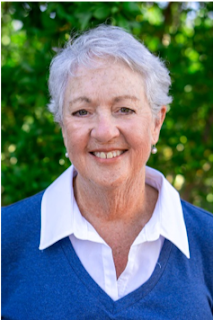
A Writer’s Progression by M. E. Roche

Like many writers, I had always wanted to write, but I had little idea what that meant until I finally set the goal of finishing something. Then I had the daunting task of figuring out how to set about getting published. It all began naively enough with the desire to re-create the student nurse mysteries of the 1950’s—Cherry Ames, Sue Barton, etc. I thought there would be young readers eager to read my updated versions of life as a nurse—and written by an RN! Of course, that didn’t happen. Against all warnings, I finally went with a subsidy publisher and discovered—what is now commonplace—that publishers expect writers to do much of their own promotion. Cut to the present: I eventually turned to indie publishing. Along the way I also discovered that I loved the creative process of writing, that despite the directive to outline one’s story, I loved letting my characters take me to where a story would go.

I wrote three YA novels, updating those old student nurse mysteries. During that process, I discovered that I loved my main character, Nora Brady. I wanted to bring her into adulthood and as she had worked with law enforcement, I decided to take her into that arena. To gain a better idea of what that involved, I was lucky to work with my local sheriff’s department: I did ride-alongs and volunteered with the coroner’s division in assisting with autopsies. I also took a gun safety class, qualifying me for concealed carry! Then I wrote the first of my adult Nora Brady mysteries: The South Spit Murders. Set in a small, coastal town in northern California, Nora is now a detective with the sheriff’s department and is tasked with solving the murders of three, seemingly unrelated victims found on an isolated strip of coastal land.

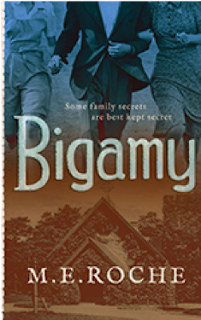
As I was working on subsequent manuscripts on Nora Brady, friends brought me the story of their grandfather who was accused (rightly so) and jailed for bigamy in the 1930’s. They had numerous newspaper clippings from that time, and they thought it would make a great novel. I did further research on the story, but it took me some time to decide if I could shape the story into a book; there was no murder. What would make readers want to read about this? Eventually, I did decide to write the story, and the product is Bigamy. What’s different about this story? Both wives were full participants in the plot and that the story was true—to a point. Times were different then. No TV. No Internet. No real communication between different state departments, or different states for that matter. These people had every reason to assume their goal was achievable, but they forgot one tiny factor which proved to be their downfall. I hope my readers will enjoy!

Meet:  M. E. Roche

 After focusing on the creative component of my writing for the last twenty years or so, it became my goal over these last few of those years, to focus on learning more about marketing—what to do once I had a finished product. Unlike many writers, I didn’t have to make a living at my writing—which was a good thing—but there is that desire to get the work out there to see if it resonates with others. This time around I did the usual work of taking classes, setting up a website—which I had done in years past, but to which I had not devoted sufficient time. I joined writers’ groups, attended webinars, and then set up online connections with social media and promotional sites. I had avoided exposing much of myself, but when the recent calls came out for those interested in doing a blog, I jumped at the chance to do something with a group that called itself “Writers Who Kill.” Coincidentally, I had just begun to wonder if I had some deep-seated psychological problem in that my work always had to include murder!

To learn more about my books and me, please visit my site: www.meroche.com

Saturday, January 29, 2022

Which Darling To Kill? by Timothy Miller


Since the name of this blog is Writers Who Kill, I ‘ve decided to take that name as my material for today’s sermon. Of course, a foundational piece of advice to writers is “Kill your darlings”, meaning not merely a favorite character, but a favorite passage, place or peroration, which might cause the arrow of story to go wide of its mark. That’s a tough lesson to learn.


Or perhaps not, any more. These days young writers on social media seem to delight in racking up body counts in their stories. I call it the George R.R. Martin Effect, plowing through characters just as fast as we can get readers to become invested in them and mourn their often gruesome endings. Frankly, I abhor this practice, refer to it as violence porn (because it appeals to the reptile brain in us the same way as porn) and hate to see it whether in G. Martin or John Irving. I think it’s a new darling which ought to be stifled in the cradle. Your mileage may vary.

But if you’re writing a murder mystery, somebody’s got to die, right? Well, right you are. And probably more than one, as every murder raises the stakes and holds the reader’s attention. So you’re going to have to decide: who dies first? Because that death will lead to any other, necessary deaths. I think Agatha Christie has Hercule Poirot state somewhere that if we understand the psychology of the victim, we’ll know who the murderer is. I can only expand on this by saying that if we know the victim’s psychology, we know our plot, which is very good news for a writer.


And so I chose for my victim in my latest novel (spoiler alert!) Vincent Van Gogh. Reams have been written about his psychology. I threw them all out the window. All of that “he killed himself because he was crazy and we know he was crazy” jazz didn’t work for me.

What if: he didn’t kill himself? Then he must have been murdered. What if you weren’t sure? Then the mystery becomes: was he mad or sane?


But why would anyone kill a penniless, friendless painter? Who profits?


Well, there’s his brother, Theo. He’s been supporting Vincent for some time and now has a new wife and child to support. Vincent’s death would be quite a financial relief for him…But Theo considered his brother an investment of sorts, and his art was just beginning to be recognized. No, his brother is a red herring, or at least a dark horse.


Well, then, if no one profits, we have to fall back on another favorite motive. He knew something, or suspected something, about a criminal enterprise. Ah, then our plot falls into place. What did he know about? Art. All of his friends were involved in the art world. Forgery, then, or theft. These are the two great crimes of the art world. This is where someone profits, and profits greatly. The man who knows too much must be eliminated.


Then the question arises: was he made to seem mad? And that’s material enough for a book.

Other murders? Someone close to the detective, to raise the personal stakes for him. A chief suspect, to frustrate our detective and readers alike. And then…well, I can’t reveal all, can I?

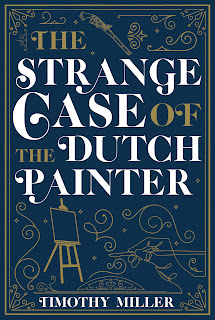
Oh—and who is the detective? It would have to be someone active in 1890. Not someone quite so recognizable in France, like Gaboriau’s Monsieur LeCoq, or even the real-life head of Surete at the time, Monsieur Goron (though he may pop up in the narrative—after all, he wrote detective novels himself). An outsider, then, but one intimately familiar with France. Why not the English great-nephew of the famous French painter Horace Vernet? What was his name again? Oh, yes. Sherlock Holmes.


BIO


Timothy Miller is a native of Louisiana and a graduate of Loyola University in New Orleans. The Strange Case of the Dutch Painter (Jan. 18, 2022; Seventh Street Books) is his second mystery that features none other than Sir Arthur Conan Doyle’s most beloved character — Sherlock Holmes.

Miller has directed and designed lighting for plays in New Orleans and Chicago. The feature film of his screenplay At War with the Ants won a Silver Remi Award at Houston’s Worldfest. His screenplays have placed in several contests including five times as a semifinalist in the Academy’s prestigious Nichol Fellowship. He has taught English in Milan and has written for the Italian design magazine Glass Style.


Saturday, January 15, 2022

Writing and Surprise by Sharon Dean

I love the surprise that happens when I write. Surprise can help writers with a murderer. Who kills? Why do they kill? Where do they kill? How do they kill? Even if the plot doesn’t involve a murder, surprise can help.


When I began writing my most recent novel, I needed to have something stolen. I heard a segment on NPR about “The Wicked Bible.” Published in 1631, the Bible contained a typo, something anyone who writes fears appearing in their published work. The seventh commandment reads “Thou shalt commit adultery.” I had the perfect object. I researched how much a “Wicked Bible” was worth––less than I thought. Others must have heard the NPR piece or read a piece in The New Yorker or The Guardian about the typo because the cost had skyrocketed by the time I was reading page proofs. Several months ago, the Bible also appeared as a Jeopardy question. Surprise gave me a perfect object and a title that might be enticing.


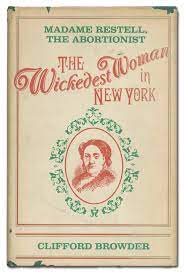
Writing The Wicked Bible, I was able to reprise another surprise I had when I wrote Death of the Keynote Speaker. A woman named Madame Restell lived in nineteenth-century New York and was dubbed “The Wickedest Woman in New York” because she ran a boarding house that disguised her work as an abortionist. The Bible with a typo and an abortionist helped me develop a plot.


Surprise can also help with setting. In my forthcoming novel Calderwood Cove  (June 2022), I researched some details about its setting in Maine. I knew the area well, but I didn’t know that coastal Maine is filled with oyster farms or that oysters might carry something called Vibrio poison. They figure into both the plot and the setting.


Surprise sometimes helps me develop characters’ personalities. Connie Lewis, the protagonist I’m working on now is driving from West Coast to East Coast. She reflects on things I discovered about some of the places she stops. In Kalispell, Montana, she discovers the Conrad Mansion. Charles Conrad had the mansion built in 1892. He’d grown up on a southern plantation where his family owned slaves, fought on the Confederate side in the Civil War, and helped to bring what he considered culture to Montana. My protagonist reflects on whose culture and on whose backs the mansion was built. Surprises I’ve been discovering are helping me to develop Connie as an eighty-year-old woman attuned to social and racial hierarchies.


From bluegrass festivals in Oregon to huckleberry ice cream in Montana to oysters in Maine, surprise helps me to become a better writer. It keeps my interest. I hope it does the same for my readers. How many of us, after all, know that a writer can kill a character by having her eat something called Mad Honey. You can look that one up and likely be as surprised as I was.


Biography


Sharon L. Dean grew up in Massachusetts where she was immersed in the literature of New England. She earned undergraduate and graduate degrees at the University of New Hampshire, a state she lived and taught in before moving to Oregon. Although she has given up writing scholarly books that require footnotes, she incorporates much of her academic research as background in her mysteries. She is the author of three Susan Warner mysteries and of a literary novel titled Leaving Freedom. Her new series features librarian and reluctant sleuth Deborah Strong. In The Barn, Deborah solves a thirty-year-old cold case. The Wicked Bible brings Deborah to a college campus and a search for who stole a Bible and a letter from the library’s archives. The third in the series, Calderwood Cove, forthcoming in 2022, will bring her to the coast of Maine and a murder. Dean continues to write about New England while she is discovering the beauty of the West.


Saturday, November 20, 2021

Typewriter Writing by Phillip Mottaz

I’m presently writing with a computer. No big deal. That’s because I’m actually communicating with the real world in a real way (to all you fine folks on the other side of the world). It’s also perfect for writing in a non-first draft manner.


However, when it comes to first drafts, a method of writing akin to barfing words into a document in hopes that they come out in any way understandable, I’ve recently used a typewriter.


Yes, this is very hipster. Yes, it’s not something everyone can afford to do. But also, yes, it’s something I’ll continue to do for future drafts.


I came to the manual typewriter in the last year. One of the unexpected impacts of the pandemic was the increase in my on-screen staring: I would do my day-job work on a screen, I would communicate with friends on a screen, and then I would try to write books on a screen. By the time I reached the book-making screen, I felt completely drained. The stress, annoyance, and fear around the pandemic fueled my anxiety, and the idea of looking at another $%^-ing screen for another $%^-ing minute made my eyeballs threaten to revolt.


Fortunately, an accidental back-up existed in one of our closets. When my son was eight years old, we went to an estate sale where he used his young-and-adorable charms to low-ball the guy on an old Smith-Corona Galaxy 12 from the 1970’s. He played with it, he got bored with it, then I played with it, intent on performing as many low-end repairs as I could.


Please note: YouTube was a tremendous resource in this regard, but lead to weird corners. Not bad ones, mind you. Many were very helpful. It’s just that any digging for a specific niche of the collecting world, however outdated or out of fashion you might think it to be, can expose you to certain levels of obsession, mania and fetish that one must prepare for. Long story short: You go digging around for typewriter videos, you’ll feel like an old man who likes the sound of typewriters AND you may love it.


After following a few helpful tips, I managed to get every key working OK again and I was ready to try it out. And the amazing thing was that this time, when I typed my daily pages, it felt less like a chore. Oh, sure, it was still work. It was still writing, complete with all the same struggles facing every writer. But by putting the work directly onto the page and removing the computer, my mind relaxed.


I found myself writing more and more. At first, it was mostly as an excuse to use the toy I’d saved (and let’s face it: the toy I’d claimed from my son). But as I started feeling my energy return, I turned to the typewriter as my chief creative outlet.


I developed clear delineation between my day-job office space and my artistic endeavors, something I’d rarely enjoyed before. We have a house on the small side, made smaller by events like working from home+distance learning, so I normally just wrote where I could with what I could. With a computer. Yet in the pandemic, the lines separating the Work Computer from the Fun-Artistic-Book-Writing Computer had become blurred until the Work Computer Status won out.


I bought paper. I bought ink (which you can STILL DO, amazingly enough). I made a DIY typing pad. And I wrote. More importantly, I felt like I was writing. That may sound like a negative point, but to someone who was struggling with the process after years of not struggling, missing that feeling was hurting me. The pages I produced were helping me to feel productive.


Flash forward to November, to NaNoWriMo, to a time I had been dreading. I had an idea for another installment in my series, but for most of the summer, my passion had dipped. Not with the typewriter. I figured out roughly how many full pages would count for my daily word count and went to it. I may have driven some family members a little nuts, but they got used to it and/or just turned the TV up to drown me out. The typewriter revived me.


I’m not alone. During my research phase, I found many more writers praising their typewriters for helping their process. And I get it. I’m with that. I encourage others to do the same for early drafts. It connects you to your work, limits distractions and sounds amazing.


BIO: Phillip Mottaz wrote his first novel when he was only 39. After growing up in Illinoissmallest city, he studied improv and sketch comedy in Chicago. Since moving to Los Angeles, he has written every kind of script imaginable, and produced multiple podcasts. His debut novel The Murderous Haircut of the Mayor of Bel Air” is a cozy mystery in his Psychic Barber Mysteries series. He types his early drafts on a Smith-Corona Silent Super. Contact him at phillipmottaz.com if you’d like to chat typewriters, books, typed books, or whatever.

Saturday, October 30, 2021

Thank You Erle, For The Reminders! By Jule Selbo

Erle Stanley Gardner’s books lined my father’s bookshelves. My dad, like Gardner’s most famous character, Perry Mason, was also an attorney, and he was of Erle’s era: women were meant to be wives, daughters were expected to obey, and men were in charge. (My dad, fortunately, by my high school years in the 1980s, had evolved.) I’ve been re-reading Gardner’s most popular series for the last months – and despite the evident 1930s, 1940s and 1950s chauvinism, the sporadic political incorrectness and racial stereotypes, and the proliferation of women hiking their skirts up above their knees to show a shapely gam, I’m taking away some “swell” reminders for my Dee Rommel Mystery series.


Even Gardner’s description of Perry Mason in The Curse of the Careless Kitten (1942) is inspiring in its thorough ability to give us the author’s version of a perfect protagonist: “Perry Mason had that peculiar, confidence-inspiring magnetism which is so frequently found in tall men. In repose, his features and his manner had the weathered patience of hard granite. But… in critical courtroom crises, he was a fast-moving, quick-thinking force, molding men’s minds, out-thinking (all) antagonists…” And Gardner upped the character stakes by making sure Mason did not do all his “lawyer-ing” in the courtroom.


Parnell Hall, author of the crossword series The Puzzle Lady, writes, “Perry Mason was always doing such outrageous, outlandish and downright illegal things… a Perry Mason book was not so much a whodunit, as a how-will-he-get-away-with it? (He’s) skating on thin ice, finding evidence, concealing evidence, juggling evidence, and planting evidence.” Now, that’s fun.


The first book in my crime mystery series, 10 Days, A Dee Rommel Mystery, was released August, 2021; it’s been well-reviewed and many readers have pointed out their delight with Dee’s tendency to head straight into trouble. Since I’m working now on 9 Days, A Dee Rommel Mystery, I use my reading of the Perry Mason books as a reminder that cool logic, reasonable caution, cerebral out-thinking are not the only goals. It’s to have “a gas”, to push Dee Rommel to the edges of danger and challenge her in emotional, physical and psychological ways. I imagine I hear Gardner’s coaxing “…let Dee make the wrong choice, at times. See what happens. See how (or if) she can right the ship.”


Gardner’s series also serves as Reminder #2 - to embrace a little aggressive chaos – and relish it. In Case of the Careless Kitten, Mason turns down a big-money, boring equity dispute to take on an if-come case because, he says: “(it) sparkles with mystery, adventure, romance… it’s cock-eyed and crazy... It’s one hell of a swell case.” In 10 Days, even though Dee Rommel begins as a “reluctant hero,” she ends up diving in because puzzle-solving, for her, is addictive.


Reminder #3: Keep the story paramount. Gardner didn’t spend much time on describing his California locations; they’re quick and concise. He writes: “… the car climbed rapidly, the screaming siren alternately roaring back in echoes, then being swallowed up in the vastness of the deep mountain canyons…” Case of the Careless Kitten (1942). He also describes characters sharply, sometimes teasing the reader into a smile. Such as: “She flowed across that office with the rippling, effortless progress of a cylinder of jelly sliding off a tilted plate.” The Knife Slipped (1939). In 10 Days, my protagonist Dee has a chip on her shoulder, and it’s hard to win her trust, so characters are always seen through her semi-cynical lens.


Reminder #4: As a reader, I enjoy hearing the opinions of characters; Gardner often allowed his characters to share their philosophy on the human condition. “When a man starts running away from things in life, he builds up a whole chain of complexes and fear.” The Case of the Grinning Gorilla (1952). In his Cool and Lam books, Gardner allowed his hard-smoking, obese private detective Bertha Cool to vent, “… people are sheep, made to be sheared. They love to worship public officials who play politics. Every eight years, the people swallow some politician hook, line, and sinker and make him president. They hold him on the political stomach for about six years. Then they commence to get indigestion because the politicians quit pouring the soda bicarbonate of publicity into their stomachs. At the end of eight years, they vomit him up in order to swallow someone else, and the process is repeated.” The Knife Slipped (1939). Bringing this back to my book, 10 Days, one 5-star reviewer on Amazon commented: “…the mystery focuses around AI and tech industries, it was fascinating and freakishly timely.” Dee Rommel has definite biases on this topic (mostly having to do with privacy rights) – and the antagonists disagree. It was fun to explore the pros and cons in this topical arena.


Reminder #5: Gardner, even after he closed his law practice to commit himself totally to writing, was inspired by real cases. Many pitted the desire of women wanting independence from domineering men or the false assumption of the wealthy and privileged that they could   with murder. Other plots were inspired by the program Gardner founded: “The Court of Last Resort”; a legal aid project dedicated to help those who had been convicted due to careless or malicious actions of prosecutors or police. Gardner has inspired me here too – I cull though police and prison records to remind myself that greed, vengeance, jealousy, lust, psychoses, and countless other societal maladies are active – and dangerous - parts of our society. That reality can certainly inspire fiction.


So, thanks, Erle for the great reads and “lessons”.


Erle Stanley Gardner wrote 155 books and more than 400 articles before his death in 1970.


SHORT BIO:

Jule Selbo’s crime mystery novel, 10 Days: A Dee Rommel Mystery (Pandamoon Publishing, August 2021) is the first in a series. Jule absconded from Hollywood and her work there as a produced screenwriter to Portland, Maine to concentrate on writing novels. After writing three award-winning historical fiction books, she has now worked up the courage to dedicate herself to her favorite genre – the crime/mystery. She’s near completion of the second in the series: 9 Days, A Dee Rommel Mystery.  https://www.juleselbo.com