Showing posts with label Sharon L. Dean. Show all posts

Saturday, January 21, 2023

But Is It A Mystery? By Sharon L. Dean

I’ve published two traditional mystery series that I’ve marketed as whodunits or cozy mysteries. Is it a mystery if an author doesn’t kill a character? I argue that there are lots of ways of killing.


On March 28, 2022, I published a piece in Mystery and Suspense Magazine called “The Classics are Mysteries, Too.” Although my fiction will never become a classic, like the books I wrote about, all of the pieces in my new collection Six Old Women and Other Stories are mysteries, though in some I’ve killed no one. What are the backgrounds of my six ninety-three-year-old women in the title story? They’ve chosen to live together on an isolated island. They’re old. How will they die or how will they live in this new environment that they know will be their last exit? Questions get raised in the other pieces in the collection. What happened at that lakeside resort nearly seventy years ago (“Shuffleboard”)? What happened thirty years ago on Cannon Mountain (“Hardscrabble”)? What prompted an old woman and an old man to become recluses (“Pavlov’s Puppies,” “The Man Who Loved Cribbage”)? Can a book be a mystery even if there’s no crime to solve?


Novelist Bobbie Ann Mason once wrote that "a scholar is a version of a sleuth." That was certainly the case when I edited a collection of letters by the nineteenth-century writer Constance Fenimore Woolson. Where would I find the letters? How would I date so many that had no dates? How would I identify the names of so many people, both well-known and obscure? What was Woolson’s relationship to these people and to the events of her world? These were mysteries. I solved many and left others unresolved, especially the mystery of whether Woolson accidentally fell out of a window in Venice or jumped to her death.


I have two outlier novels. Leaving Freedom will be reissued in 2023 by Encircle Publications. It’s a quest novel that was generated by my academic work on Constance Woolson. It has elements of mystery­­––where does my Connie’s mother get a scar on her stomach? What happened to Connie’s Uncle Charlie? The sequel, Finding Freedom, will be even harder to categorize. It’s a last-chance-for-adventure novel as Connie, now eighty years old travels across the United States alone to decide if she should move back to the town of Freedom where she was born.


Think about Moby-Dick for a moment. It isn’t just a sea yarn as Melville originally conceived it. It’s a story about the hunt for the whale Captain Ahab sees as a villain. For him, Moby Dick is the incarnation of evil. But the whale is more than that. He’s a physical representation of the inscrutable universe. He’s a mystery just as the universe and our lives in it are mysteries. Melville is a writer who kills––everyone except Ishmael and the whale.


I don’t like to get locked in genres. I like to let them bleed into one another. I don’t like to go into a bookstore and find a separate section labeled “Literary Fiction.” Mysteries, whatever the subgenre, can be literary fiction as well. Whatever Six Old Women and Other Stories is, I’ll make Amazon happy and categorize it as a mystery and as a collection of haunted stories.


What do you want in a book for it to qualify as a mystery?


Six Old Women

Six old women living on an isolated island in Lake Winnipesaukee, teenagers vacationing on Newfound Lake in 1959, paragliders and skiers on Cannon Mountain, an old woman in a house covered in gypsy moths, a man living off the grid in a shack he built himself. The characters in these stories all keep secrets. They are as tough and rugged as New Hampshire’s iconic Old Man in the Mountain. And like The Old Man who fell in 2003, their pasts survive only in memory. Sometimes that’s a good thing.


Sharon L. Dean grew up in Massachusetts where she was immersed in the literature of New England. She earned undergraduate and graduate degrees at the University of New Hampshire, a state she lived and taught in before moving to Oregon. Although she has given up writing scholarly books that require footnotes, she incorporates much of her academic research as background in her mysteries. She is the author of three Susan Warner mysteries and of a literary novel titled Leaving Freedom. Her Deborah Strong mysteries include The Barn, The Wicked Bible, and Calderwood Cove. Dean continues to write about New England while she is discovering the beauty of the West.

Monday, October 31, 2022

Writing Cemeteries by Sharon L. Dean


It's Halloween and I'm thinking about cemeteries. There's a line in the first academic book I published: "Constance Fenimore Woolson's life is marked by gravestones." I was thinking of the gravestones in Claremont, New Hampshire, for her three sisters who died of scarlet fever within a month of Woolon's birth.


There's the cemetery my grandmother took me to every Memorial Day to plant geraniums on the family gravestones, a tradition I continued until I moved away from New England. There's the cemetery where my son learned his alphabet, the Sleepy Hollow cemetery in Concord, Massachusetts, where so many writers are buried, the Civil War cemeteries in Gettysburg and Andersonville, the national cemetery at Arlington.


I prefer a simple graveyard to a landscaped cemetery, perhaps because I grew up in New England where the graveyards date to the seventeenth century. Although I titled my third mystery novel Cemetery Wine, its murder scene is in what I could have called a graveyard. Graveyard are older, smaller, filled with markers that feature death's heads or hourglasses or weeping willows.


When I wrote Cemetery Wine, I realized that all my novels contain a scene in a cemetery or graveyard. Death of the Keynote Speaker has a scene on New Hampshire's Star Island where there are gravestones for three Beebe girls who died of scarlet fever. The inscription on one reads, "I don't want to die, but I'll do just as Jesus wants me to." My novel Leaving Freedom begins with a mother and her two daughters standing over the grave of her husband. This freedom is not from life, but from the town that is suffocating one of the daughters and who is released to find her freedom as a writer.


My latest novel, The Barn, begins with an image of a barn with a wooden cow's head on the outside of the rafters. The cow's head could have been a death's head as the characters try to solve the cold case of a murdered classmate. A cemetery also figures in that novel when, thirty years later, the characters gather to bury the classmate's mother.


Why, I ask myself, do these graveyard images creep unplanned into my writing? I'm not morbid. I'm not haunted by death. I could walk into a cemetery this Halloween Eve and not be afraid of what might rise from the graves. I think it's about the history these gravestones capture in their carvings and epitaphs and coatings of lichen. It's about nostalgia I feel for the New England I left and that I recreate in the novels I write. Cemeteries give me a place to develop a scene, to capture relationships among the living and between the living and the dead. They are great places for the novelist. They can be burgeoning with flowers, covered with fallen leaves, or buried in snow. They give shape to my writing and a sense that, though I wish to be cremated, I can ask my family to bury some of my ashes back home at the grave of my parents.


Sharon L. Dean grew up in Massachusetts where she was immersed in the literature of New England. She earned undergraduate and graduate degrees at the University of New Hampshire, a state she lived and taught in before moving to Oregon. After giving up writing scholarly books that required footnotes, she reinvented herself as a fiction writer. She is the author of three Susan Warner mysteries and of a literary novel titled Leaving Freedom. The Barn, the first novel in a new mystery series, features librarian and reluctant sleuth Deborah Strong as she and her friend solve a thirty-year-old cold case. The second in this series, The Wicked Bible, will be published in Fall 2021. For more information, see https://sharonldean.com/


In 1990, Deborah Madison and Rachel Cummings, both seventeen, are enjoying a bicycle ride on a beautiful September day in New Hampshire. They stop at a local barn that no longer houses cows but still displays a wooden cow’s head that peeks out from a window in the rafters. Sliding open the door, they find Rachel’s boyfriend, Joseph Wheeler, dead on the barn’s floor.


The case lies as cold as Joseph for nearly thirty years until Rachel returns to New Hampshire to attend the funeral of Joseph’s mother. The girls, now women, reopen the cold case and uncover secrets that have festered, as they often do in small towns. Against a backdrop of cold and snow and freezing rain, Deborah and Rachel rekindle their friendship and confess the guilt each of them has felt about things that happened in the past.


The Barn is a story of friendship lost and recovered, secrets buried and unburied, and the power of forgiveness.


Available through Encircle Publications: https://encirclepub.com/ or your favorite bookstore or e-book site.


Tuesday, May 31, 2022

Fictional Elements by Sharon L. Dean

I’m a “Jeopardy” fan even though I’m abysmal at answering questions in any category that involves television, movies, contemporary music, or sports. Although I’m clueless about pop culture, I can occasionally run a category about classic literature or about lines in poetry. I got a little thrill a few months ago when there was a question about “The Wicked Bible” because I had used that Bible and its typo about committing adultery as the title for my novel, The Wicked Bible.


A category called Fictional Elements recently appeared on “Jeopardy.” Plot, character, setting, theme, tone, point of view. I was golden until the elements appeared in answers like The Man in the Iron Mask and The Silver Chair. But the category got me thinking about the elements of fiction I became so familiar with when I began teaching. Somehow, I managed to make it through a Ph.D. in English without breaking literature into those elements. In the college where I taught, they were a bit like the Biblical commandments. They work, but if I thought about them while I’m writing fiction, I’d fall back into the analytical voice of my academic days.


Still, the elements are a scaffold that holds a piece of fiction together, some central supporting poles, others carrying less weight. Tone would matter more to my work if I wrote comic or melancholic or satirical pieces. Theme seems more philosophical than literary, though I suppose I could attach something like the search for justice or the search for home to my novels.


A more obvious decision for a writer involves point of view. The omniscient of early nineteenth-century novels, limited omniscient, first person, even nowadays second person. All have their challenges and their advantages. And all require a commitment at the start of a piece. I’ve alternated between limited omniscient and first person. I’ve used first person, present tense in a couple of short stories, but I feel a little like that’s cheating because it too easily places a character in the moment.


Character gets caught up in point of view. Will the story be told through multiple points of view or one character? Will the character be reliable or unreliable? I’ve tried neither, but like many writers, I’ve found that a character leads me somewhere I haven’t anticipated. In two of my novels, I’ve come to the end and changed the murderer. In two others, an elderly woman emerges half-way through the book. Patience with the elderly is not one of my strong points, but I’ve become so interested in what’s called “geezer lit” that my forthcoming novella is called Six Old Women.


Whether they plan ahead or let the story unfold, writers think about plot, but even as a trained academic, I don’t start out deciding if the conflict will involve man against man, man against nature, man against himself, or man against fate. The gendered way of expressing conflict grates, and I wonder if literature anthologies have changed the terminology.


The last of the elements “Jeopardy” ignored is setting. Before I put pen to paper (I still draft long-hand), I know where I want to set a novel: Mississippi’s Natchez Trace, New England’s Isles of Shoals, a cemetery, a small-town library or a university library in New Hampshire, a cove in Maine. Setting may be my way of indulging my nostalgia for places I’ve loved, but it’s also what drives my ideas. It’s the golden element in the fiction I write.


You might put on your analytical hat for a moment and ask which of these elements of fiction seems the most important to you when you read or write.


Sharon L. Dean grew up in Massachusetts where she was immersed in the literature of New England. She earned undergraduate and graduate degrees at the University of New Hampshire, a state she lived and taught in before moving to Oregon. Although she has given up writing scholarly books that require footnotes, she incorporates much of her academic research as background in her mysteries. She is the author of three Susan Warner mysteries and of a literary novel titled Leaving Freedom. Her Deborah Strong mysteries include The Barn, The Wicked Bible, and Calderwood Cove. Dean continues to write about New England while she is discovering the beauty of the West.


Saturday, January 15, 2022

Writing and Surprise by Sharon Dean

I love the surprise that happens when I write. Surprise can help writers with a murderer. Who kills? Why do they kill? Where do they kill? How do they kill? Even if the plot doesn’t involve a murder, surprise can help.


When I began writing my most recent novel, I needed to have something stolen. I heard a segment on NPR about “The Wicked Bible.” Published in 1631, the Bible contained a typo, something anyone who writes fears appearing in their published work. The seventh commandment reads “Thou shalt commit adultery.” I had the perfect object. I researched how much a “Wicked Bible” was worth––less than I thought. Others must have heard the NPR piece or read a piece in The New Yorker or The Guardian about the typo because the cost had skyrocketed by the time I was reading page proofs. Several months ago, the Bible also appeared as a Jeopardy question. Surprise gave me a perfect object and a title that might be enticing.


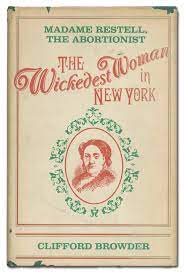
Writing The Wicked Bible, I was able to reprise another surprise I had when I wrote Death of the Keynote Speaker. A woman named Madame Restell lived in nineteenth-century New York and was dubbed “The Wickedest Woman in New York” because she ran a boarding house that disguised her work as an abortionist. The Bible with a typo and an abortionist helped me develop a plot.


Surprise can also help with setting. In my forthcoming novel Calderwood Cove  (June 2022), I researched some details about its setting in Maine. I knew the area well, but I didn’t know that coastal Maine is filled with oyster farms or that oysters might carry something called Vibrio poison. They figure into both the plot and the setting.


Surprise sometimes helps me develop characters’ personalities. Connie Lewis, the protagonist I’m working on now is driving from West Coast to East Coast. She reflects on things I discovered about some of the places she stops. In Kalispell, Montana, she discovers the Conrad Mansion. Charles Conrad had the mansion built in 1892. He’d grown up on a southern plantation where his family owned slaves, fought on the Confederate side in the Civil War, and helped to bring what he considered culture to Montana. My protagonist reflects on whose culture and on whose backs the mansion was built. Surprises I’ve been discovering are helping me to develop Connie as an eighty-year-old woman attuned to social and racial hierarchies.


From bluegrass festivals in Oregon to huckleberry ice cream in Montana to oysters in Maine, surprise helps me to become a better writer. It keeps my interest. I hope it does the same for my readers. How many of us, after all, know that a writer can kill a character by having her eat something called Mad Honey. You can look that one up and likely be as surprised as I was.


Biography


Sharon L. Dean grew up in Massachusetts where she was immersed in the literature of New England. She earned undergraduate and graduate degrees at the University of New Hampshire, a state she lived and taught in before moving to Oregon. Although she has given up writing scholarly books that require footnotes, she incorporates much of her academic research as background in her mysteries. She is the author of three Susan Warner mysteries and of a literary novel titled Leaving Freedom. Her new series features librarian and reluctant sleuth Deborah Strong. In The Barn, Deborah solves a thirty-year-old cold case. The Wicked Bible brings Deborah to a college campus and a search for who stole a Bible and a letter from the library’s archives. The third in the series, Calderwood Cove, forthcoming in 2022, will bring her to the coast of Maine and a murder. Dean continues to write about New England while she is discovering the beauty of the West.