Showing posts with label reading. Show all posts

Friday, July 25, 2025

How Many Books Do You Read At Once? by Nancy L. Eady

One of the many things that drives Archie Goodwin crazy about Nero Wolfe is his reading more than one book at a time. Normally I’m Team Archie all the way, but here, I sympathize with Mr. Wolfe, because at latest count, I have at least four books I’m reading now. 

First, I am working my way back through Bobbi Holmes’ Haunting Danielle series on my Kindle. That is my fun read; I read the series at lunch and if I am at home with free time. I finish one of those books every two days. When I finish the series, I’ll pick something else. It might be something I already have on Kindle, or I might start something new. It just depends on what I feel like. 

Second, I am reading a (very thick paperback) biography of Winston Churchill written by Andrew Roberts called, originally enough, Churchill. I manage two or three pages of it a day during the ten to fifteen minutes I spend waiting for the dogs to finish eating, go outside and come back in. Having started it about two weeks ago, I’ve completed Chapter One. It’s a little dangerous for me to read because when I get too interested and forget myself, I end up being late for work. But it’s better than just sitting and being bored or, even worse, emptying the dishwasher or cleaning the kitchen. (My family probably disagrees on this point.) 

My third book is the Bible. This year’s edition is the Women’s Bible, New King James Version. I have a schedule that will let me finish the entire book in one year. It varies between two and four chapters a night with readings from the Old Testament and the New Testament. For those of you unfamiliar with the book, the Old Testament is a lot longer than the New. For example, I am going through the book of Psalms (Old Testament) and will finish it in September. I will finish the book of Acts (New Testament) next week. I switch yearly between a Bible that lets me read it in the Old/New format and a Bible that is arranged chronologically. Parts of the chronological arrangement are based on an educated guess by the editors, but it provides a different perspective.  

My fourth book is called Miracles by C.S. Lewis. I read it on those nights when I am not too tired after reading my Bible to conquer a chapter. I don’t know when I will finish it, but I read an entire chapter at once when I read it. The book before that was by Lee Strobel, although I don’t recall the name. 

So tell me, are you in the Archie Goodwin or Nero Wolfe school of reading? When is your favorite time to read? (I think just about any time is a good time to read, but other people may have different ideas.) Do you read more than one book at a time? Do you have a favorite time for reading?


Friday, May 10, 2024


Where Did Your Love of Mysteries Begin? – by Heather Weidner

When I’m asked about where did my love of mysteries start, I always say that Scooby-Doo and Nancy Drew were my gateways to the mystery world. But as I look back on my favorite children’s books, I realized that the first mystery that really hooked me was actually a picture book, Jon Stone’s The Monster at the End of the Book. Grover, the blue fuzzy protagonist, spends the entire book fretting over the monster who is supposed to make an appearance on the last page of the story. In hindsight, this is where I was discovered a passion for suspense, mystery, plot twists, clues, and irony.

Saturday morning cartoons were also the beginning of my mystery-watching addiction that has blossomed to include true crime shows, podcasts, and a host of murder documentaries. There were so many cartoons in the seventies with crime fighters and puzzle solvers like Scooby-Doo Where Are You, Josie and the Pussycats, The Funky Phantom, Captain Caveman, Jabber Jaw, Goober and the Ghost Chasers, Speed Buggy, Lassie’s Rescue Rangers, The CB Bears, Deputy Dawg, Mumbly, and Devlin, and I watched them all.


Cartoons and my picture books started a love that grew to include a whole host of books as soon as I discovered the library. In fourth grade, my friend and I raced to finish the yellow-covered Nancy Drews, and then we moved on to the Hardy Boys and the Three Investigators. (And it didn’t hurt that Shaun Cassidy and Parker Stevens starred in The Hardy Boys and Nancy Drew Mysteries every week on TV.)

Nancy Drew and the Hardy Boys, like the Mystery Inc. gang in the Scooby-Doo series, were ordinary kids who were able to solve mysteries that the adults couldn’t. They had freedom to explore, cool transportation, and friends to help them solve the crime and bring justice. I devoured these books and moved on to Two-Minute Mysteries, Agatha Christie, Edgar Allan Poe, and Arthur Conan Doyle.

Mystery and crime fiction followed me to college where I took the best course offered in our English department, Dr. Magnuson’s “Mystery and Detective Fiction.” He introduced us to the history of the genre, key tropes, subgenres, and the “rules” for writing crime fiction, but the best part was that I was required to read an entire syllabus of new-to-me authors.

My love of mysteries started early with cartoons and books. It also didn’t hurt that I was a C. K. (cop’s kid), and murder and true crime were regular topics at our dinner table.

Where did your love of mystery and suspense start?


Monday, March 11, 2024

The Vintage Bookshelf: The Mrs. Pollifax Series

By Shari Randall


Welcome to another episode of the Vintage Bookshelf. My name is Shari Randall and I enjoy reading books published more than fifty years ago (the current definition of vintage). In this episode, I discuss a favorite series protagonist, one of the original “silver sleuths,” Dorothy Gilman's Mrs. Emily Pollifax.


As aa reader who falls into the “vintage” category, (not quite antique yet, thank you), I am especially pleased to have made the acquaintance of Mrs. Emily Pollifax of New Brunswick, New Jersey, a widow in her sixties who satisfied her longing for adventure by taking on the occasional undercover assignment for the CIA.


When we meet Emily in her first adventure, The Unexpected Mrs. Pollifax (1966), she’s sharing with her garden club the night-blooming cereus that she’s managed to grown in a box on her fire escape. Despite this impressive horticultural feat and her forays into yoga and karate, Emily longs for more and she decides to write to the CIA to ask for a job. Through a (less than believable) mix up (hang in there, it’s worth it), she’s hired. Her CIA handler, Carstairs, believes that her resourceful and improvisational personality, disguised by her ladylike gloves and hats, makes her the perfect spy. Her adventures take her to geopolitical hot spots like Hong Kong, Morocco, Sicily, Mexico, and more. She goes undercover in carnivals, souks, and sanitariums. She’s held at gunpoint, knocked out with chloroform, and kidnapped numerous times, but with sturdy common sense and gumption she vanquishes experienced foreign agents, art forgers, and a cast of other bad actors.


Keep in mind, Mrs. Pollifax operates in a time when the Cold War was hot. Yes, as with all books on the vintage bookshelf, one is very occasionally jolted by attitudes and language that were acceptable at the time the book was written, but no longer. Never fear, Mrs. Pollifax maintains an open-hearted and broad-minded attitude that has insured her welcome on our bookshelves today. 


Dorothy Gilman

It’s particularly pleasing to see how popular these books have remained. There are websites and social media groups devoted to the series. The name of a popular mystery review site run by Mark Baker, Carstairs Considers, pays homage to Mrs. Pollifax’s CIA handler.


If you think Mrs. Pollifax bears some resemblance to Riley Rhodes, the protagonist of my Ice Cream Shop Mysteries (written with my super-secret pen name of Meri Allen) you would be correct - and very perceptive. Riley’s background as a former CIA librarian/occasional asset was inspired by Mrs. Pollifax.


Here are the Mrs. Pollifax books in order:


The Unexpected Mrs. Pollifax (AKA Mrs. Pollifax, Spy)

The Amazing Mrs. Pollifax

The Elusive Mrs. Pollifax

A Palm for Mrs. Pollifax

Mrs. Pollifax on Safari

Mrs. Pollifax on the China Station

Mrs. Pollifax and the Hong Kong Buddha

Mrs. Pollifax and the Golden Triangle

Mrs. Pollifax and the Whirling Dervish

Mrs. Pollifax and the Second Thief

Mrs. Pollifax Pursued

Mrs. Pollifax and the Lion Killer

Mrs. Pollifax, Innocent Tourist

Mrs. Pollifax Unveiled1990)))


Who’s your favorite “silver sleuth?” Let me know in the comments.


Shari Randall is the author of the beloved Lobster Shack Mystery series and, as Meri Allen, the Ice Cream Shop Mysteries. You can see what she’s up to on Facebook (@sharirandallauthor) and Instagram (@meriallenbooks).


Friday, September 29, 2023

A Picture is Not Always Worth A Thousand Words by Nancy L. Eady

 I spent decades of my education learning to read—first picture books, then chapter books, then young adult fiction, then regular fiction and non-fiction, then legal cases. I sometimes think maybe I should have stopped at fiction and non-fiction; there’s nothing worse than trying to read long legal opinions when you are having an afternoon slump. After page twenty, I’m not sure if I’m reading words, or counting sheep. By page fifty, I begin to nod off, which I don’t recommend as a savvy career move. 

But I digress. (I tend to do so.) With all the time and effort I have put into learning to read, nothing is so irritating as opening a box of equipment or furniture requiring assembly, and finding the instructions explained with pictures only. A picture of a screw with a twisty arrow on top of it may seem self-explanatory, but for someone who constantly argues with herself about the meaning of “righty tighty, lefty loosy,” such instructions are fraught with peril. I will always talk myself out of one meaning (the twisty arrow means I turn the screw clockwise) into the opposite (no, the twisty arrow means I turn the screw counterclockwise.) And no matter which meanings I flutter back and forth between, the one I finally choose will be wrong. Worse, the error will not become obvious until twelve steps later, when I get to exercise a part of my vocabulary that most people aren’t aware I possess. 

If the sentence is written out—insert screw 20 into hole 12 and screw it in counter-clockwise—I’ve got it. No need to debate or ponder, just instructions to follow. 

We bought a flat screen TV a few years ago. It came with a stand that had to be installed before you could set up the TV. The directions were pictorial only. I have a law degree and my husband a master’s in human resources, and the TV stand still almost defeated us. After two hours of effort, it was our tenth-grade daughter’s suggestion that provided the final piece necessary to get the TV mounted on the stand correctly. And while I tend to be inept with mechanical things, my husband and my daughter both are skilled with them. 

There is an increasing tendency to use pictures and icons in warning and clothing labels as well. Even I can figure out that a skull and crossbones means that whatever is in the bottle so labeled probably shouldn’t be part of my dinner, but other warning labels are more esoteric. The hardest warning labels to decipher involve a stick figure doing something with a red X over it. The red X I understand but figuring out whether the stick figure is walking up a ramp, punching someone else, tap-dancing on the forklift prongs or doing the hokey pokey can be difficult. 

And with clothes, deciding which symbol means wash in hot water, which means wash in warm water, and which means cold water only still defeats me. Let’s just say those symbols aren’t intuitively obvious to the casual observer. 

The only time I ever found a pictorial sign more helpful than a written sign was when our daughter first came to live with us. The social worker who came to inspect our house informed us that the next time she came to visit, we needed to have a fire escape plan posted. She came back to a sign in front of our daughter’s room showing flames and an arrow pointing toward the front door. She wanted to argue that the sign was inadequate, until my husband pointed out that our daughter was three, couldn’t read, and that sign was all she could understand. Our daughter helped us out, too; the social worker asked her what she should do if there was a fire. Kayla announced she should run outside, go next door, and call 911. The social worker was sufficiently impressed to move on to other matters. It’s a good thing she wasn’t around an hour later, when Kayla said thoughtfully, “The only thing is, where is next door?”  

As writers, we draw pictures with our words for the canvas of our reader’s minds. These word pictures evoke not only landscapes but emotions and memories as well. Because of our words, readers are transported from their current world to the world we create for them, and they go gladly. I don’t think the increase in pictorial instructions and warnings can threaten that, and I’m glad. There’s nothing better than being lost in a good book—and I defy any picture sign to lead me out again before I’m ready. 

Sunday, July 3, 2022

A Tale of Redwall, the Power of Reading by Molly MacRae


I’m piggybacking off Sarah E. Burr’s celebration of bedtime reading in her June 19th Writers Who Kill post. Her essay, also written for Fathers’ Day, celebrated the dads—really all the grownups—who enrich a child’s life by reading aloud. In her piece, Sarah reminisced about her childhood love for the Redwall books by Brian Jacques. Do you know these swashbuckling adventures? Set in pseudo-Medieval times populated by moles, mice, squirrels, otters, cats, rats, and more, they’re epic tales of good creatures pitted against sneaking, ornery, wicked ones. They’re also tales of wonderful feasts. When asked about his descriptions of food, Jacques said they stemmed from his hungry childhood during the depression and rationing during WWII.

Oh, Redwall! My children loved these books and my husband and I loved reading them aloud—at bedtime, before walking to school in the morning—we couldn’t get enough of them. So when I got to the Redwall part of Sarah’s post, her memories immediately whisked me back to 1998.

In the 90s, I managed a small, independent bookstore located in an old grocery store building. And in the spring of 1998, Penguin Books announced a nation-wide Redwall window dressing contest for bookstores. It was a promotional gimmick, and we had no real hope of competing with chain stores or well-heeled stores in big cities. It was an opportunity to draw attention to a wonderful author and our store, though. We also didn’t have a budget for anything even halfway professional or fancy, so we decided to have fun instead.

I invited a group of neighborhood kids, some who’d read the books and some who became quick fans, to design and install the display. Those kids, including our youngest, worked straight through their spring vacation, coming to the shop every afternoon. They created a diorama with Redwall Abbey made from cardboard boxes and characters and food for a sumptuous Redwall feast modeled from clay. They brought in dollhouse and model train accessories to complete their tableau. They outdid themselves, even giving two of the shop windows faux illuminated frames. Then they made Redwall costumes for themselves and we held our own feast on the porch. I took pictures of them at work, of the finished windows, and the front porch feast and sent them to Penguin. All of it looked exactly like it was engineered by a bunch of school kids. Totally charming and so much fun.

We never heard a thing from Penguin.

Until September.

Long after the window display had been changed to something less exciting, a letter arrived that I had trouble believing. Somehow, miraculously, we’d won the contest. And what was the prize? Brian Jacques. Brian Jacques! He came to our little store, with his family, all the way from England, for a book signing. Well, he was probably in the states for a major book tour, anyway, but wow! Our little shop was wall to wall people during his visit. Literally. At one point I couldn’t push my way through them to get from the greeting card racks back to the service desk.

Even better, though, before the signing, Brian Jacques spent an hour alone with the kids who'd made the window. Amazing! The memory of all that still makes me cry.

Reading to children well past the age they can read to themselves is important for so many reasons. The reasons include exposing children to vocabulary they might not run across in their grade level books, giving them a sense of fluency and drama, and the creation of continued and lasting bonds between the reader and the child.

Brian Jacques died too soon, in 2011, and only 71. By then the Redwall series ran to twenty-one books and had sold more than twenty million copies worldwide. What Jacques and Redwall did to motivate kids to read—and what people who read to children do for the world—is immeasurable.

Below are too many pictures of our long ago Redwall triumph at The Book Place in Johnson City, Tennessee. They aren’t terribly good pictures, but the folks at Penguin liked them, and they capture the true spirit of our homemade tribute to a fantastic writer and wonderful person.


Monday, January 10, 2022

2022: The Return of Reading Mojo?

By Shari Randall, writing from snowy (finally!) New England


Like many, I lost my reading mojo in 2021. I don’t keep an annual total of books read, but I do know that there are too many books on my TBR that I didn’t open once. They glare from the bookshelf with such resentment that I avoid walking past them. I still read books for my virtual book club -- well, enough chapters of the chosen books to fake having read them. One of my book clubs has surrendered and renamed itself the Two Minute Book Club, because that’s all the time we’ve been spending talking about the books.


What explained this lack of focus for a formerly beloved activity, this lack of reading mojo? Many blamed pandemic malaise, a kind of low level swirling background anxiety that, like an ear worm of an infernally catchy 80s song, blotted out the concentration necessary for sustained reading.


In my case, I think whatever concentration and mojo I had was transferred to watching TV. Pre-pandemic I’d never watched a ton of television, and my use of streaming services had been one and done. My girls gifted me Acorn so I could watch Agatha Raisin and I’m embarrassed to say that Aggie is the only show I streamed on it for a year.


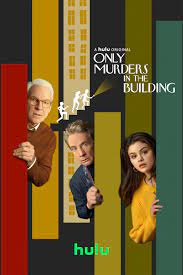
Then came Tiger King, a plus sized dose of streaming mojo, and I turned more to the screen than the bookshelf. I discovered and devoured Broadchurch and Hinterland and Shetland but my streaming diet wasn’t all gloomy British policing. My hubby and I watched every bit of hilarious Brooklyn 99, quirky New Tricks (11 seasons!), and the sprightly detective show from Down Under, Brokenwood Mysteries (Jean!). I warmed to the fresh McDonald and Dodds (set in glorious Bath) on Britbox. We loved Netflix’s Only Murders In the Building. Thank goodness for Only Murders in the Building – it helped me get my reading mojo back.


While watching Only Murders in the Building, I became fascinated by the magnificent Renaissance revival building that was the home of the characters. Some said the “Arconia” was based on the Apthorp, an elegant condominium apartment building on the Upper West Side of Manhattan which was once home to luminaries like Douglas Fairbanks Jr., George Balanchine, Jennifer Hudson, and Nora Ephron. You can admire it here.


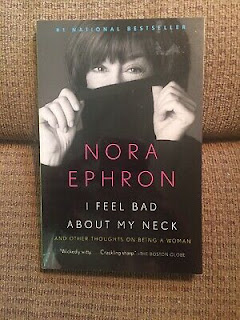
My Two Minute Book Club was casting around for a book to read and I suggested Ephron’s I Feel Bad About My Neck mainly because, as a woman of a certain age, the title speaks to me. (Don’t worry, that’s an essay for another day.) Ephron’s memoir is written in short, chatty chapters; each is like a lunch date with your wittiest friend. I looked forward to my time with Nora, as she dished and gossiped about everything, including her love affair with her sprawling rent-controlled apartment in the Apthorp. My streaming and reading worlds collided, and I looked forward to my reading time in a way I hadn’t in months.


So, thank you Only Murders In The Building and Nora. I feel my reading mojo return!


Did you lose some reading mojo in the past year or two?


Has your reading mojo returned?


Shari Randall is the author of the Lobster Shack Mystery series, and as Meri Allen, writes the new Ice Cream Shop Mystery series. The Rocky Road to Ruin debuted in 2021, and Mint Chocolate Murder is available for pre-order now. Follow her on Facebook and Instagram.


Sunday, May 16, 2021

Am I Too Out-dated for My Day Job? or When Did Deep Reading Die?

I am a physician, an anesthesiologist who specializes in obstetrics and has remained in academia my entire career (25 years). It’s been rewarding, with lots of publications (that would cure insomnia), an introductory textbook (that was kinda cool), teaching awards (yay), several patents (that I wrote little of because attorneys don’t speak English (says the doctor)), and a long list of administrative positions (not my strength). More importantly, I’ve been privileged to take care of women at an incredibly special time in their lives and to work with amazing nurses and colleagues. Teaching the next generation to take skilled and compassionate care of pregnant women is a laudable goal, and I feel I still have something to offer in that vein (ha!), as all the other OB anesthesia-trained faculty at my institution are men. I think having experienced labor and delivery brings an added something to my teaching.

But…as I’ve grown older, I sound more-and-more like my grandfather (“kids these days”) and seem to have less-and-less patience for what I consider to be trainees’ lack of ownership of their own education. As a colleague once said, “We’re an institution of higher learning, not higher teaching.” I want them to be curious, to read about interesting cases, then come to me with thoughts and questions. Though it’s possible my memory is faulty, I recall that’s what I was taught, and it’s what I try to role model on a daily basis.

I tell the residents we had these things called books, made of mushed up trees. They were divided into topics, and you read them, like with your eyes, and you took notes on paper with a pen…possibly even in cursive(?!). Several glassy-eyed stares later they show me YouTube videos and practice question banks and podcasts. I’m not opposed to any of these, but they’re short-cuts. I have my own teaching videos on YouTube, and I created a question bank for the residents before they were available, but none of this is the same as READING. When you read, you control the pace. You pause, think, re-read, look up unfamiliar terms, check another source for unclear points, take notes in your own words. That’s how you learn…or maybe that’s just how I learn (backed by research…but finding that would require READING).


Don’t get me wrong, I love audiobooks and listen to at least one a week, alternating between non-fiction and novels. I listen to podcasts on topics that interest me (writing, technology, philosophy). I rarely watch Youtube unless the kids send something (nearly always humorous), or I need instructions on how to fix something before my husband finds out I broke it. But, barring certain medical conditions, there is no replacement for the eye-to-brain connection of a book or an ebook or even a well-selected website, though writing in the margins isn’t quite the same.

And I don’t want to scare anyone. We are still training superb physicians who will take excellent care of you and your family. Clinically, they learn the craft much as I did thirty years ago, as an apprentice under the watchful eye of myself and my colleagues. It’s just a different model outside the OR, and though I’ve been there through the metamorphosis, I’m not a fan. So I’ll keep telling them to be curious and learn more even if it won't be on the Board exam, and I’ll keep printing articles and referencing books. Maybe, when they’re out of training and have passed the Boards and paid down their student loans, they’ll find the time to read, for work and for pleasure.

I have an idea, how about Fatal Intent and its sequels???

~Tammy Euliano, MD

Author of Fatal Intent

Saturday, May 15, 2021

What We're Reading Now by WWK Authors


Four Mums in a Boat


Four Mums in a Boat was written by the four mums, Jennette Benaddi, Helen Butters, Niki Doeg and Frances Davies who rowed a boat for 3,000 miles as part of the Talisker Whiskey Atlantic Challenge. The women ranged in age from 46 to 52 and collectively had eight children.


It was an amazing undertaking by middle-aged women who were not Olympic athletes and who had quite limited experience of rowing at the beginning. They turned a crazy idea into reality within three years. The preparation was as intense as the journey since they had to convince their incredulous husbands, children and other family members, get sponsorship, get into shape for the months-long events and so forth.


They wrote about persisting through serious injuries, chronic seasickness, a hurricane, and a few woman-overboard experiences. I say will all respect these are four tough mothers. A very interesting and inspiring book.                                                                                                                                                                                         -Warren Bull


Paige Shelton’s Scottish Bookshop Mystery Series


During the past year when travel has been so restricted, I gravitated to books that took me out of my own world and let me enjoy other places. Paige Shelton delivered on that by not only whisking me away to Edinburgh, Scotland, but also setting her series in one of my favorite places, a bookshop—one with a treasure storehouse attached. Fortunately, when I discovered her books, Paige Shelton had already written several in the series, so I was able to go right through them without having to wait for more to be released. The joy of following her main character, American Delaney Nichols, in her adventures is that we get to see Edinburgh through the eyes of someone who has gone to live there and not through the eyes of a tourist. The book is filled with interesting and realistic characters, with each book delving into some aspect of Scottish history in a modern-day setting. One book even focuses on the Loch Ness monster. I listened to the audiobook version of the series and found the narrator did a remarkable job on the various accents. The Scottish Bookshop Mystery Series is a delight, and I highly recommend it.                                                                                                                                                   -Grace Topping


Saturday, May 8, 2021

AAPIHM Book Recommendations By Jennifer J. Chow

Every May, we get to celebrate Asian American and Pacific Islander Heritage Month. As an avid reader, my idea of celebration involves books.


Books that I’ve recently read by AAPI creators and loved include the following (my opinions are asterisked):


·        Vanessa Yu’s Magical Paris Tea Shop by Roselle Lim (August 4, 2020)


Magical realism/Rom-com
"...similar to the sweet fabulist-romcom style of Lim’s debut, this new book follows a young woman’s culinary and magical adventures."—BookRiot


*A luscious book filled with treats about love, family, and destiny.


·        Nights When Nothing Happened by Simon Han (November 17, 2020)

Literary fiction/Family saga

“A deeply affecting portrait of one family’s immigrant experience—and the toll that the American Dream takes on those who chase it.” —Harper's Bazaar


*An intense and quietly moving portrait of a family in a cultural crossroads, entwined with internal excavations.


·        Arsenic and Adobo by Mia P. Manansala (May 4, 2021)

Culinary cozy mystery

"This debut introduces readers to Filipino American food and culture, with its emphasis on family…” —Library Journal, starred review

*A great start to a new cozy series filled with serious eats and culture.

·         The Tiger Mom’s Tale by Lyn Liao Butler (ARC; releases July 6, 2021)

Women’s fiction/Mothers and daughters

"The Tiger Mom's Tale is a heartfelt, delightful read. Lyn Liao Butler's story of Taiwanese and American identity had me turning pages and laughing (and drooling over the delicious descriptions of food)."—Charles Yu, author of Interior Chinatown, winner of the 2020 National Book Award


*A must-read moving journey of growth and character, imbued with warmth and authenticity.


Here are a few novels I’m looking forward to picking up soon:


·       Dial A for Aunties by Jesse Q. Sutanto (April 27th)


Rom-com/Murder mystery

People have compared it to Weekend at Bernie’s—but involving a dead blind date, meddlesome aunties, and an over-the-top wedding.


·        Clark and Division by Naomi Hirahara (August 3rd)

Historical mystery

Set in 1944 Chicago. After her family’s release from Manzanar, a Japanese American woman must hunt for the real truth behind her sister’s death.


·        Steelstriker by Marie Lu (September 28th)

Young adult

The concluding book in the Skyhunter duology, this novel explores issues of complicated friendships, homeland loyalty, and chilling scientific modifications.


What AAPI book recommendations do you have?


Tuesday, July 30, 2019

What We're Reading Now


Margaret S. Hamilton

Paper Son by S. J. Rozan

If you drive an hour south of Memphis to the Batesville exit and turn west, toward the Mississippi River, you’ll find the small town of Clarksdale. Oxford, home of Ole Miss and William Faulkner, is an hour due east of Clarksdale.

S.J. Rozan sets her latest private investigator Lydia Chin/Bill Smith book in Clarksdale and the Mississippi Delta, an area with a long-established Chinese-American population. After the transcontinental railroad was complete, the Chinese workers went to Mississippi to do field work, and then opened grocery stores in the predominately African-American communities of the Delta (in this part of Mississippi, the Delta is the floodplain to the east of the river,extending from Memphis to Jackson). The Chinese-Americans founded their own schools and became established members of the Delta community.

Lydia Chin’s mother is worried that her Clarksdale cousin, Jefferson Tam, has been arrested for the murder of his father, Leland. Lydia and Bill are assisted by Jefferson’s uncle, Peter Tam. Chinese families are complicated: another cousin, Reynold Tam, whose father married a white woman, is running for governor. “Paper sons” were late nineteenth and early twentieth century immigrants who asked naturalized Chinese Americans to file papers identifying them as their sons. In Mississippi, money helped the filing process. They’re considered family, though in many cases were not related.

Rozan establishes an intricate plot with compelling characters to portray the morass of bigotry, drug addiction, and prejudice in the Mississippi Delta. For Lydia and Bill’s first foray outside the New York City area, Rozan succeeds with her accurate portrayal of her private detectives operating in an area completely foreign to them.


Kathleen  Rockwood 


As usual, I have three reads going. One on my Kindle, which I take on public transportation and to doctors’ waiting rooms and anywhere else I think I may have to cool my heels for a while.
One in my car. Since my husband no longer drives but remaining socially active is important, I spend an inordinate amount of time waiting in the car for him. Poker games, bridge games, breakfast with his fellow retirees from work, etc.
The other is my leisure read, which I keep in the house. If it’s compelling enough, it replaces the usual short story anthology on my bedside table.
The Thief of All Light by Bernard Schaffer is a fascinating read. Sometimes I do want to reach into the book and strangle the protagonist, a female cop who wants to be a detective. How could she not know that an officer interrogating a suspect will try to appear to be sympathetic, even in the case of a pedophile who has done dreadful things to children? This is the way to get confessions. She isn’t well self-disciplined, and sometime she skirts with the “too dumb to live” borders. But the story is carrying me right along, and I will continue to read it when I’m depending on my Kindle.
My in-the-car read.
I’ve just started The Devil’s Half Mile by Paddy Hirsch. It’s historic fiction, set in New York City 1n 1799. It’s interesting, and I like the historic details (I’m not familiar enough with those times to know how accurate it is, but it seems good to me) and the characterizations. I haven’t yet really gotten into the plot, and so far it’s not compelling enough to make me want to bring it into the house with me, where I’d have more time to read it.
On my bedside table
Racing the Devil, by the Charles Todd duo, has supplanted the short story anthology I normally have by my bed. Charles Todd is one of my reliable go-to novelists, and Rutledge, despite his somewhat disconcerting paranormal contact with Hamish, is a favorite. It is also a historic novel, set in 1920 in England. I just finished re-reading The Mysterious Affair at Styles by Agatha Christie, set in the same era, and it was a natural next choice.


Susan Van Kirk


I just finished Connie Berry's A Legacy of Murder, and it's a wonderful read for people who like British mysteries about crumbling mansions. [Right down my alley!] Kate Hamilton, an American antiques dealer, is visiting her daughter Christine who is working as an intern at the stately home of Lady Barbara in Long Barston. That home is widely known in the area as Finchley Hall. No sooner does Kate arrive than the body of a murder victim--also an intern--is found in a lake on the Finchley grounds. The murdered intern was working on the Finchley Hoard, a legendary collection of treasures owned by the family through generations. Soon, Lady Barbara persuades Kate to take over the work for a huge celebration when the family opens its house to the public and displays its treasures. This is where the twists, turns, and surprises begin!

I really enjoyed Berry's mystery, the second in her Kate Hamilton series after her debut, A Dream of Death. Her romantic subplot is perfect but not too overwhelming. The main characters are likable and believable, and the minor characters are intriguing, especially an elderly antiques collector who helps Kate with the history of the manor and its earlier murders. Put this book on your "to read" pile when it comes out October 8 from Crooked Lane Books. I read a copy in advance from NetGalley. 


Kaye George


White Heat
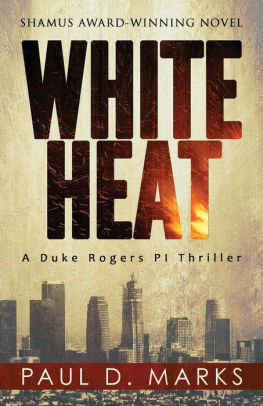
White Heat by Paul D. Marks

I can’t recommend this Shamus Award winning novel (and the sequel) enough. The writing is tough where it needs to be, tender at just the right spots. The love Marks has for Los Angeles shines through on every page. The time is 1992. The backdrop is the aftermath of the Rodney King riots. The story delves into crime, race, families, and more as hard-hitting little PI Duke Rogers and his pal Jack push their way through the story. After you’ve read White Heat, you’ll have to read Broken Windows, of course.  


Annette Dashofy

Because I seem to be at least a book behind on all my favorite authors, I just finished reading R. G. Belsky's Yesterday's News (last year's release).

When eleven-year-old Lucy Devlin disappeared on her way to school more than a decade ago, it became one of the most famous missing child cases in history. The story turned Clare Carlson into a media superstar overnight. Clare broke exclusive after exclusive. She had unprecedented access to the Devlin family as she wrote about the heartbreaking search for their young daughter. She later won a Pulitzer Prize for her extraordinary coverage of the case.

Now Clare once again plunges back into this sensational story. With new evidence, new victims, and new suspects--too many suspects. Everyone from members of a motorcycle gang to a prominent politician running for a US Senate seat seem to have secrets they're hiding about what might have happened to Lucy Devlin. But Clare has her own secrets. And, in order to untangle the truth about Lucy Devlin, she must finally confront her own torturous past.

I've always enjoyed Belsky's voice in his previous series, but admit I was worried about his attempt to create a realistic female protagonist. I needn't have been concerned. Clare sounded exactly like Murphy Brown in my head! And his past experience in both print and TV news brings authenticity to the story. There are twists and turns galore with just enough humor to lighten what could otherwise be a very dark subject.

Connie Berry


These days I’m listening to books on Audible more than reading them. With publicity and blogging and working on Book 3, finding time to actually sit and read is difficult. But I can listen while doing boring things like getting ready in the morning, driving, cooking, and doing laundry. Right now I’m listening to an absolutely amazing debut novel—Dear Mrs. Bird by the British author A. J. Pearce.

The story is set in London during the blitz. The protagonist, Emmeline Lake, dreams of being a war correspondent. Through a comedy of errors, she takes a typing job at a women’s magazine under the redoubtable “agony aunt” Henrietta Bird, whose moral standards preclude any mention of Unpleasantness—like dating, kissing, falling in love, or *gasp* going too far and getting oneself in the family way. At the same time, Emmy volunteers with the London Fire Brigade and may or may not be falling in love with a soldier on the front lines. I must say, I’m in love with this writer’s voice and the skillful way she uses language. Pearce is a rising star, and I can’t wait for her next book.


Marilyn Levinson

I just finished reading The Stationery Shop by Marjan Kamali. In the early 1950's, a young couple fall in love during their visits to a stationery shop in Tehran. They become engaged, but are    cruelly separated by the young man's deranged mother. We learn of the mother's unhappy love affair when she was young. A wonderful story of love that lasts through decades.


 Linda Rodriguez

I am currently reading two books, The Dreamblood Duology by N.K. Jemisin and An Elderly Lady Is Up to No Good by Helene Tursten (translated by Marlaine Delargy). The first one is the omnibus collection of the two novels in N.K. Jemisin’s Dreamblood fantasy series. Jemison has won all the major awards in fantasy and science fiction, and I've read all of her other books, so I was excited to see a deal on the e-book omnibus version of this series that has been out of print. I've just started this one, but I can recommend Jemison for anyone who's interested in superb worldbuilding, really marvelous character development, and lots of thought-provoking questions about society and our world.


An Elderly Lady Is Up to No Good by Helene Tursten, a Swedish author, is a delightful book about an elderly Swedish woman who decides to start doing away with everyone who irritates her or gets in her way. She gets to be quite successful at the murder of convenience. This book was a truly thoughtful gift from a dear friend to thank me for some small favor I had done for her. I have had so much fun reading it bit by bit and savoring the characterization and the subtle wit.


Shari Randall 

Right now I'm reading - and savoring - Kate Atkinson's newest Jackson Brodie mystery, Big Sky. Atkinson, who is well known for her more literary standalones, packs so much into each book - allusion, humor, turns of phrase and characterization of absolute perfection - that I never want them to end. Jackson is a private investigator in Edinburgh, a former soldier and cop who struggles to understand his teenage son, Nathan, and brilliant TV actress wife, Julia. When he relocates to a quiet seaside town, Jackson takes what looks like a hum drum adultery case which turns into so much more.

The books were turned into the Case Histories TV series and Jackson Brodie was played by Jason Isaacs, famous for his turn as Lucius Malfoy in the Harry Potter movies, which adds another layer to be savored reading this book.