Showing posts with label beginnings. Show all posts

Monday, August 14, 2023

Where to Start?

by Shari Randall


The question “Are you a plotter or a pantser?” always throws me. The process has been different for every book I’ve written. I write scenes, sometimes starting with the climax, and then shuffle the scenes around and pray that they flow together. I don’t recommend this process because it usually means that I have to write the most difficult part of a book at the end: the beginning.


I wish I could start a novel at the beginning and write until the end. Not doing so always leads to lots of rewriting. For me, beginnings are hard because Ii’s not always clear where the best spot to start a story is.
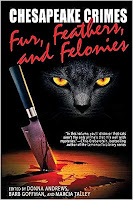


Case in point. My short story “Pet,” which appeared in Chesapeake Crimes: Fur, Feathers, and Felonies. My main character, Katya, is a simple teen who came to the United States from Russia illegally and finds a dream job with a California heiress – at least she thinks it’s a dream job. In the original manuscript, I started Katya’s story on a winter’s day on her grandmother’s farm. Katya is seven-years-old, shivering, starving. Snow is falling. Baboushka has died at the hands of a merciless criminal and poor Katya has only her pet dog for comfort. I was really channeling my inner Tolstoy. Seriously, I’m tearing up right now.


When I gave the story to my editor, she sent it back with a note and a red X over the first seven pages. “Your story doesn’t start on page one,” she said, “it starts here on page seven.”


I’d fallen into the trap of the info dump. The bucket of backstory. She was right. I cut the pages and the story took off.


Why do I bring this up? Because I’m starting a new book. I have 11,349 words worth of scenes, but I’m not sure where the story begins. Sigh. Time to shuffle the scenes and see what happens.


Writers, how do you write a good beginning for your story?


Shari Randall is the author of the beloved Lobster Shack Mystery series. She writes the new Ice Cream Shop Mystery series under the pen name Meri Allen. The latest in the series is Fatal Fudge Swirl.


Saturday, June 2, 2018

On Navigating the Murky Middle by Joanne Guidoccio


I love beginnings—in life and on the page. Anything and everything is possible whenever a blank slate appears before me. That momentum can last for days, weeks, months, and sometimes even longer.

At least, that’s what I like to think whenever I begin a new writing project.

A linear pantser, I write brief character sketches, plot the first three chapters and the last, and then let the words flow. At some point, usually around Page 80, I encounter the murky middle, that nebulous place where I find it difficult to continue or sustain the tension of the novel. In short, I’m lost with no clear trail or direction in sight.

In the early days of my writing career, I struggled to regain my motivation, wondering if I should abandon the novel. Thankfully, I have discovered three strategies that have lifted me out of the abyss.

Professional Development

During my teaching years, I would sign up for summer in-service at different universities throughout the province of Ontario. These courses would last anywhere from three days to four weeks. Afterward, I would feel refreshed and ready to tackle a new semester in the fall.

While experiencing my second prolonged drought, I searched for the right course/workshop that could propel me over the writing hump. Online courses offered through Sisters in Crime, Romance Writers of America, Savvy Authors, and Ed2Go have worked best for me. Lasting anywhere from one to four weeks, these courses succeed in inspiring and motivating me to return to the page. The key is to complete all the recommended exercises and actively participate in discussions.

Cross-Reading

In Think, legal analyst and author Lisa Bloom urges us to select books that challenge our points of view. Her argument: Our brains need a varied diet of books to stay sharp.

An avid reader of mysteries and women’s fiction, I decided to explore historical fiction written by a male author. During a cold, blustery winter, I spent the entire month of February reading the Century Trilogy by Ken Follett. The three tomes—Fall of Giants, Winter of the World, Edge of Eternity—follow dramatic events in the lives of five interrelated families (American, Russian, German, English, and Welsh) and sprawl over nearly 3,000 pages.  After that month-long reading marathon, I was ready to return to the calmer, less complicated world of my WIP.

NaNoWriMo (National Novel Writing Month)

This is the Red Bull solution that has helped me avoid two murky middles. In 2016 and 2017, I joined millions of authors worldwide and made the commitment to write 50K words during November. Inspired and motivated by the online community and local meet-ups, I wrote at least 1,667 words each day and completed very rough first drafts of two novels: A Different Kind of Reunion and No More Secrets. Whenever I encountered a roadblock, I typed INSERT CHAPTER and continued writing. My well-honed left brain appreciated the badges, and I wanted to wear the Winner T-shirt!

Trailer – A Different Kind of Reunion

Giveaway:
Click on the Rafflecopter link below for your chance to win a $10 Amazon gift card.
Bio

A member of Crime Writers of Canada, Sisters in Crime, and Romance Writers of America, Joanne Guidoccio writes cozy mysteries, paranormal romance, and inspirational literature from her home base of Guelph, Ontario.


Thursday, March 20, 2014

HOW A BOOK BEGINS AND EVOLVES

 
In the beginning is a word. The word becomes a sentence, and the sentence becomes a paragraph leading to the opening scene. But even before the first word there has to be a germ of an idea which then develops into a plot, and that’s how a book starts evolving.

Once I have the plot idea, I start to develop the characters. My first character for the new book has to be the murderer. He/she can be a new character to my series or a returning minor character, who becomes a murderer. It’s very important for me to develop this person. I need to know what is so important to this character that they’d murder to protect it. I don’t write psychopathic murderers so my murderer is not totally evil. In fact, there is much I like about them and have more sympathy for this character than I do for the victim. As I include them more into the story, I actually feel a little sorry for them and I wish they’d change their mind. Most of my victims are not very nice, and those that are, I don’t develop enough rapport to feel saddened when they die.

My next step is to create new characters and to give more depth and attention to one or more of the returning characters. In this way I bring in more suspects for the murder or murders that will happen. This is a fun part. I love creating characters.  Unfortunately, I hate letting characters go, so sometimes I let them rest for one book and then maybe have them return in another book. Some will never return and some will never be more than a very minor character; sort of like a part of the scenery of Portage Falls.

Because my books not only have a gardening theme, they also follow a chronological order of months. The Blue Rose took place in June. Daylilies for Emily’s Garden in July and Ladies of the Garden Club takes place in August. My fourth book that I’m working on now, The Body in the Goldenrod, will be taking place in September. In this book there will be a Civil War Re-enactment going on at Elmwood Gardens. Our local newspaper has been featuring columns twice a week for over a year now by local historians and/or Civil War reenactors. I’ve been saving these columns to get a feel for that period in northeast Ohio where I live and my fictional books take place. I’m lucky because Carole Babyak, a member of my local writers group not only writes books about the Civil War Era based on people from our area, but also has a husband, who is a Civil War reenactor. She belongs to a group of Civil War enthusiasts, and dresses the part of a woman of the time at Civil War events. She will be my go to person to make sure what I write is accurate and believable. I’ve already been asking her questions.

I’ve finished chapter twelve now, and I’ve not reached a place yet where I don’t know where I’m going with it. I’m much more a pantser than a plotter and somehow when I end one chapter, an idea for the next chapter comes up. If only there weren’t constant interruptions in my life, I think the book would be done by now. Meanwhile I already have a germ of an idea for October’s book as well as a title - Murder in the Corn Maze.

What steps do you take in writing a book?