Showing posts with label Cheddar Off Dead. Show all posts

Sunday, March 10, 2024

HOW I GET COMFORTABLE OUT OF MY COMFORT ZONE

 by Korina Moss

Out of my comfort zone:
Giving my Agatha Award acceptance speech
in front of hundreds of people

Remember when “comfort zone” became a buzz word and we were constantly encouraged to step out of it? Those self-help gurus were relentless, but I wasn’t buying it. What’s wrong with being comfortable? It’s a synonym of cozy, and as the writer of the Cheese Shop Mystery series, we all know how I feel about the word cozy. Thus, I’ve never been a fan of stepping out of my comfort zone, however life has been consistently kicking me out of it over the last several years. Becoming a published author is like immersion therapy for discomfort. I’m left with no choice but to lean into it, whether it’s doing podcast interviews, speaking at events, mentoring writers, or sharing recipes. Yes, I said sharing recipes. 

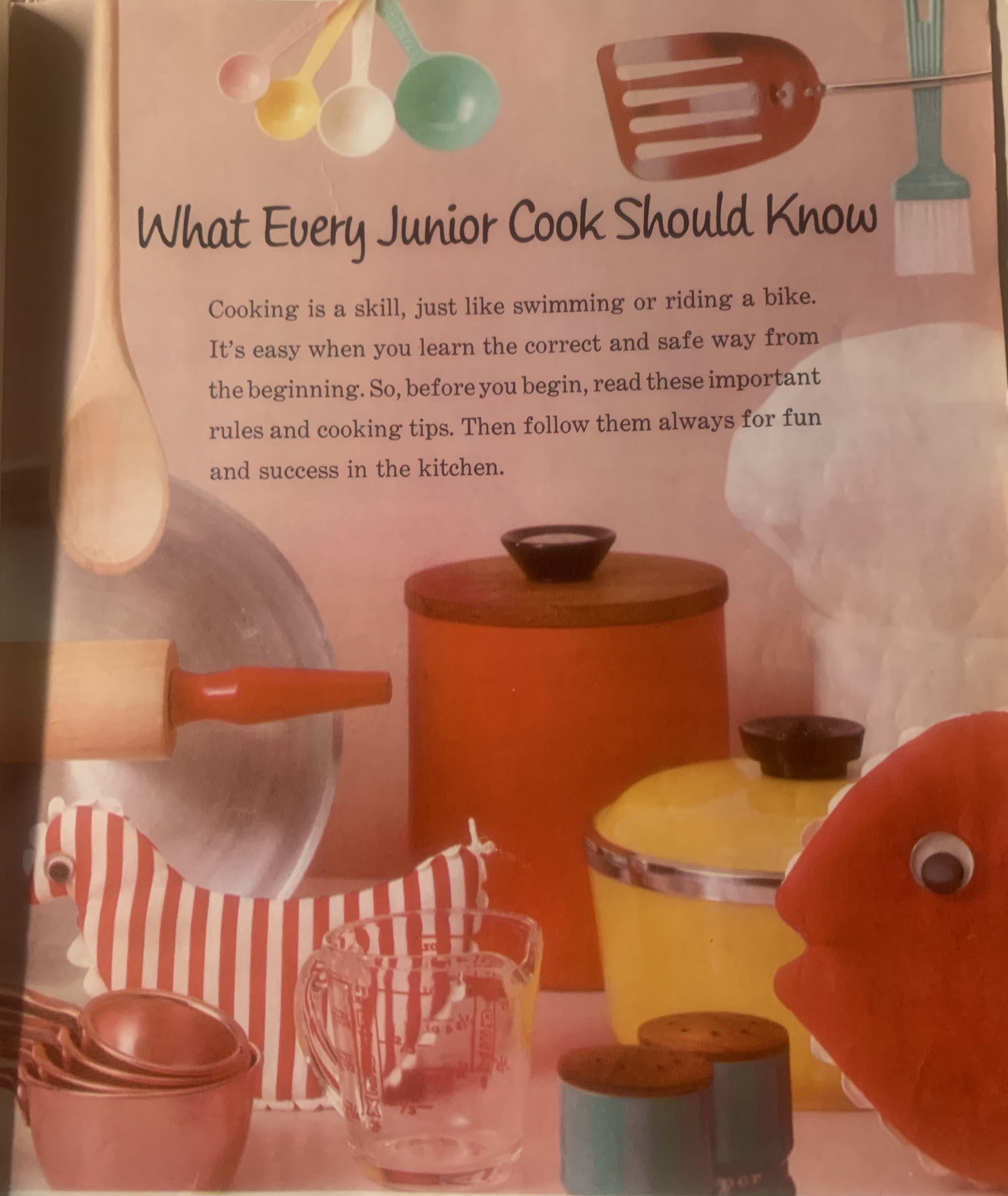
I may have to dig into my copy of
Betty Crocker's New
Boys and Girls Cookbook

I’ve always been a passable cook, but it’s never been something I cared to take too much time doing. I’m a food enthusiast, but I’m happy to let someone else do the cooking. Now that I’m single and my son is away at college, I only cook for myself—which is to say, I don’t cook. I throw things together. I am the queen of the one-bowl meal. I used to bake often and well, but again, as a household of one, baking is a roundly dangerous prospect. So, when I was recently invited to become a member of the wonderful blog, Mystery Lovers’ Kitchen, my first thought was uh-oh. The twelve members are fantastic culinary cozy authors who share recipes they cook themselves, which include photos and step-by-step instructions. Obviously, you gotta cook. I was honored to be considered to join their group and I wasn’t about to pass that up. I mean, have you seen the Mystery Lovers’ Kitchen authors? Leslie Budewitz, Maddie Day, Meg Cochran, Leslie Karst, Libby Klein, Lucy Burdette, Maya Corrigan, V.M. Burns, Vicki Delany, Cleo Coyle, and our own Writers Who Kill member, Molly MacRae.  

After my initial panic, I did what I always do when life kicks me out of my comfort zone. First, I find something that makes me feel even a little bit qualified to do this uncomfortable thing. The only way to break down fear is to hit it with logic. Ok, so what are my qualifications for this? I, too, am a culinary cozy author. I’ve learned a great deal about cheese while doing research for my Cheese Shop mysteries, and cheesy recipes are included in my books. I love watching cooking shows and cooking and baking competition shows. In fact, Loretta, the flamboyant betta fish in my series, is a big fan of Food Network’s Chopped. 

After making myself feel slightly more comfortable with my qualifications, the next step is to ask what I can bring to this experience that will highlight my strengths. It’s a reminder that I don’t have to be just like everyone else, which takes most of the pressure off. What can I bring to the blog? Surely, some Mystery Lovers’ Kitchen readers are single, like me, so perhaps simpler recipes-for-one are something they’d like to see more of. Another strength? Cheese, which—let’s face it—is practically a superpower. 

My superpower

The last step is to think about the purpose of the experience. Why do people read Mystery Lovers’ Kitchen? Because of their shared love and appreciation of food. Do I share that purpose too? Absolutely. I admitted in my extended author bio that I've been on my own Eat, Pray, Love journey, however I seem to have stalled at the Eat phase. 

After doing these three exercises, I usually find I’m not as far out of my comfort zone as I thought. And invariably, once I actually do this new thing, it becomes not only more comfortable, but enjoyable. Whether it involves becoming a better public speaker, gaining practical experience, or allowing myself to be more present in a daily activity like cooking, it also turns into a growth opportunity. I will probably always feel discomfort at facing new experiences, but I can comfortably say the rewards are worth it. 

Readers: Have you had experiences venturing out of your comfort zone? How do you handle it?

The delicious croque monsieur 
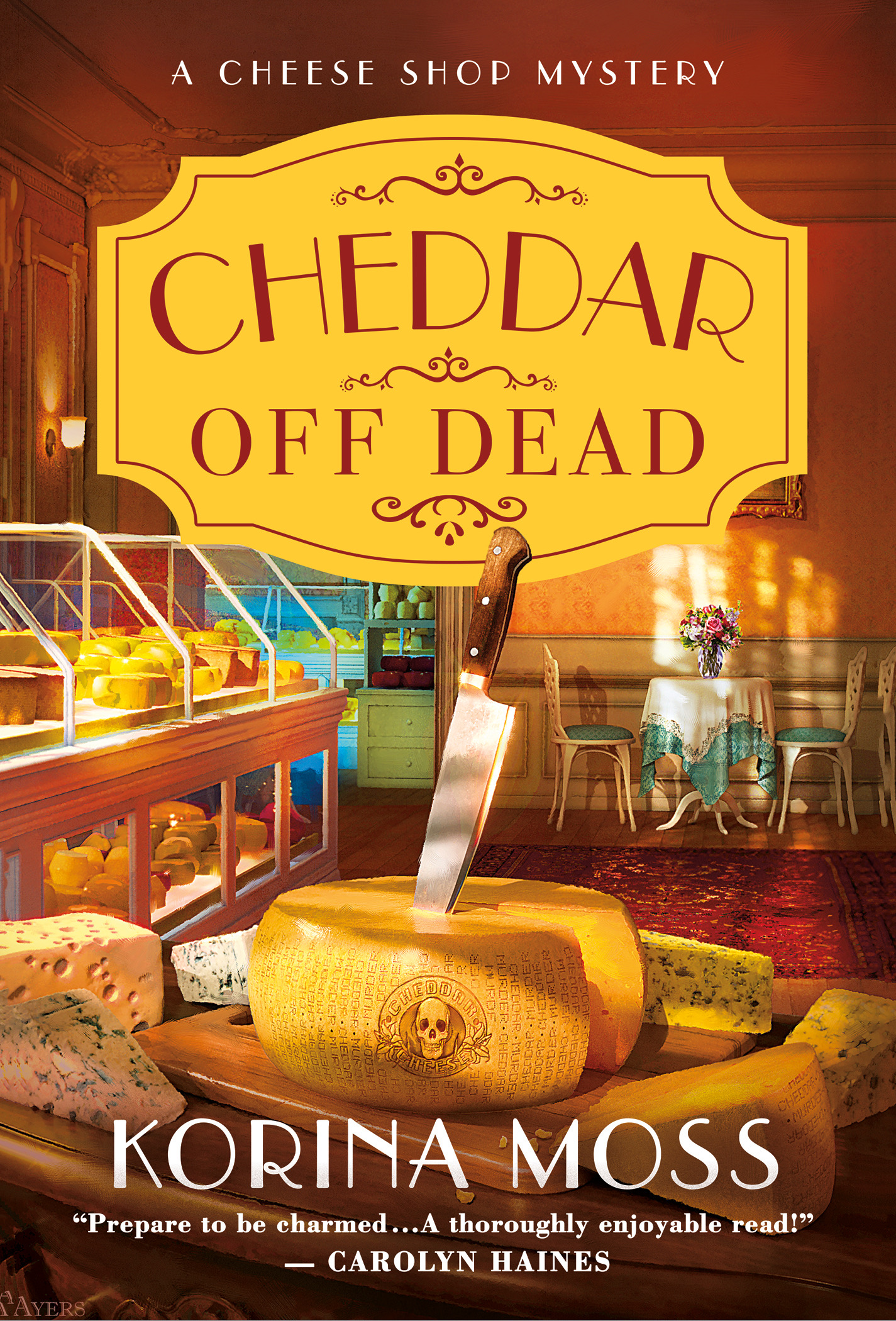
from Cheddar Off Dead

My first post for Mystery Lovers’ Kitchen is Monday, March 11th, where I’ll be making a recipe from my first Cheese Shop Mystery, Cheddar Off Dead—a croque monsieur sandwich that’s easier to make than to pronounce!


KORINA MOSS is the author of the Cheese Shop Mystery series (St. Martin’s Press) set in the Sonoma Valley, including the Agatha Award winner for Best First Novel, CHEDDAR OFF DEAD, and the most recently Agatha-nominated Best Contemporary Novel, CASE OF THE BLEUS. Her books have been featured in PARADE Magazine, Woman’s World, AARP, and Fresh Fiction. To learn more, visit her website korinamossauthor.com. 


Wednesday, April 5, 2023

An Interview With Korina Moss

by Grace Topping


It’s no wonder mysteries featuring food and cooking are popular with readers. The food descriptions are enticing and frequently introduce dishes that may be new. They also whet our appetites for the foods being described. The main character in Korina Moss’s series owns a cheese shop. So while reading her latest release, Curds of Prey, I made multiple trips to my refrigerator searching for cheese—although none of mine was as good as the cheese Korina describes in her books. I need to make a trip to a cheese shop. In the meantime, I spent time with Korina, a member of our Writers Who Kill group, talking about Curds of Prey and all kinds of cheese.


Curds of Prey

In Korina Moss’s Curds of Prey, murder again comes to Yarrow Glen, and cheesemonger Willa Bauer must be the predator … before she becomes the prey.


Yarrow Glen’s favorite cheese shop, Curds & Whey, gets to be a part of the social event of the season: Summer Harrington’s wedding. Cheesemonger Willa Bauer is going all out for the wedding shower’s cheese bar. But the eagle-eyed Harrington family is proving to be a pain in her asiago. A last-minute tasting ends in disaster when one of Willa’s potential beaus, Roman, gets in a fight with the groom. Then the shower arrives, and while there’s anything but love in the air, there is plenty of cheese. Oh, and Roman… again. The day officially ends in disaster when Willa finds the groom―who also happens to be the mayor’s nephew―in the stable, dead as a dodo. At the mayor’s request, Willa must follow the trail of cheese curds to find a killer while continuing to walk a tightrope between two of Sonoma Valley’s most powerful families.                         
amazon.com


Welcome, Korina. 


What inspired you to write a mystery series featuring a cheese shop owner?


It was actually an idea from an editor at St. Martin’s Press, who was seeking a writer for a cozy mystery with the theme of a cheese shop owner. My agent asked if I’d like to vie for the contract, so of course, I did. I began brainstorming ideas and researching cheese, and within a few weeks, I had a proposal (synopsis, the first three chapters, and summaries for the next two books in the series). They loved it and gave me a three-book contract. Last summer, I got a second three-book contract to continue the series (six books total, thus far). The theme was the catalyst, but my inspiration for what became the Cheese Shop Mystery series came from my love of cozy mysteries and my newfound respect for cheese and cheesemongers. I discuss this inspiration in more detail in an article I wrote for Women Writers, Women’s Books. 


Since you live in New England, why did you set your series in the Sonoma, California, area?


When I was researching cheese, I came across the northern California cheese trail – a map where tourists can discover where to visit artisan cheese shops, creameries, and homestead dairy farms to learn about and eat cheese. I liked the idea of setting it in a region known for wine. Although they go together, it’s also a little unexpected to focus on cheese in a wine country setting. My fictional small town of Yarrow Glen has its roots in dairy farming, so it’s a bit of an underdog compared to the fancier surrounding vineyard towns that draw the bulk of the tourists. The underdog theme of the town itself parallels my protagonist, Willa, and many of the small business owners in town who make up the close-knit community in my book.  


In cozy mysteries, the main character’s business or interest is a key component of the story, and readers will often gravitate to cozies with certain businesses. How do you balance how much focus you give Willa’s cheese business with the mystery she must solve?


That’s a great question. One reader who reviewed my first book, Cheddar Off Dead, said she absolutely loved it, but she was furious that Willa kept going off to investigate instead of staying in her new shop to work. I thought that was funny, but she had a point. You need to balance realism with the fairly rapid pace of a mystery. I want my readers to walk away with new knowledge and fun facts about cheese and, hopefully, a desire to explore new types. I’ve heard from readers that they develop a craving for cheese while reading my books, so I’ve done my job there. But I also need to develop the characters and their relationships, keep the town alive and the cheese shop cozy, and solve a mystery, which should always be at the forefront. To accomplish this, I make sure all my cheese shop scenes serve a purpose toward developing the mystery itself, which keeps pushing the momentum forward. 


You write authoritatively about a wide variety of cheeses. Were you knowledgeable about cheese before you started your series?


Not at all. I was your average cheese eater who liked eating it and bought the same four varieties at the grocery store. I love it when readers think I must’ve been a cheesemonger myself—it’s a great compliment, and it means I’ve done my research. However, when interviewers ask me a lot of specific questions about cheese, I have to remind them that I’m not actually a cheese expert. I’m a mystery writer. 


How did you research the various cheeses you describe in your books? 


Because my protagonist Willa is a cheesemonger—a cheese expert—I felt I needed to do a lot of research to get it right. I discovered that cheese is a subject that you could never know everything about. It’s also extremely interesting—the centuries-long history, the multitude of ways it’s made, all the variables that contribute to its flavor and texture… I fell in love with it, not just because it’s delicious. My first book was written during the initial months of the pandemic, so I only had Google to help me out. I’ve since found a local artisan cheese shop, Spread Cheese Co in Middletown, CT, whose owners and cheesemonger are three young women much like Willa (without the amateur sleuthing). They’re now my resource for cheese, although I still take full credit for anything I might get wrong in the books. 


When reading Curds of Prey, I wanted to sample the cheeses you described. Do you have a problem limiting the amount of cheese you consume—all in the name of research? 


Ha! All in the name of research, indeed. The only saving grace is that the cheese shop I mentioned is almost an hour away, so I don’t have the time to get to it as often as I’d like. I try to limit myself by just sampling. Although some cheese is so good, I just have to bring home a wedge and indulge myself. 


Do you have a favorite cheese? Or does that change with each new cheese you try?


It changes with each new cheese and at a moment’s notice. Last fall, in one shopping visit, I’d brought home Brabander Gouda, Curat de Búfala (my first buffalo-milk cheese), and the World Champion Rogue River Blue, a seasonal blue cheese wrapped in syrah grape leaves soaked in pear spirits. Each time I ate one of the cheeses, I’d insist it was my favorite… until I had the next and the next and went back to the first. They were all so different but incredibly delicious. 

 In Curds of Prey, you shine a light on the wealthier side of the community. Is it true what they say about the rich being different?


By the fact that they are automatically given the privilege of power, yes. In Curds of Prey, it’s assumed by everyone, even the wealthy Harringtons themselves, that they’ll receive special treatment during the ongoing murder investigation. It’s something that bothers Willa, since the guy she’s dating is one of the prime suspects. It also concerns the mayor, so Willa begins sleuthing on her own. However, the Harringtons aren’t the only powerful family Willa should be worried about.


Authors often will take a writing retreat so they can focus solely on writing, especially when facing a deadline. Please tell us about some of the writing retreats you’ve taken.


I’ve worked retreats into my budget because they’re a must for me. I wish I could take more! I’ve spent a few days in the Catskills in one of those tiny houses with a view of the woods and no internet. Being unplugged is a great way to focus. I’ve driven to an Airbnb with a lake view. By far, the best one has been my most recent, a solo writing retreat cruise, which was utterly divine and boosted my creativity. I wrote about it in my March Writers Who Kill blog post. 


How was your path to publication? You had a terrific launch of your first book, with it garnering an Agatha nomination for Best First Novel. Congratulations. Did the nomination put more pressure on you when writing the subsequent books in the series?


Thank you. I’m so honored to be nominated for the Agatha Award, named after Agatha Christie. (Pinch me.) The nominations were announced in January of this year after my second book had already been released, my third book was about to be released, and my fourth was nearing completion. I suppose that’s a good thing, or I may have felt added pressure. Now with four books under my belt, I still feel the pressure to make each book as good or better than the last, but mostly I just love getting to return to Yarrow Glen and decide what’s next for my characters, who I’ve grown to love. 


Since you started writing, what is the most valuable thing you’ve learned along the way?


The act of writing may be solitary, but being a writer isn’t. The mystery writing community is a big family that befriends and supports one another. For any mystery writer, beginner or otherwise, who may feel alone in their endeavors, I would say to join a writing organization like Sisters in Crime and your local chapter of SinC, attend a conference if you can, or connect virtually with other writers. Read blogs like this one, follow authors on social media, and immerse yourself in the writing community. 


What’s next for Willa?


Another murder investigation, of course. Book 4, Case of the Bleus, comes out in September and is available for preorder. I did something a little different with this one. It’s not only about solving a murder but also finding the secret to an extremely valuable and highly sought-after bleu cheese. The book contains cryptic clues, a word scramble, and riddles for the reader to try solving along with Team Cheese. I think it’s going to be a fun one. Here’s the book jacket description: What in the bleu blazes is happening in Yarrow Glen now?

Cheesemongers across the Northwest have come to the Sonoma Valley for the Northwest Cheese Invitational. As the owner of the local cheese shop, Curds & Whey, Willa Bauer loves it. The event showcases custom cheese creations, and it’s the perfect time to gather with old colleagues to honor her former boss, the late and grate cheese legend Max Dumas. He was famous for journeying into the wild bleu yonder to where he aged his award-winning custom Church Bleu. Only Max knew the recipe and location of his beloved cheese, and many are eager to have these revealed at the reading of his will.


But instead of naming someone to inherit his cheese and its secrets, Max stuns everyone with one cryptic clue. When a fellow cheesemonger dies under mysterious circumstances––the woman they all thought would get the secrets to Max's prized possession––everyone falls under suspicion. Willa adores Church Bleu as much as the next cheese connoisseur, but it’s not to die for. Is a killer trying to get away with murder...and the cheese?


Thank you, Korina. And now I’m off to find another piece of cheese.


You can learn more about Korina Moss and her series at https://www.korinamossauthor.com/

and on Facebook and Instagram. 


Sunday, September 11, 2022

The Challenge and Reward of Writing a Standalone Series

by Korina Moss


Cozy mysteries are my favorite kinds of books to read because they are generally standalone series. I know standalone series sounds like an oxymoron, but it’s really the best of both worlds. Although the series is a continuation of the same characters in the same town, each book’s mystery is complete--it stands alone without plot cliffhangers. I love these types of mysteries because even when I’m racing to finish and find out whodunnit, I don’t want it to end. I always want to continue to follow the characters, even doing their routine things. Just give me a few more chapters of them eating breakfast… working together… doing anything so I don’t have to leave them yet! 

I always start with the first book in a series. Being a writer of a standalone series, however, I’m aware that the first book a reader may pick up may not be Cheddar Off Dead, the first book in my cheese shop mystery series. The challenge comes in writing descriptions that draw new readers in but don’t bore those who are well-versed in my fictional town of Yarrow Glen. A friend of mine who’s an avid cozy mystery reader was put off by an author whose long-running series she loves, but who describes the town and characters the same, verbatim, in every book. As an author, I understand the temptation—it’s difficult to find new ways to describe people and places when you want new readers to know the same things that old readers know. Unfortunately, we can’t all be Sue Grafton in how cleverly she not only made her recapped descriptions work but made them comforting to return to in each book. 

The best part of writing this kind of series is being able to develop my characters and their relationships over many books. I was thrilled when my publisher offered me a second contract to write three more books in my cheese shop mystery series, for a total of six books thus far. It means I can think more long-term about my characters, and it allows them more room to grow. My readers can get to know them even better and see how their personalities and relationships change over time. When readers open another cheese shop mystery, I want them to immediately feel they’re back among old friends. 

The second cheese shop mystery, Gone For Gouda, releases on September 27th and is available for pre-order. Cheddar Off Dead is available wherever books are sold. You can go to korinamossauthor.com for more information. 


Are you like me and always start a series from the first book or do you pick up the latest book? 


Sunday, June 12, 2022

CELEBRATING WITH FAMILY, FRIENDS, & A GIVEAWAY!

by Korina Moss

I can’t believe it’s been over two months since the release of Cheddar Off Dead. A hectic yet wonderful whirlwind of activity surrounded my first Launch Day, culminating in a book party thrown by my family. Except for the date, all the details were kept top secret from me. My son and I arrived from Connecticut and thought we’d stepped into my fictional town of Yarrow Glen in the Sonoma Valley. (In actuality, it was my sister’s backyard in upstate New York.) A skull-decorated faux cheddar wheel with a large knife sticking out of it mimicked my book cover, and the cake looked like a real book. Even Loretta, my protagonist Willa’s flamboyant fish, made an appearance (in the form of my niece’s fish). 
The wine flowed, and everyone partook in gorgeous charcuterie boards and wonderful cheeseboard pairings. I happily signed books and met some new readers. I received some thoughtful gifts, including an apron and a cheeseboard with the name of Willa’s cheese shop, Curds & Whey. One of my sisters made me another apron quoting Willa: “I firmly believe most of life’s problems can be solved with cheese.” It was a fabulous day of celebration that I’ll never forget.

Speaking of celebrations, June is my birthday month, so I want to celebrate it by giving back to my most loyal readers. I’m holding a Subscriber Gratitude Giveaway. The giveaway will include four summer cheeseboard cards, a Good Vibes journal, and signed bookmarks. Only those who subscribe to my free monthly #TeamCheese newsletter before June 20th will be entered to win. You can subscribe via my website at korinamossauthor.com. The winner will be announced on my social media and in July’s newsletter. 

I’m already thinking ahead about fun ways to launch Book 2 in my Cheese Shop Mystery series. It’s only three months until Gone For Gouda releases. Here’s what’s happening with Willa and her Curds & Whey crew: 

Things are going from gouda to bad to ugly for cheesemonger Willa Bauer in Gone for Gouda. 

Yarrow Glen’s newest cheese shop, Curds & Whey, has a lot on its plate, but cheesemonger Willa Bauer relishes a challenge. There’s a float to build for the fall festival, plus the French-inspired cheese shop is playing host to celebrity vegan chef Phoebe Winston. But when photos surface that prove this vegan influencer is, in fact, a carnivore, things crumble faster than any cheese on the market: Phoebe is murdered. Willa’s employee, the affable Archie, was the last one to see Phoebe alive and the first person the police suspect. To clear his name, Willa must uncover who’s been up to no gouda...

Readers: Tell me about your favorite party!

Go to my website to order Cheddar Off Dead and Gone for Gouda and subscribe to my newsletter. Follow me on Facebook and Instagram. 

Wednesday, March 23, 2022

An Interview with Korina Moss by E. B. Davis


Who needs Xanax when you’ve got cheese?

Korina Moss, Cheddar Off Dead, Kindle Loc. 389


In Korina Moss's cozy series debut, Cheddar Off Dead, cheesemonger Willa Bauer discovers that her new home in a small Sonoma Valley town is ripe for murder... something here stinks to high heaven, and Willa knows it's not the cheese.

Cheesemonger Willa Bauer is proving that sweet dreams are made of cheese. She’s opened her very own French-inspired cheese shop, Curds & Whey, in the heart of the Sonoma Valley. The small town of Yarrow Glen is Willa's fresh start, and she's determined to make it a success – starting with a visit from the local food critic. What Willa didn’t know is that this guy never gives a good review, and when he shows up nothing goes according to plan. She doesn’t think the night can get any worse... until she finds the critic’s dead body, stabbed with one of her shop’s cheese knives. Now a prime suspect, Willa has always believed life’s problems can be solved with cheese, but she’s never tried to apply it to murder…

Amazon.com


WWK Blogger Korina Moss’s debut book, Cheddar Off Dead, will be released next week on March 29th. Korina’s main character Willa Bauer is a likeable character. As the daughter of dairy farmers, she knows her milk products and has worked in the cheese industry. Opening her new cheese shop in Sonoma Valley should be easy. What better to eat with wine than good cheese?

 But Willa is the new shop owner in town. She’s lucky that her employees are knowledgeable about the townspeople because when she finds a murder victim’s body, she has to solve the case or land in jail. I especially liked Korina’s secondary characters who help her investigate.


Please welcome Korina Moss as my interviewee to WWK.     E. B. Davis


Yarrow Glen is in Sonoma Valley. It has a few wineries and farms surrounding it. Why hasn’t it made more of a name for itself?

Its roots are in dairy farming, so it’s more of a working-class town, whereas the towns with the vineyards and wineries tend to attract the tourists. I wanted Yarrow Glen to sort of mirror Willa’s journey—both are ready to blossom. Many of the characters that you’ll see throughout the series are also finding their footing, the same way Willa and Yarrow Glen are.  


Willa’s parents owned a dairy farm in Oregon. But Willa never was into farming. She made and sold cheese at an early age. What kind of cheese did she make to sell in farmers’ markets?

You’re right that she preferred the cheese-making aspect of their dairy farm, although she had to do plenty of farming growing up, since that was the family’s main source of income. The creamery was a smaller part of their dairy business. She eventually convinced her parents to let her sell mozzarella and ricotta at their local farmer’s markets.


I can understand why Willa didn’t return to live near her parents. They have sayings that come back to Willa in times of stress that I don’t think are very helpful. What are some of their sayings and how does Willa use them?

Willa’s parents are hardworking, humble farmers who always put in an honest day’s work, which is enough for them. Willa sees life a little differently, but their sensibilities still stick with her. When she remembers them saying things like, “It’s not about the outcome, it’s about the work,” or “We do our best and we don’t get upset,” they mean for her stay focused on the work she’s putting into something. You can’t control the outcome or how others perceive what you do. This helps her when she’s nervous about whether the magazine critic will like her shop. It gives her confidence that the critic’s judgement won’t change how great Curds & Whey is.


Why didn’t Willa know that the food critic, Guy Lippinger, rarely gave good reviews to Yarrow Glen venues?

The book begins in Willa’s cheese shop, which readers learn has been barely open two weeks. She’s just moved to Yarrow Glen and opened her shop. She’s never lived in northern California before and hadn’t been familiar with All Things Sonoma magazine, which is where Guy Lippinger’s reviews are published.


One of your characters, Roman, owns a meadery across from Willa’s shop. What is mead?

Mead is an alcoholic beverage somewhere between wine and beer. Whereas wine is made from grapes, and beer from barley, mead’s base is honey. It’s brewed and fermented like beer, but its alcohol content is about the same as wine. Also like wine, it can be produced in a variety of sweetness levels, from very dry to sweet, and can be still or sparkling.  It can also be brewed with grains, fruit, spices, or hops to give it many different flavors. Over the last few years, meaderies have been popping up all over the U.S.


Roman attracts Willa. But she doesn’t approve of her own feelings. Why?

Willa enjoys flirting with Roman, but he’s known for being a serial dater. Willa was burned by love badly once, so she needs a certain level of trust before she’ll allow herself to really fall for someone.


Willa incorporates her store promotions with sleuthing. What promotions has she created?

The most successful one is the Cheese Hunt. It’s a game where customers get a fun fact about a type of cheese, and they search for which cheese it describes. When they find the right one, they get a discount. It was a fun way to add some cheese trivia into the book and it was also an important scene to ensure all the townspeople were in her shop that day.


Willa has a cheese making class, which interested me. What cheese were they making?

They were making fresh mozzarella from curds, which is how all cheese starts. (The whey is the liquid it floats in.) All mozzarella gets stretched, which prevents the proteins from breaking. If they break, it alters the texture. Anybody can make their own mozzarella and some cheese shops have cheese-making classes like the one in my book.


Sixty-something Mrs. Schultz was a favorite of mine. Please describe her to our readers. She has some particular notions!

I’m glad you enjoyed Mrs. Schultz. It’s fun to write her. She’s a retired high school drama teacher “smack-dab” in her sixties, who was looking for her next chapter after being widowed. She rides a retro bicycle to work and I describe her appearance as “an updated Lucy Ricardo, but with the curly blonde hair of her sidekick, Ethel.” She prefers to be called Mrs. Schultz rather than by her first name, but don’t let that fool you into thinking she’s stuffy or formal otherwise. She’s unconventional, loyal, whip smart, and always up for the next adventure to take her out of her ‘comfort zone.’


Who is Loretta?

Willa isn’t home often enough to have a dog or a cat, so she has Loretta, a fluorescent red and blue Betta fish. But, according to Willa, she’s not just any fish—she’s a fish with attitude and particular preferences, such as having a favorite TV show.


Toilet guy’s real name is Baz Tooney and lives next door. Why does Willa take a liking to him?

He’s the first one to arrive after Willa discovers a dead body, so they’re bonded in that way. He also reminds her of her younger brother, who she misses. There’s not any physical attraction to their relationship, just a fast friendship.


What is the cheese trail website?

The cheese trail is a map of cheese shops and creameries in California. You can work your way up the coast, tasting and buying cheese. When people think of northern California, their image is wine country, but it also has a long dairy farming history. If you plan a trip to visit wineries in Sonoma or Napa Valleys, check out the cheese trail too. What’s better than wine and cheese? https://cheesetrail.org


Like wine, do some cheeses have province?

Some cheeses must be made in a certain region and only have certain ingredients in order to be labeled that type of cheese. Parmigiano-Reggiano is one of these cheeses. It’s not just a fancy name for Parmesan. It must be made with only three ingredients: milk, calf rennet, and salt, and it’s solely made in the regions of Parma, Reggio Emilia, Modena, Bologna to the left of the Reno river, and Mantua to the right of the Po river in Italy. Their website is beautiful and fascinating if you want to see how it’s been made for the last thousand years. https://www.parmigianoreggiano.com.


When Willa makes fondue in her store, she melts three cheeses together. I thought fondue always had wine added to thin the cheese. Is that wrong?

When Willa makes cheesy dishes, I don’t list every step, so as not to bog down the book with too many cooking details. With that scene, I mention that the three cheeses are the base for the fondue. Plus, one of characters, Archie, was partaking and he’s not yet 21, so I didn’t want to get into trouble with any readers by specifically adding wine. The fondue recipe is one of the recipes in the back of the book. It includes wine, but you can make it without wine and use chicken broth and lemon juice instead.


Willa and her two employees use different methods to dip the bread into the cheese mixture. Is this symbolic of their sleuthing styles?

For sure. Archie goes in for the full dunk, which is indicative of his all-in method of investigation. Mrs. Schultz, on the other hand, tends to ask more questions while they’re trying to figure out whodunit, and how she takes her time by dabbing her bread to coat it in the fondue is analogous to this.


Like yogurt, were many cheeses discovered by accident?

Cheese predates recorded history, but it is thought to have been discovered by accident. In my research, I did come across some types of cheeses that were produced accidentally, such as Tilsit cheese. It was made by accident when the Dutch, settling in East Prussia, were trying to recreate Gouda (which originated in the Netherlands). The caves of that area where it was aging were damp and infected it with unintended molds, yeasts, and bacteria, which created a new cheese they named after the town.  


What type of certification do you need to be a cheesemonger?

It’s a rigorous standard. You must have 4,000 hours of documented experience (paid or unpaid) in the cheese profession or 2,000 hours of experience and 2,000 hours in cheese-related formal education. Then you must pass an exam given by the American Cheese Society (ACS), much like the bar exam for law school graduates. In addition, you can also get a sensory certification. That exam requires you to be able to evaluate cheeses by using your senses, similar to how a sommelier would be tested for their knowledge of wine. An example of a past exam question: test-takers were asked to identify 10 vials of milk based on scent alone. 


What’s next for Willa and her employees?


Gone for Gouda, the second book in the Cheese Shop Mystery series, comes out in September. Here’s the jacket description:


Things are going from gouda to bad to ugly for cheesemonger Willa Bauer in Gone for Gouda.

Yarrow Glen’s newest cheese shop, Curds & Whey, has a lot on its plate, but cheesemonger Willa Bauer relishes a challenge. There’s a float to build for the fall festival, plus the French-inspired cheese shop is playing host to celebrity vegan chef Phoebe Winston. But when photos surface that prove this vegan influencer is, in fact, a carnivore, things crumble faster than any cheese on the market: Phoebe is murdered. Willa’s employee, the affable Archie, was the last one to see Phoebe alive and the first person the police suspect. To clear his name Willa must uncover who’s been up to no gouda...


Wednesday, August 24, 2016

An Interview with Julia Buckley

by Grace Topping

A Dark and Stormy Murder
by Julia Buckley

“Lena London's literary dreams are coming true—as long as she can avoid any real-life villains...

Camilla Graham’s bestselling suspense novels inspired Lena London to become a writer, so when she lands a job as Camilla’s new assistant, she can’t believe her luck. Not only will she help her idol craft an enchanting new mystery, she’ll get to live rent-free in Camilla’s gorgeous Victorian home in the quaint town of Blue Lake, Indiana.

But Lena’s fortune soon changes for the worse. First, she lands in the center of small town gossip for befriending the local recluse. Then, she stumbles across one thing that a Camilla Graham novel is never without—a dead body, found on her new boss’s lakefront property.

Now Lena must take a page out of one of Camilla’s books to hunt down clues in a real crime that seems to be connected to the novelist’s mysterious estate—before the killer writes them both out of the story for good...”
www.amazon.com


Like many other writers, Julia Buckley began her career teaching school, moved on to writing and publishing books in various genres, and then turned to writing about murder and mayhem. She now has not one but two series with Berkley Prime Crime. After reading A Dark and Stormy Murder, I’m happy that she made the switch to mysteries.

Welcome, Julia, to Writers Who Kill


In A Dark and Stormy Murder, Lena London moves from Chicago to a quaint but small lakeside town to work for her favorite author, Camilla Graham. What was the hardest adjustment she had to make?

Julia Buckley
Lena takes to Blue Lake pretty quickly, but in some ways Blue Lake is like a town out of time, with sort of a Brigadoon quality. It has an old-fashioned vibe and a slower pace. People still buy postage stamps at a little window in the back of Bick’s Hardware.  If Lena ever misses anything, it’s the more fast-moving life she had in Chicago.

But as she and Camilla both acknowledge, Blue Lake is “relentlessly beautiful,” and not the sort of place you leave once you’ve been there.

Meeting a much-admired author is probably every reader’s dream come true. If you could spend time with a writer, who would it be and why?

While there are many writers that I’d enjoy meeting or sharing lunch with, there is only one writer that I ever hero-worshipped, and that is the late Mary Stewart (with some other Gothic suspense writers coming in a close second: Phyllis A. Whitney, Victoria Holt, Daphne du Maurier). Unfortunately all of these great writers are long gone, so I would have to travel in time to meet them.

Lena befriends reclusive Sam West. What made her trust him when everyone else suspected him of murdering his wife?

Lena is at heart a very trusting person, and innately good. Therefore she cannot necessarily see bad in others.  One has to read to find out if this quality in her helps or hinders her pursuit.

Writer Camilla Graham was a terrific character. I hope we’ll see more of her in future books. Do you see yourself expanding her character?

Of course. There is much that is not known about Camilla’s past, her late husband, James, and her family. She is almost seventy years old, so she has a whole life of memories for Lena to slowly interrogate.


Camilla’s books were said to be reminiscent of the terrific works by such writers as Victoria Holt, Phyllis A. Whitney, and Mary Stewart. What do you think are the greatest differences between their books and the mysteries being written today?

That’s an interesting question. It’s true that you don’t find books quite like them, and many who read them now say they are too dated to be enjoyable (I disagree). In the case of Stewart, she imbued everything with a literary sensibility, so that one learned things about literature from reading her books. Because her husband was a famous geologist, she traveled the world with him, and then brought her experience and her natural flair for poetry to creating spectacular descriptions of setting.  

She also created good-hearted, intelligent heroines who had to find their own ways through danger in far-flung settings, and in the process they learned about themselves (and usually fell in love, as well).  I suppose the authors mentioned above were still writing in a time period when it was acceptable to immerse their young heroines in Gothic worlds, modernized from the days of the Brontes, but still capturing the wild and dark elements of another era.

Today’s Gothic-inspired books are modernized, as well. Still good, but different.

In A Dark and Stormy Murder, you left us with a clear lead-in to a sequel—the further adventures of Lena and Camilla. Without giving away the ending of the book, what’s next for Lena and Camilla?

Well, of course they will have to solve another couple of mysteries while they work on a new book of Camilla’s called Death on the Danube.

You wrote several books before your contract with Berkley. What was the most valuable thing you learned on the way to getting your first book published and then your contract with Berkley?

Every book was a learning experience, back to the first one I wrote in my early twenties just to see if I could finish a novel. It was terrible, but it started me on a path.  Every time I started a new book or got a new story idea, I was able to learn more about my own inclinations as a writer—my style, my preferences, my genres.

For example, I’ve written some books with darker themes, and they were reviewed well enough, but people seemed to respond more strongly when I wrote more light-hearted material. That was what made me consider sending out queries for cozy mysteries. I had enjoyed reading them ever since I discovered Joan Hess and Dorothy Cannell back in the 80s, and I got to a point that I thought I could write in that genre.

What advice would you give writers still trying to get published?

If you persist, you will most likely get there. It really is about persistence and numbers. If you send your book to only one or two agents (as I did in the early days) and they both reject the manuscript, you might come to the erroneous conclusion that it would never sell. But what if you sent it to 80 or 100 agents with the goal that you wanted to hear back from, say, 5? That is an achievable goal, and it makes the 75 rejections just a matter of recordkeeping. No need to let them be soul-crushers.

I also found that as my writing improved over the years, my rejection letters grew more encouraging. If you are getting personal notes and encouraging comments from agents, then you are very close! Don’t give up.

I also recommend reading articles about writing, going to writer-friendly conferences, and joining a writing critique group.  I’ve been with my group since 2000, and they’ve given me endless good advice, not to mention noticed tons of continuity errors in my manuscripts that helped with my revision.

In your second series with Berkley, the Undercover Dish series, your characters are hiding a secret, which really ties the hands of your main character, caterer Lilah Drake. Tell us about that series and The Big Chili.

My agent had the idea for a series with an “undercover” cook, and I proposed the Lilah story. Lilah Drake is a food artist—she loves to cook and bake, and she makes up her own recipes. She started charging people in her town for secret cooking that they could claim they made themselves.

This earned her a list of clients and a complicated series of problems.


What’s next for Lilah and her catering business?

In Cheddar Off Dead Lilah will stumble across a murder at Christmastime, and she will be forced to work with her former boyfriend, Jay Parker, in order to solve the crime. Meanwhile, she has a chance for a television spot on Chicagoland cable TV.

In your appearance on WYCC TV’s Mystery Marathon, you were quite poised. Have you made other appearances on TV? What was it like?

Well, thank you for that! I saw myself and immediately asked my husband and sons, “Do I really LOOK like that? Do I really SOUND like that?” I guess no one likes him or herself on camera.

I have taught high school for 28 years, and it has afforded me a lot of opportunities for public speaking; that may have honed my skills, but I had never been on television before.

What’s the hardest thing about promoting your books?

Really everything, but only because I am essentially shy and was brought up to believe that talking about yourself is rude—a general belief espoused by my parents and in my Catholic School, which downplayed the ol’ sinful pride.

So promotion continues to feel alien to me, though I force myself to do it and have made some really nice friends at conferences and online. It helps, and I’m getting better, but I still post things with the fear that I’m irritating everyone and the world in general is sick of hearing about my book.

You live in a big city but write about small towns. Where would you prefer to live, big city or small town?

I actually live about fifteen minutes outside of Chicago, so I have a nice compromise of a setting—a suburb that can feel like a small town but is a quick El ride away from the skyscrapers.

However, I have family members who live in small towns, and my grandparents used to have a little property in a small town in Michigan that became sort of a family retreat.  Because I’m not a huge fan of planes, my husband and I honeymooned in a little resort town similar to Blue Lake that was just about a three hour ride from Chicago.

The nice thing about the Midwest is that nothing is far away—not the city, not the country. When I visit my dad, I drive for about an hour and a half and suddenly I’m in farmland with totally open sky.

I’ve experienced both settings and I love them both. I once told my mom that I wished I lived way out in the country, and she laughed. “No you don’t,” she said. “You’d miss all the activity after one day.”  I thought about it, and she was right, which is why I’m probably in pretty good shape right where I am.

Thank you, Julia, for joining us on Writers Who Kill.

A Dark and Stormy Murder and The Big Chili are available at your favorite book seller. Cheddar Off Dead is being released September 6, 2016 but is available for pre-order.

Visit Julia at her website, JuliaBuckley.com or her Facebook page, Julia Buckley Mystery Novels, or see her on Twitter @juliabucks.

To view her interview on WYCC TV, go to her website: www.JuliaBuckley.com