Showing posts with label Sharon Marchisello. Show all posts

Tuesday, April 29, 2025

Real vs. Fictitious Settings

by Sharon Marchisello

When I was writing my first published novel, Going Home (Sunbury Press, 2014), I set it in Tyler, the small East Texas city where I grew up. In one of my early critique groups, a member asked why.

“It’s my home town,” was my lame reply. Inspired by my mother’s battle with Alzheimer’s disease, Going Home opens when the protagonist returns to her childhood home for a brief visit and finds her mother hovering over the bludgeoned body of her caregiver. Alone and unable to explain what happened. Naturally, the mother becomes a suspect. The protagonist must remain in her hometown, step into the role of caregiver and amateur sleuth, and try to prove her mother’s innocence. Since my mother lived in Tyler until the end of her life, that was where I set my story.

But my critique partner asked me, “How long has it been since you’ve lived there?”

Decades had passed since I left home, only returning for an occasional visit (like my protagonist).

“You might want to rethink it,” she advised. “For every reader who’s excited to buy your book because it’s set in her town, you’ll hear from others who’ll accuse you of getting something wrong.”

“You can’t turn left at that intersection!” “There’s no store on that corner!” “They changed the name of that school years ago!”

Not to mention the readers connected to local law enforcement who are offended that an amateur sleuth solves the murder mystery.

I took my friend’s advice and created a fictitious East Texas town for my setting. And what freedom! I could put the buildings and streets wherever they best fit the story and call them whatever I wanted. I made up a history that enriched the backgrounds of some of my secondary characters. Two Wells (my fictitious town) even holds an annual rose festival “almost as famous as the one in Tyler.”

When I started writing my current series about DeeLo Myer, a woman who rescues cats and finds dead humans, I had no doubt that I would set it in a fictitious town. There are a few similarities to the community where I live, but Pecan Point, although also a suburb of Atlanta, is definitely not Peachtree City. For one thing, unlike in Peachtree City, there are no ubiquitous golf cart paths in my novels about Pecan Point (at least, not yet).

One thing I did not fictionalize was the county’s animal ordinance, which DeeLo aims to change. Unfortunately, Fayette County (and its alter ego, Pecan County, in my books) is not alone in its draconian animal laws.

Trap, Neuter, Die (Level Best Books, 2024), the first in my DeeLo Myer cat rescue mystery series, opens with DeeLo sentenced to community service with an animal rescue group. She works in their Trap, Neuter, Vaccinate, Return (TNVR) program to control the overpopulation of free-roaming cats and is surprised to discover that TNVR actually violates the county’s animal ordinance. Because the ordinance considers all cats to be owned, someone who traps a feral cat and gets it spayed is considered to be the cat’s owner and is thus guilty of “abandoning” their pet when they return it to its outdoor home.

DeeLo vows to get the antiquated law changed to recognize TNVR, exempting feral cats and their caretakers from the provisions governing “ownership,” but she finds it’s not as easy as she envisioned. I drew some of her struggles from my own experience with a local rescue group trying to update our county’s animal ordinance. The murder part, however, was fiction, and none of the characters are based on real people. I promise.

Have you ever set a story in a fictional location? Or if you use real places, how do you ensure your descriptions are accurate?
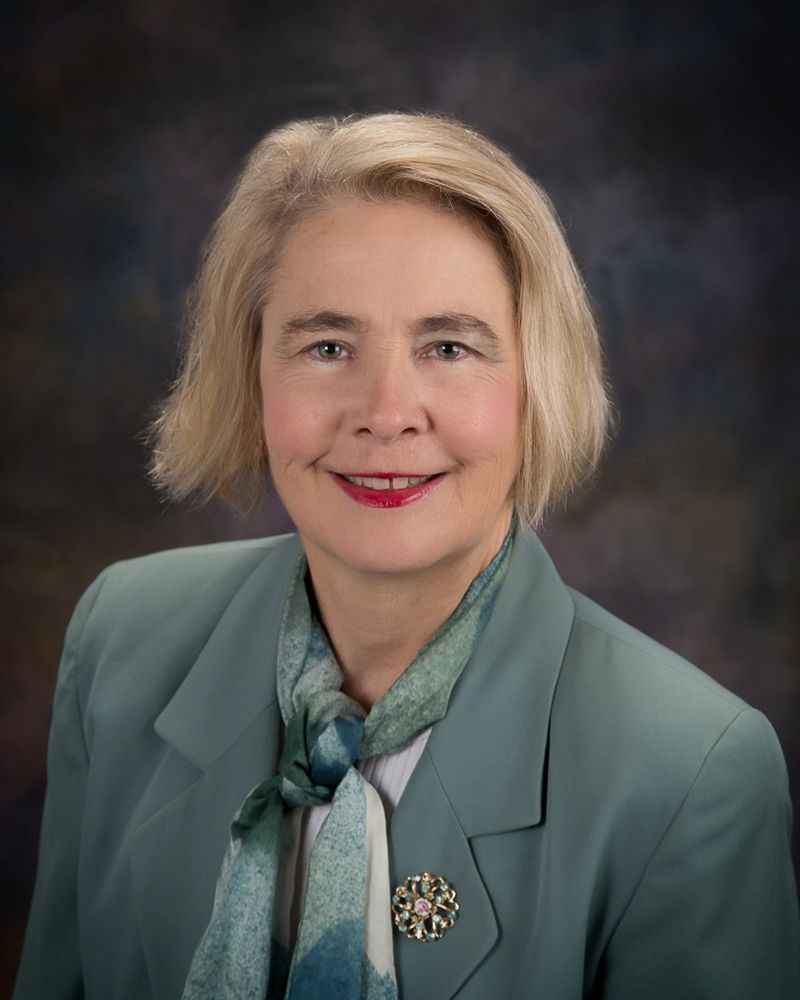
Sharon Marchisello is the author of the DeeLo Myer cat rescue mystery series from Level Best Books, starting with Trap, Neuter, Die (2024). Book #2, Trapped and Tested, is scheduled for a September 2025 release. Her other mysteries were published by Sunbury Press: Going Home (2014) and Secrets of the Galapagos (2019). A sequel, Murder at Leisure Dreams – Galapagos, will be released later in 2025. Sharon has also written a nonfiction book about personal finance (Live Well, Grow Wealth - 2018), travel articles, a blog, book reviews, and short stories. She earned a Master’s in Professional Writing from the University of Southern California and is active in Sisters in Crime, the Atlanta Writers Club, and several critique groups. Retired from a 27-year career with Delta Air Lines, she now lives in Peachtree City, GA, and serves on the boards of the Fayette Humane Society, Hometown Novel Writers Association, and the Friends of the Peachtree City Library.

Website: sharonmarchisello.com (https://smarchisello.wordpress.com/)

https://www.facebook.com/SLMarchisello

https://twitter.com/slmarchisello

https://www.goodreads.com/author/show/4297807.Sharon_Marchisello

https://www.linkedin.com/in/sharonmarchisello

https://www.instagram.com/slmarchisello/

https://www.bookbub.com/profile/sharon-marchisello


Saturday, January 14, 2017

Out-of-the Box Marketing, by Sharon Marchisello


So many books are published every year, and when you're an unknown author, it's hard to get noticed. If you can figure out a way to sell books in a non-traditional way, you might face less competition.

When my first novel, Going Home, came out in 2014, I wanted to celebrate with a launch party. But I felt uncomfortable asking my friends and neighbors to buy my book; it seemed like I was charging them admission to come to my party. Even though many of them were eagerly awaiting the book's publication and more than willing to buy a copy, some of my friends and neighbors aren't readers. And then there are those who think being a friend or relative entitles them to a free copy.

I'm an active volunteer with the Fayette Humane Society, a local nonprofit animal rescue group, and we're always short of funds. I decided to turn my launch party into a fundraiser for the Fayette Humane Society, and donate the proceeds to furthering our mission of spaying/neutering cats and dogs to fight pet overpopulation. With all the funds going to charity, I felt more comfortable asking people to buy my book. If they didn't want to read it, perhaps they could gift it to someone who's a fan of mysteries—someone who might not ordinarily know about the book. (And who might read it, like it, and refer it to friends, some of whom might actually buy it through another channel that would result in royalties for me.)

And a lot of people bought Going Home at my launch party and at subsequent author events I held. I'd tapped into two audiences: those who were actually interested in reading a good mystery (or at least owning a signed copy of a book written by an author they had met) and those who believed in supporting a local animal charity. And because the money was going to charity, many people gave me more than the list price. My book retails for $16.95; a lot of people handed me a twenty-dollar bill and told me to keep the change. (I doubt that would have happened if the money were going into my pocket.) And I didn't have to worry about collecting sales tax, since I wasn't really "selling."

But Going Home has nothing to do with animals. The heroine does have two pet cats, but they're not on screen. So partnering with animal rescue groups to sell the book did not make sense on a larger scale. The story was inspired by my mother's battle with Alzheimer's, a cruel disease that robs a person of her very identity, while her family watches hopelessly. I never realized how many lives Alzheimer's has touched until readers started telling me they could relate to my story and the mother character, because they had had to deal with a friend or relative who had suffered from the disease.

After Going Home was published, I participated in my first Alzheimer's Walk, where I discovered a huge potential audience and natural fit for a partnership. I also learned something pretty cool: all the Alzheimer's colors are reflected on my book's cover. Purple stands for those who have lost someone to Alzheimer's. Blue represents people living with Alzheimer's; yellow represents their caregivers. Orange symbolizes those who don't have a direct connection to the disease, but are supporters of the cause to find a cure. I contacted the graphic artist at Sunbury Press who had designed my cover. "Did you know about the colors?" I asked her. She hadn't known.

The following year, when I was approached by someone from the Alzheimer's Association about being a team captain, I suggested holding an author event as a fundraiser. She thought it was a great idea, but said she'd have to check with the organizers.
They turned me down. "We don't think it would be appropriate for the Alzheimer's Association to promote someone's book." Really? But it's okay to sell T-shirts, wristbands, and other swag (and you know the vendor is getting a chunk of the money) but not a book, whose entire proceeds are being donated to the cause? "If you'd like to hold your own fundraiser and donate the proceeds to us, that would be okay." Thanks a lot! I was hoping to gain a wider audience. All my friends with any interest in my book have already bought it.
This past year, my new next-door neighbor became one of the organizers of the Alzheimer's Walk for our city. I approached her with my offer, and unlike her predecessor, she got it. Although the "powers that be" still wouldn't condone selling the book at the event (alongside the T-shirts and other swag), she put me in touch with a team captain who was holding a fundraiser at a restaurant that was contributing a portion of their dinner sales to the cause. They allowed me to set up a table at the entrance to the restaurant and sell books in exchange for donations. In one evening, with no prior advertising besides my personal Facebook shares, I collected almost $300 for the Alzheimer's Association. Next year, I'm hoping to expand my reach to a different team and explore new ways to introduce my book to supporters.
Partnering with a charity is not the way to get rich from your writing. But I do think it enables you to find more readers and feel good about helping causes you care about.
Bio:
Sharon Marchisello has written fiction all her life, but Going Home (2014, Sunbury Press) is her first published novel. She has also written travel articles, corporate training manuals, book reviews, and a personal finance e book, Live Cheaply, Be Happy, Grow Wealthy. She earned a Masters in Professional Writing from the University of Southern California, and is an active member of Atlanta Sisters in Crime, where she contributed a short story to their anthology, Mystery, Atlanta Style. Going Home was inspired by her mother's battle with Alzheimer's, which prompted Sharon to wonder what it would be like to interview a witness unable to rely on her memory. She is currently seeking an agent for her new mystery novel, Secrets of the Galapagos.