
by Julie Tollefson
As a reformed journalist (four years as a copy editor for a
daily newspaper before I jumped ship—first to business and then to higher
education), I have a soft spot in my heart for good journalism. And my love is strong
for work that seriously examines the stories, challenges, and triumphs of the
people in my part of the world, the largely rural central United States.
Great journalism that also informs and strengthens my
fiction writing? Score!
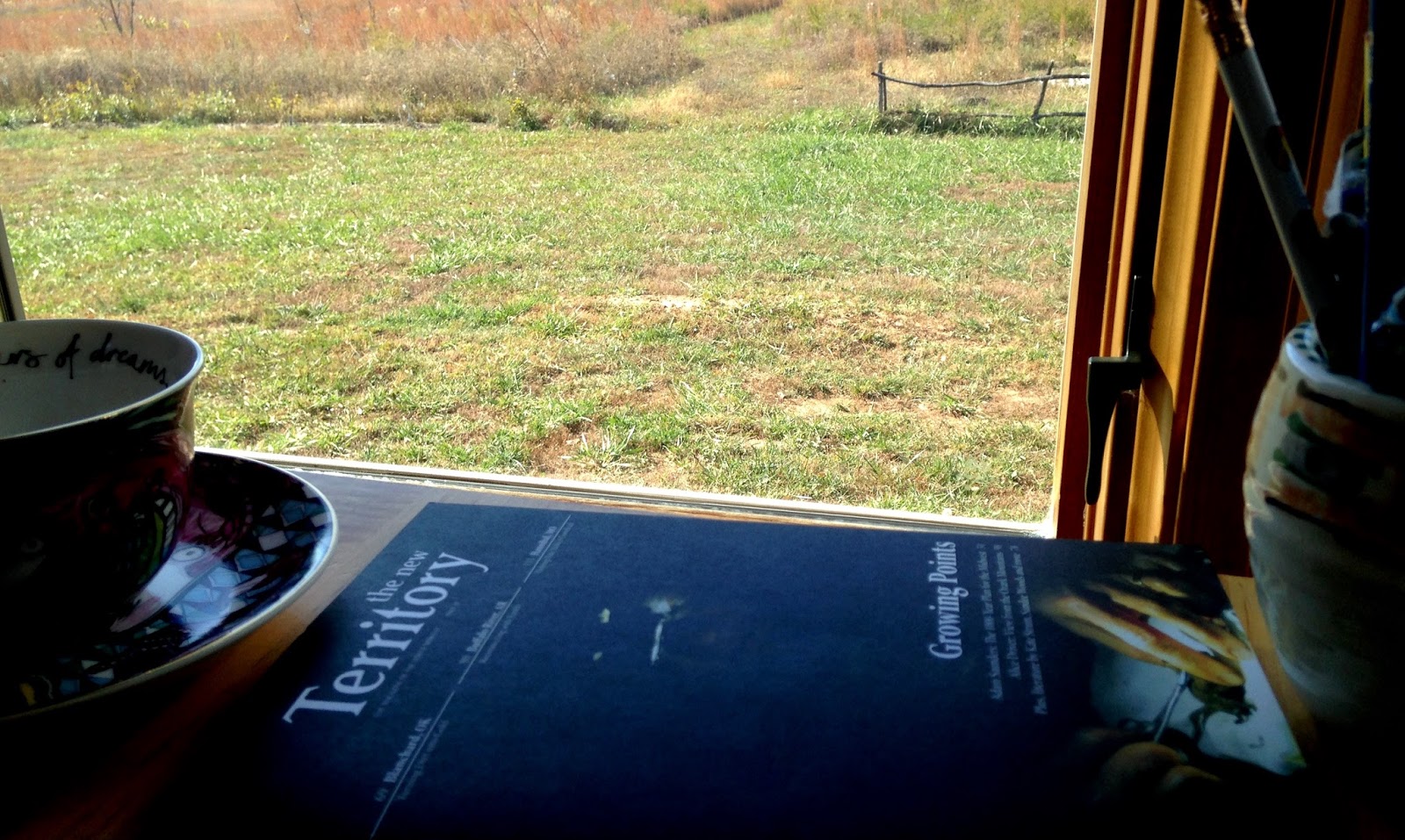
A couple of years ago, The New Territory, a magazine with a mission to
“cultivate connections among the land, people and possibilities of the Lower
Midwest,” launched.
It’s a beautiful magazine, published quarterly and filled
with personal essays, photography, fiction, poetry, art, and the kind of
quality journalism that takes a deep dive into important issues. Its focus may
be Kansas, Oklahoma, Nebraska, Arkansas, and Missouri, but the stories have significance
beyond their borders. Conservation. Transportation. Health care.
Its insightful articles are also a terrific resource for my
fiction, most of which is set in small towns in what some people deride as
flyover country.
This past week, The
New Territory’s role as one of my writing resources took a new
turn when it hosted a Facebook Live event with Michael Noll, whose short story “The
Dependents” appeared in the magazine’s second issue. (“The Dependents” is this
month’s free
story of the month on The New
Territory website.) For forty minutes or so, Noll gave a mini-class in
fiction writing, character development, and place
as an integral story ingredient. If you have time to spare, especially if
you’re a writer, check out the October 25 video on the magazine’s Facebook page.
Because of that Facebook Live event, I visited Noll’s
website, Read to Write Stories,
and found a treasure trove of writing resources: an extensive collection of
author interviews and writing exercises—in categories such as Exercises to Help
Find a Premise and Exercises for Structure—based on excerpts of published
essays, novels, and more. The interviews I’ve read so far have been
enlightening, and I’ve bookmarked the site for the future.
My younger self, from the pre-Internet era, would be
overwhelmed by the sheer volume, diversity, and availability of resources for
writers today. The ones described here—from traditional print journalism to
websites to social media—represent just a tiny slice. As a writer, what are
your favorite resources for research or honing your craft?
As a reader, what are your favorites for learning about
writers or books you might be interested in?
