Showing posts with label Judy Penz Sheluk. Show all posts

Wednesday, November 8, 2023

An Interview With Judy Penz Sheluk

by Grace Topping 

Members of the mystery writing community are known for their willingness to help other writers—none more so than Judy Penz Sheluk. She has taken her helpfulness a step further and written two step-by-step reference books on publishing, Finding Your Path to Publication and recently: Self-Publishing The Ins & Outs of Going Indie. Judy joined us at Writers Who Kill to talk about the December 1 release of her guide on self-publishing. 


Self-Publishing 
The Ins & Outs of Going Indie: A Step-by-Step Guide 

You’ve thought about self-publishing, but is it the right path for you? Find answers, insights, and pro tips in Self-Publishing: The Ins & Outs of Going Indie. Written by Judy Penz Sheluk, bestselling author of Finding Your Path to Publication and multiple mystery novels, this must-have reference book covers the nuts and bolts of self-publishing from business basics and publishing platforms to post-publication sales and marketing strategies. Whether you’re an aspiring author, a traditionally published author considering a change, or merely curious, “Going Indie” takes an honest, unbiased look at the pros and cons of self-publishing while guiding you through the process—one easy-to-understand step at a time.           www.amazon.com


Welcome back, Judy, to Writers Who Kill.


You had books traditionally published. What made you decide to go indie for the next books in your publishing journey?


I’d been with two medium-sized independent publishers. One (an MWA-approved publisher) shuttered its doors in 2018. The other (in business for 14 years) gradually culled its list until they were only publishing their own works. I was “orphaned” by them in 2017 (orphaned being the industry term for a publishing contract being terminated early). 

Fortunately, I regained all rights to my books (that’s not always the case). In any event, I was faced with three choices: give up, try to find another publisher, or self-publish. I’m not the sort of person who gives up. I didn’t think another independent publisher could do more for me than I could for myself (having learned much along the way) and, besides, there was no guarantee that I wouldn’t be in the same spot down the road if the publisher decided to shut down. Self-publishing just made sense.


In addition to going indie, you established your own publishing imprint, Superior Shores Press. That sounds like going far beyond self-publishing. Please tell us about it.


Yes, I set up Superior Shores Press in February 2018. It’s been a great decision for me, personally. But even if all someone wants to do is publish their own books, it’s worth setting up an imprint and it’s not all that difficult. 


In December, you will be launching Self-Publishing The Ins & Outs of Going Indie: A Step-by-Step Guide (available now for preorder). What made you decide to write this guide?


Yes, December 1 (www.books2read.com/going-indie). And to answer your question, I believe there is a need for an honest, unbiased look at self-publishing. I spell out the steps involved in an accessible way so an individual can decide if it’s the right path for them. 

You’ve written that self-publishing may not be for everyone. When considering self-publishing, what is the most important thing a writer needs to take into consideration?


Time, money, and multi-tasking. Time: there’s a definite learning curve, and you need to have a business sense and be ready to learn the technical aspects. Money: every expense, from editing to cover art, is on you. Multi-tasking: You’re running a business. You are CEO, admin, advertising exec, and everything in between. Organization is a must.


The term indie (or being an independent writer) has changed somewhat in recent years. How was it previously used, and how do you define it? 


An independent publisher is a traditional publisher not associated with a large press (like HarperCollins, for example). An indie author is one who independently publishes their own works. There’s a lot of that sort of duplication in the writing world. For example, there are hybrid publishers (you pay for them to do the work) and hybrid authors, like me (indie published, and also published by a traditional publisher). 


Before writing the guide on going indie, you published Finding Your Path to Publication: A Step-by-Step Guide. The reviews have been outstanding. What have you learned from the whole process? Is there anything that you wish you had done differently?


Thank you, I’ve been pleased with the reviews. As for doing anything differently, no, it went exactly as I’d hoped. I worked with an editor (Emily Nakeff) during the writing process (for both books) and then with my go-to editor (Ti Locke) for the final round. My cover art guy (Hunter Martin) was, as always, able to see inside my head. But I came to it after considerable thought as to whether I should do it, and how to approach it. I really planned each step well ahead of time (which, ironically, is completely at odds with my pantser style of writing fiction).

Some of your mysteries have been translated into different languages. Do you plan to have the guides translated?


Not at this time. The guides are geared to U.S. and Canadian authors; the steps can be followed by anyone, in any country, but the resources are all North American-based. 


You’ve published three Superior Shores Anthologies. What prompted you to put together these collections of short stories by various authors? Will you be doing more?


The anthologies are my way of giving back (my first publishing credits were short stories), as well as a means of giving the press “legitimacy.” And yes, there are plans for at least two more. The first of the two, Larceny & Last Chances, is open for submissions as of November 15. https://www.judypenzsheluk.com/larceny/


I’ve listened to several of your mysteries in audiobook format and enjoyed them immensely. How involved were you in their production?  


I selected the narrators, listened to each chapter as completed, and published it through ACX (Amazon’s audiobook division). It’s more work for the narrator than the author. I’m not sure if I’ll put the step-by-step books on audio – I’m not sure how well they would translate to audio. It’s something I need to think about. 
 

You always seem to be juggling a number of projects. Is there anything that you haven’t attempted that you would like to?


Oh my gosh, yes! I really want to write about a true crime and found a cold case that would be perfect. But it’s a lot of digging through old newspaper archives, and I’ve already discovered (by dabbling) that it can be a tedious process. Still…it’s on my to-do list. I’d like to take a course on playwriting and write a simple play for local theatre. I keep bumping that one, so no idea if it will ever happen. But it’s on the back burner. I’m also sort of in the process of writing a standalone, but that took a back seat to the step-by-step books. I’m hoping 2024 is the year to finish at least one of those projects. No idea which one will “win.”


What’s next for you?


Just taking one day at a time, and most grateful for each one.


What is the most valuable thing you’ve learned since you started writing?


The harder you work, the luckier you get.


Thank you, Judy. 


To learn more about Judy and her works, visit www.judypenzsheluk.com.


Grace Topping is the author of the Laura Bishop Mystery Series. 


Wednesday, May 3, 2023

An Interview With Judy Penz Sheluk

by Grace Topping 

Ever since Judy Penz Sheluk came out with her first book many years ago, I’ve followed her career with great interest. I’ve read the books in her Glass Dolphin and Marketville series, listened to them in audio, and followed her ups and downs in the publishing world, which included starting her own publishing imprint, Superior Shores Press. So when she wrote and published Finding Your Path to Publication: A Step-by-Step Guide, I knew it would contain a wealth of information. 


I’ve read a number of books developed to help writers get their books published, but Judy’s book tops them all. This is definitely a book every writer needs to have on their reference shelf. It’s up to date with what’s happening in the publishing world. It’s also different in that Judy wrote it in first person, and it’s very conversational. Almost like she has a group of friends sitting around a campfire and she’s sharing everything she’s learned about publishing. By including her own personal experiences, the book goes beyond a simple “how-to” guide. It was a pleasure talking to Judy about her career and her terrific new book. 


Finding Your Path to Publication: A Step-by-Step Guide

The road to publishing is paved with good intentions…and horror stories of authors who had to learn the hard way.


For the emerging author, the publishing world can be overwhelming. You’ve written the book, and you’re ready to share it with the world, but don’t know where to start. Traditional, independent press, hybrid, self-publishing, and online social platforms—all are valid publishing paths. The question is, which one is right for you?

Finding Your Path to Publication is an introduction to an industry that remains a mystery to those on the outside. Learn how each publishing option works, what to expect from the process start to finish, how to identify red flags, and avoid common pitfalls. With statistics, examples, and helpful resources compiled by an industry insider who’s been down a few of these paths, this is your roadmap to decide which path you’d like to explore, and where to begin your author journey.

                                                                                                www.amazon.com


Welcome back, Judy, to Writers Who Kill.


After years of writing mysteries and short stories, and publishing anthologies, you took the wealth of experience you gained along the way and published Finding Your Path to Publication: A Step-by-Step Guide.” What prompted you to produce this guide?


The germ of the idea started in November 2021, after I’d done a NaNoWriMo debriefing for my then local library— Failing (and Succeeding!) with NaNoWriMo. For those who don’t know, NaNoWriMo is an annual event with the challenge of writing 50,000 words during the month of November. When it came to the Q&A portion of the program, it became clear that most of the attendees were more interested in how to get published than chatting about whether they’d reached the 50,000-word mark. That led to the library requesting a workshop on publishing, and following that, one on self-publishing. Based on the number of attendees, and their thirst for knowledge, I knew there was an interest and a need, but I couldn’t find any single book that covered all the different paths to publication. I’m a complete pantser when it comes to writing fiction, but with this book, my library presentation—Finding Your Path to Publication—worked as an outline, and I liked the idea of going back to my roots as a journalist.

You spent a career writing and editing non-fiction. Why the move to writing fiction—specifically mysteries?


I’d been a journalist since 2003 and added magazine editor to my repertoire in 2005. I loved the work, especially my ten years as Senior Editor at New England Antiques Journal (2008-2018). But I’d wanted to write a novel since I was a kid. In 2012, I went to a mystery conference in Toronto (the now defunct Bloody Words) and meeting other authors, listening to them speak on panels, I thought, “I think I’m ready to try that now.”

I read the occasional historical fiction or autobiography, but my go-to has always been mystery and suspense. There’s something satisfying about trying to unravel clues and guess the ending. It seemed like a natural progression to try to write a mystery of my own. I never have an outline and am often surprised by whodunit (or why they done it!). Mostly though, writing is fun for me. It never feels like a job.


From writing mysteries and short stories, you took a major step setting up your own publishing venture, Superior Shores Press, which had to be a huge challenge. Please tell us about that.


That was 2018. My first book was published in 2015. By 2018, I’d been “orphaned” twice. One publisher closed and the other culled her author list down until she now only publishes her own titles. I decided I would try to start my own imprint and it’s proved to be the right decision for me. 


I cover getting orphaned in Finding Your Path to Publication. It’s not as uncommon as some might think, and when it happens, those authors are often left struggling with what to do next. Self-publishing is one option, though there are others.


Do you plan to publish more anthologies?


I do. I published one in June of 2019, 2020 and 2021, then took a much-needed break. But I’m hoping to publish a new collection in Spring 2024. Interested authors should sign up for my newsletter, where I’ll announce the Call for Submissions first. http://eepurl.com/b4cQvP


Each new step in the publishing world is exciting and satisfying, such as having audio versions of your books produced. But having your books translated into German, Chinese, Spanish, Portuguese, and other languages, has to be beyond imagination. Please tell us how the translations came about?


The Chinese language rights came about as a result of being Chair of the Crime Writers of Canada Board of Directors. Crime Writers of Taiwan was starting and one of the CWC members, who I met at Left Coast Crime Vancouver, was on the Board of CWT. He interviewed me for their inaugural magazine and that led to interest in publishing Skeletons in the Attic. It released in the Asian marketplace (excluding mainland China) in March of this year.


The German translations are published by Superior Shores Press, my imprint. The translator, Petra Schmelzeisen, is native German but has lived in Canada for many years, and the proofreader, Mary, lives in Germany. We talked about possibilities and worked out terms. Right now, the first two Marketville books are live, and book three is almost ready. I feel very lucky to have Petra and Mary in my life.

I’ve also had some translations done through Babelcube, Inc., which is basically a publisher that brokers contracts between authors and translators for a share of the royalties. Nothing against the translators I worked with on the published books (they were great), but I’ve been extremely disappointed in Babelcube’s customer service and their lack of transparency when it comes to sales reporting and royalty payments. There are few decisions in life that I regret, but going with Babelcube is definitely one of them. I no longer accept translation requests through them.


You describe the books in your Glass Dolphin series as “cozy mysteries without the cats, crafts, or cookie recipes.” Why the distinction?


Marketing (laughs). Actually, there’s some truth in that. I was in one of those author “speed dating” rounds at Left Coast Crime Vancouver (2019), and they partnered me with Vicki Delany, who is seriously one of the most beloved and prolific cozy writers on the planet. And I thought…how am I going to distinguish myself and my books from Vicki? One of my book reviewers had mentioned that my books were clever cozies without the need for cats, crafts, or cookie recipes. I tried it out as we made the rounds and could tell it worked as a slogan. I’ve used it ever since.


Hopefully, we’ll see more books in your Glass Dolphin and Marketville series. Any plans for more books in these series or for a new series?


I’ve started a standalone suspense, but it’s been sidelined while I finish the Step-by-Step Guides (in addition to Path, I have one coming out this fall on Self-publishing). The Glass Dolphin series ended at three, and I’m happy at where the main characters landed in their lives. 

That said, a couple of the characters from Glass have made guest appearances in the Marketville series. Because of that, I’ve toyed with the concept of a Glass Dolphin / Marketville mashup. I have a couple of ideas on how to do that, but I expect it will be 2024 before I get working on it with any sense of urgency. 


Now that you’ve written two successful series, produced in audio and translated into multiple languages, set up your own press and published anthologies, and written a self-help book on becoming published, what challenges do you hope to take on next?


I’ve already mentioned the self-publishing guide coming this fall, another anthology, the possible mashup, plus the standalone suspense, which will be a new genre for me to write. I think that’s about all I can deal with right now (laughs). 


Book promotion seems to be the bane of most writers. How do you balance writing, publishing, and promoting your books?


I accept that some days will be devoted to one of the three. I used to try to do a bit of each, every day, but that started to feel too much like work. There are some benefits to being your own boss.


Which one do you find the most challenging?


Promotion. Social media, especially. If I ever earn Stephen King money, I’ll hire someone to take care of all of that for me. If I wasn’t an author, I’d have no social media presence, but these days, it’s part of the deal. 


Leaving big city life for a home along the shores of Lake Superior sounds like a dream come true for you and your husband. And from the photos of your dog, Gibbs, paddling in the lake, he’s also happy with the move. Has the change had an effect on your writing—caused you to be more creative?

Well, to be fair, I haven’t lived in a big city since I left Toronto at 23. I do best in small towns and have lived in a few of them. But living on the lake is quite spectacular, and it does boost the creative spirit to wake up next to the water. And Gibbs is definitely loving it here!


Since you started writing fiction, what is the most valuable thing you’ve learned along the way?


That the best place to get story ideas is from life. There’s an endless supply, as long as you’re willing to pay attention.


Thank you, Judy.


To learn more about Judy Penz Sheluk and her books, visit her at judypenzsheluk.com.


To obtain a copy of Finding Your Path to Publication: A Step-by-Step Guide:

Universal Buy Link: https://books2read.com/FindingYourPathtoPublication


Grace Topping is the author of the Laura Bishop Mystery Series.


Saturday, October 29, 2022

How a Prequel Became a Sequel By Judy Penz Sheluk

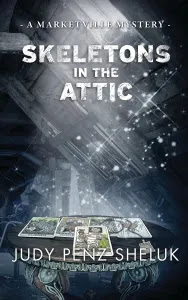
The title came first. Before There Were Skeletons, a nod to Skeletons in the Attic, book 1 in my Marketville Mystery series. In book 1, Calamity (Callie) Barnstable, my protagonist, 36 at the time, inherits a house in Marketville from her father, who has died in an “unfortunate” occupational accident. The catch? She must move into the house, a house she didn’t know existed, and find out the truth about her mother, Abigail Osgoode Barnstable, who disappeared when Callie was six


Callie ferrets out the truth, but that doesn’t mean she isn’t left with unanswered questions and unresolved issues. In book 2, Past & Present, Callie starts her own private investigation firm—Past & Present Investigations, specializing in cold cases—may as well put into practice what she learned, right? It’s either that or going back to a nine-to-five job, the latter holding no appeal. But while Callie finds herself adept at digging into other people’s lives and secrets, she’s not quite equal to the challenge of doing that in her own life, especially when it comes to those “mother” issues that still need resolving.


In book 3, A Fool’s Journey, Callie’s on the hunt for a young man who’s been missing for 20 years. She also manages to develop a relationship with her heretofore estranged great grandmother, Olivia Osgoode, but the skeletons of her past, and the scars left behind, remain.


My initial thought was that I’d write a prequel from Abigail’s point of view. You see, Abigail (Abby to her friends) had been in her final year at Lakeside High, with plans to go to university, a dream easily achieved, thanks to good marks and affluent parents. She got pregnant instead, dropped out of school, married the boy (James “Jimmy” Barnstable), and moved to Marketville. There’s a story there, right? At least I thought there was.


And so, I wrote the first few chapters as Abby, alternating attempts between first person (which is how the Marketville mysteries are written, albeit from Callie’s POV) to third person. Here’s a third person version of the prologue.


September 1976


Abigail Osgoode hopped off the school bus in front of Ben’s Convenience, unrolled the waistband of her orange miniskirt until the hem reached mid-thigh, and started walking east on Winding Lake Drive. The bus driver would have dropped her off at the gated entry into Moore Gate Manor, but Abigail preferred to keep where she lived private. It was hard enough being the new kid on the Lakeside block, let alone being the new rich kid. Most of the students at Lakeside High came from what could best be described as limited means. Lakeside, despite the indication of growth to come, was primarily a summer resort town with a population that declined dramatically during the remainder of the year. Local jobs tended to be retail, restaurants, or seasonal—marinas and lawn mowing in the summer, snowmobiles, and ice hut rentals in the winter.


Now…I didn’t use any of that, or the 50+ additional pages I wrote in Abby’s voice, and while it just never felt right to me, it did serve to make me understand Abby. Where she came from, who she was, what she became, why she disappeared on Valentine’s Day 1980, leaving behind a six-year-old daughter and a husband who loved her.


Some of that backstory trickles into the final version of Before There Were Skeletons, told from her daughter Callie’s point of view, 45 years later. Some doesn’t.


Because life is like that, isn’t it? Full circle. Even when we tear away the extra pages we don’t want to remember, some of it sticks. Some of it doesn’t. And those we’ve left behind are left wondering.


About the Book

The last time anyone saw Veronica Goodman was the night of February 14, 1995, the only clue to her disappearance a silver heart-shaped pendant, found in the parking lot behind the bar where she worked. Twenty-seven years later, Veronica’s daughter, Kate, just a year old when her mother vanished, hires Past & Present Investigations to find out what happened that fateful night.

Calamity (Callie) Barnstable is drawn to the case, the similarities to her own mother’s disappearance on Valentine’s Day 1986 hauntingly familiar. A disappearance she thought she’d come to terms with. Until Veronica’s case, and five high school yearbooks, take her back in time…a time before there were skeletons.

Universal Book Link: https://books2read.com/u/mqXVze.


About the Author

A former journalist and magazine editor, Judy Penz Sheluk is the bestselling author of two mystery series: The Glass Dolphin Mysteries and the Marketville Mysteries. Her short crime fiction appears in several collections, including the Superior Shores Anthologies, which she also edited.

Judy is a member of Sisters in Crime, International Thriller Writers, the Short Mystery Fiction Society, and Crime Writers of Canada, where she served as Chair on the Board of Directors. She lives in Northern Ontario on the shores of Lake Superior. Find her at judypenzsheluk.com.


Tuesday, June 15, 2021

Finding the Story You Have to Tell

by Paula Gail Benson

Earlier this month, KM Rockwood posted a message about her love for short stories and about writing “Burning Desire,” the first story in Heartbreaks and Half-truths, a new anthology edited and with a story by Judy Penz Sheluk (Superior Shores Press), available June 18, 2020. Yesterday, in the Stiletto Gang, I gave a short summary of each of the anthology’s stories, including my own, “Living One’s Own Truth.”

My journey in writing the story is different from my previous work. Usually, I start out with a clear idea of who the narrator is. I thought I’d discovered her when, in response to the call, I began with the image of a daughter raised by her embittered and abandoned mother to be a heartbreaker. I could hear the daughter’s voice explaining how her mother, a stern classics teacher at a 1931 boys’ school, tortured the students and encouraged the daughter to concentrate on using her looks rather than her brain. I sensed the daughter resented this manipulation and acquired limited knowledge to rebel. When a new teacher arrived, a handsome fencing instructor who appreciated both the daughter’s mind and body, she was ready to run away with him. However, his ultimate aim was to use her against her mother. I kept trying to determine how the daughter was going to turn the tables on this beau/betrayer.

Only, I couldn’t figure out how she would manage it. She was intelligent, but being so limited in focus and experience made her self-absorbed. She had known manipulation, but she had no capacity for reversing it except by using her beauty, which didn’t work. The story stopped moving forward.

I could still hear the daughter telling about her upbringing, but I realized that she needed someone to listen to her and perhaps consider her best interests. At that point, I discovered there was another teacher just waiting in the wings to hear the daughter out and show her some sympathy. That new teacher became the narrator of and a key player in the story.

Before Covid 19 redirected our lives, I had hoped to attend Louis Bayard’s class on writing historical fiction at Yale University this summer. In fact, I had submitted the opening scene of this story as my writing sample for admission.

In a way, writing this story and learning how to confirm and incorporate historical accuracies was a good substitute for the class (although, I still would like to take it, if it is offered again). Did you realize that the punctuation in Emily Dickinson’s poetry as she wrote it differs from that in the later published versions? Because my story took place in 1931, I had to use the punctuation in the earliest printing rather than the 1955 version that was greatly edited.

Part of my story involved the sport of fencing in the Olympics. I researched when women competed in fencing and learned about the spelling of the fencing gear. Judy and I had discussions about sabre vs. saber.
Judy Penz Sheluk
Some of my initial research about the Framingham Normal School in Boston introduced me to the institution’s founding president Cyrus Pierce. His quote, “live to the truth,” led to the story’s title.

Are you looking for a great summer read? Please let me recommend Heartbreaks and Half-truths. Each story interprets the theme quite differently. There are computers, science experiments, PIs, and just regular folks from different time periods experiencing and reacting to love and loss. And, in each story, part of the fun is uncovering what is hidden. The secret you think you know may be a different truth altogether.

Come and explore this anthology which includes the following contributors: Sharon Hart Addy, James Blakey, Gustavo Bondoni, Susan Daly, Buzz Dixon, Rhonda Eikamp, Christine Eskilson, Tracy Falenwolfe, Kate Flora, John M. Floyd, J.A. Henderson, Blair Keetch, Steve Liskow, Edward Lodi, Judy Penz Sheluk, KM Rockwood, Peggy Rothschild, Joseph S. Walker, James Lincoln Warren, Chris Wheatley, Robb T. White, and me!

Do you enjoy reading short stories? I hope so.

Monday, August 19, 2019

It Started With an Article in the Community Paper by Judy Penz Sheluk

It was March 2018, a cold and blustery day in my small town of Alliston, Ontario, Canada, the groundhog getting his forecast for an early spring wrong once again. I sat down at the kitchen table with a cup of cinnamon rooibos tea and the community paper, setting aside the grocery store flyers for later perusal. As I scanned obituaries (yes, I do that) and stories of local politics, restaurant openings, and high school sports accomplishments, one article grabbed my attention:

MAN STILL MISSING 13 YEARS AFTER DISAPPEARANCE

The article went on to report that in 2005, a 24-year-old man had dropped out of college, moved back home, and then, one day, when he was supposed to be out job hunting, left a note for his family on the kitchen counter: he was leaving to find himself. No one has seen or heard from him since.

The photo of the young man accompanying the piece was credited to Ontario Missing Adults. I’d never heard of it, and googled to find out more. What I discovered took my breath away: eighteen pages, 25 entries per page, of missing adults, some dating back as far as 1935. Another 200 entries of Unidentified Adults, remains found, identity unknown.

And this was just for Ontario. Further research showed that in 2017, 78,000+ adults were reported to the RCMP as missing in Canada. And while the majority of cases were solved within a few days, far too many remained unsolved.

I reached out to the founder of the Missing Adults Registry, Lusia Dion. “Dealing with missing adults is a difficult issue,” she told me. “There is no law that prevents an adult from voluntarily picking up and starting a new life somewhere else. The situation is further complicated in cases where there is no clear indication of foul play. It’s a delicate balance between respecting the adult’s privacy, while trying to determine exactly what has happened to them. At the same time, family and friends of the missing person are left to grapple with feelings and situations for which there is no guidebook. I created the Ontario Registry of Missing and Unidentified Adults as a first step in helping those families.”

While the young man featured in the article initially inspired the story behind A Fool’s Journey, the novel is a compilation of many cases fueled by countless hours of scouring the Registry, and the invaluable and compassionate input of Lusia Dion, who has a small role in the book as Lucy Daneluk, founder of the fictional Ontario Registry for Missing and Unidentified Adults.

And now, here’s a bit about the book:

 In March 2000, twenty-year old Brandon Colbeck left home to find himself on a self-proclaimed “fool’s journey.” No one—not friends or family—has seen or heard from him since, until a phone call from a man claiming to be Brandon brings everything back to the forefront. Calamity (Callie) Barnstable and her team at Past & Present Investigations have been hired to find out what happened to Brandon, and, if still alive, where he might be. As Callie follows a trail of buried secrets and decades-old deceptions only one thing is certain: whatever the outcome, there is no such thing as closure.

Now available for pre-order, A Fool’s Journey, book 3 in Judy’s Marketville Mystery series, will be released on August 21 in trade paperback at all the usual suspects, and on Kindle.
Amazon: https://www.amazon.com/Fools-Journey-Marketville-Mystery-ebook/dp/B07VM4751B
Barnes & Noble: https://www.barnesandnoble.com/w/a-fools-journey-judy-penz-sheluk/1132632054

Judy Penz Sheluk is the author of the Glass Dolphin Mystery and Marketville Mystery series, and the editor of The Best Laid Plans: 21 Stories of Mystery & Suspense. Her short stories can be found in several collections. Judy is also a member of Sisters in Crime, International Thriller Writers, the Short Mystery Fiction Society, and Crime Writers of Canada, where she serves as Vice Chair on the Board of Directors. Find her at judypenzsheluk.com.

Wednesday, September 26, 2018

An Interview With Judy Penz Sheluk

by Grace Topping

One of the best things about traditional mysteries is the puzzle they present—readers trying to solve the mystery based on the information and clues the writer weaves into the story. Judy Penz Sheluk, in her most recent mystery, Past and Present, provides readers with an intricate puzzle that had me turning pages. I didn’t want to put it down. 


Past and Present

Sometimes the past reaches out to the present…

It’s been thirteen months since Calamity (Callie) Barnstable inherited a house in Marketville under the condition that she search for the person who murdered her mother thirty years earlier. She solves the mystery, but what next? Unemployment? Another nine-to-five job in Toronto?

Callie decides to set down roots in Marketville, take the skills and knowledge she acquired over the past year, and start her own business: Past & Present Investigations.
It’s not long before Callie and her new business partner, best friend Chantelle Marchand, get their first client: a woman who wants to find out everything she can about her grandmother, Anneliese Prei, and how she came to a “bad end” in 1956. It sounds like a perfect first assignment. Except for one thing: Anneliese’s past winds its way into Callie’s present, and not in a manner anyone—least of all Callie—could have predicted.


Welcome back, Judy, to Writers Who Kill.

The latest book in your Marketville Mystery series has your main character, Calamity “Callie” Barnstable forming a team for her Past & Present Investigations business. What exactly is her business?

Judy Penz Sheluk
Past & Present Investigations isn’t your typical P.I. firm, in that neither Callie, her partner, Chantelle, or their team are licensed private investigators. Rather, Callie is taking the skills she acquired in Skeletons in the Attic, when searching for the truth about her mother’s disappearance thirty years earlier. Their first case involves a thirty-five-year-old woman looking for information about her grandmother, who immigrated to Canada in 1952 and came to a “bad end” in 1956. 

Her team includes a genealogist, a research librarian, an antiques expert, and a resident psychic. What do these different areas of expertise bring to the team? 

I’ve recently become somewhat fascinated by genealogy and relatives I’ve never met. I thought an expert in this field could explore that in their investigations. The research librarian culls old newspaper articles looking for information. The psychic specializes in tarot, and she’s started a Misty’s Message page that has proven to be far more helpful than Callie (who wasn’t crazy about the idea) could have anticipated. 

Occasionally Callie relies on the aid of someone with a skill in psychometry or psychometrics. What exactly is that?

Psychometry is another name for object reading. It’s based on the theory that the human mind radiates an aura in all directions, which impresses everything within its orbit. Since all objects are porous, the minute holes in the object’s surface collect fragments of the mental aura of the person who possessed the object. There’s no scientific evidence that psychometry exists, and skeptics explain alleged successes of psychometry by cold reading and confirmation bias. Callie definitely leans towards the side of non-believer.

The team members are quite skilled in doing research using various media. Since you write about it so convincingly, do you have a background in doing research?

I’ve been a fulltime freelance writer and editor since 2003, with a lot of that work done for a wide variety of trade and consumer magazines (home building, finance, agriculture, antiques, engineering, pile driving, travel etc.). One of the skills you acquire pretty quickly if you want to be successful as a freelancer is the ability to research, which usually includes talking to experts (people love talking about their work/passion). Behind each of my team members’ research is me, the author, making sure even the small details, like old train schedules and ship menus, are accurate.

In her dealings with a psychic and psychometrics, Callie went from being a complete skeptic to a hopeful cynic. How about you? Are you a complete skeptic or a hopeful cynic?


I’m a bit of both. I think there are people who may have psychic abilities. I also think there are plenty of fraudsters. When I was about sixteen, my mother and her best friend, Kay, dragged me to an “event” where a blind psychic would go into the audience, take a proffered object, and tell the owner something about it (for something like $10 a pop). At the time, Kay and my mom were big on going to fortunetellers, Kay being recently divorced and actively looking for a replacement husband and impending news of where or when she’d find one, whereas my father had died of stomach cancer two years earlier, widowing my mother at age 41. She was looking for answers, too, though her hope was that she’d hear from my father on the “other side.”

Anyway, being the stellar teenager that I was (hey, this is my version of the story), I agreed to go with them and so off we went. I’ll admit to being a major league skeptic, especially after the first few objects garnered generic responses like, “The person who gave you this ring meant a lot to you, didn’t they?” and so forth. It was all I could do to keep from laughing out loud.
When my turn came, I handed him a gold locket given to me by my father two month’s before his death. I was expecting the usual rhetoric when the psychic doubled over, clutching his stomach, his face writhed in pain, tears trickling down. I watched transfixed, wondering how he could have felt my father’s pain while holding that locket, when he handed me back the locket and said something along the lines of  “He is watching over you.” My mom and Kay became life long believers. I never went to another psychic.
Callie is always reaching for a cup of rooibos tea. What is rooibos tea?

OMG, you’ve never heard of rooibos tea? You are missing out! It’s herbal, no caffeine, and the tea is made from the leaves of the African rooibos bush. My favorite blend is by Tetley Tea and it’s called Warmth. It's a blend of cinnamon, spices, and rooibos. I think it may only be available in Canada. Well, we need the warmth up here, at least in the winter! 

Editor’s note: I discovered rooibos tea is also available in the U. S. and will have to try it.

After successfully publishing books with an established publishing company, you took a huge step and set up Superior Shores Press, your own imprint. What prompted this step?

When I signed my contract with Barking Rain Press (www.barkingrainpress.org) in 2014, I never dreamed I’d want to self-publish. But I’ve learned a lot about the business since then, and I’ve also realized that when you’re with a small press, most of the promotion lands on the author’s shoulders. Even so, the author has no control over pricing etc. and the process of getting published is painfully slow. 

I set up Superior Shores Press in February 2018. I hired a professional editor for Past and Present, one I’d worked with from Barking Rain, and also a professional proofreader. I hired a cover artist, Hunter Martin, and I love the cover. I’ve had input before, but never control over every step. It’s quite exhilarating. Whether I earn back the money I invested upfront remains to be seen, but if I was doing this, I was doing it right.

Now that you have four books in print and some short stories, what do you know now that you wish you had known when you started writing?

That the writing part does get easier. You learn to be more efficient with your time and your words. I’d also tell my old self to buckle up and get used to doing a lot of shameless self-promotion.

What’s next for Callie and her team?

I’m midway through book 3, which was inspired by an article I read in my local newspaper. Beyond that, I can’t say. I’m terribly superstitious about stuff like that.

Thank you, Judy.

For more information about Judy and her books/short stories, visit her at http://www.judypenzsheluk.com