Showing posts with label The Kate Hamilton Mystery Series. Show all posts

Wednesday, October 18, 2023

An Interview with Connie Berry by Grace Topping

 One of the best things about becoming a member of the mystery-writing community is the friends you'll make. I met Connie Berry a number of years ago at Sleuthfest, a conference for mystery writers held each year in Florida. We both had manuscripts we had been working on for more years than we wanted to count. We met again at Malice Domestic and CrimeBake and later exchanged manuscripts for critique. A few years later, we sold our manuscripts about the same time and actually had our first books published within a month of each other. We truly traveled the path to publication together. In an ironic twist of fate, our first books were nominated for an Agatha Award for best first mystery. Neither one of us won, but Connie's books will always be a winner to me. Connie has gone on to win a number of other awards and most recently had one of her books nominated for an Edgar Award. Connie is a member of the Writers Who Kill family, and it was a pleasure interviewing her about her latest release, Mistletoe and Murder.

Mistletoe and Murder

Five days before her wedding to Detective Inspector Tom Mallory, Kate Hamilton finds her friend Sheila in need of her help. Sheila, a soon-to-be bride herself, needs Kate’s help to get Carl Curtis, her fiancĂ©, out of Venezuela. His passport was taken from him by the authorities, and they say he owes them money. Carl says it’s a bribe, but he’s unable to leave unless it’s paid. Sheila decides to sell her grandfather’s coin collection, including a valuable gold coin presented by Queen Victoria to her great-grandmother. Among her grandfather’s stored possessions is a letter from the Queen. When someone breaks into Sheila’s house, all signs point to even more foul play. As Kate deals with a disturbing number of wedding-plan hitches, a fire in town reveals a body. Unfortunately, the burned-out flat is next to the bridal salon where Kate’s dress is being altered. Can the cleaners really eliminate the odor of smoke? 

As the clock ticks down to Kate and Tom’s “I do”s, Kate goes to Sheila’s house to help her search for the royal letter, but she’s nowhere to be found. The house has been torn apart, and Sheila is missing. Could Sheila’s disappearance be connected to the death in town? Kate will have to piece together the clues.  www.amazon.com

 Welcome, Connie.

In the midst of your Kate Hamilton series, you wrote the novella, Mistletoe and Murder, instead of a full-length novel. Why a novella? 


The short answer is timing. Traditional publishing isn’t a quick thing. Often a full year goes by from the finishing of a manuscript to the shipment of books to outlets. With the fifth book in my series scheduled for publication in late spring of 2024, I needed something to bridge the gap for my readers. I proposed a novella, and my publisher agreed. The deeper answer involves subject matter. Mistletoe and Murder covers six days leading up to Kate and Tom’s planned Christmas Eve wedding. Since my books are mysteries, not romances, the wedding—does it come off or not?—is a subplot. The main plot involves the mystery surrounding a client who vanishes along with a rare gold coin and a hand-written letter from Queen Victoria, leaving a single bloody fingerprint. Can Kate and Tom ignore this woman and go off on their honeymoon? Of course not.

 Other than the length of the story, is there anything different between a book and a novella?

 The main difference is length. A novella falls somewhere between a long short story and a full-length novel. Mistletoe and Murder has 38,000 words rather than my usual 90,000+. A novella has all the elements of a novel, but the shorter length requires a limited cast of characters and a more focused storyline with fewer subplots. This is the first novella I’ve written, and it was lots of fun to pare the story down to the essentials.

Each of your books has a rich and complex plot involving relationships, murder, and Kate’s knowledge of antiques. So often items from the past result in intrigue in the present. What is it about Kate that causes her to react to certain items?

Thank you for the compliment, Grace. Readers of the Kate Hamilton Mysteries know that Kate experiences a visceral reaction to objects of great age and beauty--usually a vague sense of joy or fear or grief, as if the emotional atmosphere in which an object once existed had seeped into the joints and crevices along with the dust and grime. Every once in a while, these impressions coalesce into something more specific and unsettling—a word. a phrase, even an image that alerts Kate to the fact that something nefarious is afoot. Kate, not one to credit such things as ESP, blames her overactive imagination, and she may be right. I use her experiences as a kind of metaphor for the truth, as William Faulkner put it, that “The past is never dead. It’s not even past.” I love history. I wish time travel was real. And I enjoy exploring the echo of the past in the present.

 How much of the plot do you hash out before you start writing? Do you start with a specific antique in mind?

Like many writers, I’m a “plantser.” That means I plan out the major turning points in the plot but leave room to follow the characters as they make their way from point to point. I know in advance the major characters, the setting, and the particular object or objects that will act as a catalyst or focal point. That’s what gives me the confidence to write. I know the book is going somewhere. But I’m always surprised at the twists and turns the characters create along the way. That’s what makes the writing process exciting and fun!

Kate and Detective Inspector Tom Mallory‘s romance has been a part of your series from the first book. Did you plan to have romance in your mystery series? Or did your characters insist on it?


In the first book, A Dream of Death, Kate is forty-five, a recent widow with two college-age children. If I presented her as immune to the charms of an attractive man, I’d have to explain that in some way. While Kate isn’t looking for romance, Tom proves hard to resist. Although Kate’s first marriage was happy, in some ways her relationship with Tom is even better. Their gifts and skills complement each other, and they come to respect each other as human beings. Besides, it doesn’t hurt that Tom is a detective inspector. As Kate becomes involved in solving crimes, he’s a good source of information. Over the course of several books, Tom learns to trust Kate’s instincts and her ability to see patterns and connect dots. Together they make a formidable team.

Kate and Tom are faced with a decision that will determine their family relationships, careers, etc. What is that decision?

It has taken Kate a while to admit she’s in love with Tom. She also recognizes the irony. The only man she’s been attracted to since her husband’s death lives 3500 miles away from Ohio, where Kate has a thriving antiques business and her aging mother lives. If she and Tom are ever to be together, one of them will have to move. That’s the problem: which of them will give up their career and family obligations for love? And if they do, will they come to resent it? Grace, I happen to know you married a Brit, which means you and your husband faced these same questions.

 What has been the biggest challenge you’ve faced placing American Kate in a British setting?


Setting the Kate books in the UK was always my plan. My paternal grandparents were Scottish, so I grew up partly in that culture. During college, I attended St. Clare’s, Oxford, and fell completely under the spell of the British Isles. I majored in British literature, read British history extensively, and since discovering the original members of the Detection Club, have adored classic British mysteries. The challenge, of course, is the fact that I’m not and never will be a native. That means there are nuances of language, culture, history, politics, and geography I won’t comprehend without research and time spent in the UK. That’s both a challenge and a joy. I love research (too much), and I spend time in the UK at least once a year. This past summer I asked a British woman, one of my beta readers, to pay special attention to “Britishisms”—had I gotten everything right? I learned something: while British people use common past participles such as have written, have eaten, have been, they never say have gotten. It’s always have got. I’d heard it spoken, but it never registered until she pointed it out. Of course if I get something wrong, I can blame it on Kate. She’s not British either.

 Besides being faced with a solving a murder, Kate has the additional hurdle of winning over Tom’s mother. What seems to be Mrs. Mallory’s problem with Kate?


Liz Mallory’s problem with Kate is two-fold. First, she doesn’t like Americans. Kate thinks Liz fears she will talk Tom into moving to the U.S. That fear plays into the underlying problem: Liz is overly dependent on her son. Tom’s father left the family early on, and Liz raised Tom alone, working full time to provide for them. When Tom’s first wife died, leaving him with a thirteen-year-old daughter, Liz moved in with them. Tom’s hours as a policeman were unpredictable, and he needed help. Liz became a second mother to Tom’s daughter. She kept house for them, cooked for them, and came to think of herself as indispensable in Tom’s life. Making room for another woman—Kate—isn’t something Liz is willing to do. In a word, she’s jealous. At the moment, Kate has pretty much given up trying to win her over. We’ll see what happens.

 Mistletoe and Murder is set during the Christmas holidays in England. Are the ways the holidays are celebrated in the UK much different than in the US?

 Many of the Christmas traditions in the UK are the same or similar in the US. We both decorate trees, put up mistletoe, eat turkey, and open presents. Some British traditions seem odd to us, though. Here are eight:

1.     Santa Claus is called Father Christmas.

2.     Children hang stockings at the ends of their beds rather than over the fireplace.

3.     Christmas in the UK means pantomimes (“pantos”)—slapstick comedies often based on fairy tales. There’s always a villain sneaking up on the hero/heroine, giving the audience a chance to yell, “He’s right behind you!”

4.     The King’s Christmas message on Christmas Day is one of the most-watched TV shows of the year.

5.     Small mince pies are eaten by everyone, everywhere, throughout the holidays.

6.     Christmas dinner includes a flaming Christmas pudding baked with a silver coin inside. The one who finds the coin will have good luck in the coming year.

7.     Christmas crackers are pulled, revealing a tiny gift, a paper hat, and a silly joke like this one: Why did Father Christmas go to the doctor? Because he had low elf esteem.

8.     Boxing Day, December 26, is a public holiday. No one knows how it got its name, but one theory claims it was created for people to box up unwanted Christmas gifts to give to the poor. I think it’s a great idea.

 How has Kate changed over the course of the series? Or has she?


When the series began, Kate had already suffered the loss of three much-loved men in her life. Her eleven-year-old brother, whom she adored, died when Kate was five. When she was seventeen, her father was killed in a car crash on Christmas Eve. Three years before the first book, her husband, Bill, died of a massive heart attack. In each case, the loss was completely unexpected, leaving Kate with an irrational fear of loss. Although she knows it isn’t true, in her world, when you love someone, they die. Now she’s given her heart completely to Tom—even though she understands that his work as a policeman puts him in danger. That has taken courage.

In England, Kate has also become involved in solving crimes, applying the expertise and research techniques she uses in the antiques trade to solve mysteries and unmask villains. Twice the police have hired her as a consultant in cases involving antiques, and she is gaining a reputation for noticing details and spotting connections others miss.

She’s changed in more practical ways as well. She sold her thriving antiques business in Ohio and now works with Ivor Tweedy in the Cabinet of Curiosities, an antiquities shop in Long Barston, Suffolk. She’s made new friends and has created a whole new life in England, leaving her old life behind.

Some things have not changed. Kate continues to worry about her mother, who’s in her late seventies and recently suffered a TIA. Being so far away from her is difficult. Kate also worries about her two children, especially her impulsive daughter, Christine, who tends to fall in love with feckless young men who disappoint her.

 What is the most valuable thing you’ve learned since you started writing?

 That’s a hard question because I’ve learned so much. I’ve always been a writer, but learning the craft of fiction-writing involved a rather steep learning curve. I’ve also learned a lot about traditional publishing, especially the fact that it takes more time to produce a book than most people realize. Perhaps the most valuable thing I’ve learned, though, is the fact that the crime-fiction community is incredibly supportive and welcoming. As they say, “No one needs to fail so that I can succeed.” So true.

 You’ve taken on a new role in the mystery-writing community. Please tell us about it.

 One of the smartest things I did as a new writer was join Sisters in Crime and their online chapter, Guppies. Guppies exists primarily to help new authors improve their craft and move forward toward publication, but many of our 1100+ members are published and stick around because we love the community. This past July I took over the presidency of Guppies, working with a fabulous Steering Committee, to offer classes on all aspects of writing; opportunities for manuscript critiques; a forum for networking with others; a place to ask questions; and opportunities to join small groups with a specific focus such as writing short stories or querying. We also publish a quarterly newsletter filled with helpful information. This year we’ve also decided to publish our eighth anthology with submissions open to our members. More information will be forthcoming!

What’s next for Kate and Tom?

 Great question! If you read A Collection of Lies (coming June 2024), you’ll know that Kate’s life is taking an unexpected turn. I’m currently planning the main plot lines for a new book but don’t have any information yet about a possible publication date. I’m also plotting out a new series, a historical that shall remain a secret for now.

Thank you so much, Grace, for asking wonderful questions!


Wednesday, May 11, 2022

An Interview with Connie Berry by E. B. Davis

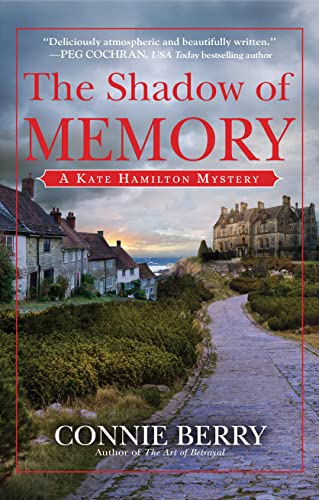
In Connie Berry’s fourth Kate Hamilton mystery, American antiques dealer Kate Hamilton uncovers a dark secret buried in Victorian England.

As Kate Hamilton plans her upcoming wedding to Detective Inspector Tom Mallory, she is also assisting her colleague Ivor Tweedy with a project at the Netherfield Sanatorium, a former Victorian insane asylum, which is being converted into luxury townhouses. Kate and Ivor must appraise a fifteenth-century painting and verify that its provenance is the Dutch master Jan Van Eyck. But when retired criminal inspector Will Parker is found dead, Kate learns that the halls of the sanatorium housed much more than priceless art.
 
Kate is surprised to learn that Will had been the first boyfriend of her friend Vivian Bunn, who hasn’t seen him in fifty-eight years. At a seaside holiday camp in 1963, Will, Vivian, and three other teens broke into an abandoned house where a doctor and his wife had died under bizarre circumstances two years earlier. Now, when a second member of the childhood gang dies unexpectedly—and then a third—it becomes clear that the teens had discovered more in the house than they had realized.
 
Had Will returned to warn his old love? When Kate makes a shocking connection between a sixty-year-old murder and the long-buried secrets of the sanatorium, she suddenly understands that time is running out for Vivian—and anyone connected to her.

Amazon.com


Although The Shadow of Memory was set in the summer, I got a distinct chill while reading. While on holiday, bored teens participate in a detective game of whodunit. Sixty years later, they are being murdered one by one. Kate’s friend and landlord, Vivian, was one of those teens. It’s a haunting tale that disturbs Vivian’s happy memories of her camp days and of her long-lost first love. It also provides the basis for a great plot. I love how authors bring together old and new mysteries into a single story.


This is Connie Berry’s fourth Kate Hamilton mystery. The Shadow of Memory was released on May 10th. You can read my interview with Connie on her third book, The Art of Betrayal, here.


Please welcome WWK blogger and author Connie Berry.    E. B. Davis


Would you humor us by telling a Beowulf joke?


Only if you insist! With a master’s degree in British history and literature, Kate realizes that a) no one will get the jokes, and b) no one cares. You’ve been warned!

Q: How did Beowulf defeat Grendel?

A: He simply disarmed him.

Those familiar with the eighth-century epic poem will get the punchline.


Kate seems skeptical and pessimistic in this book. She has doubts about the authenticity/value of a Dutch medieval painting that Ivor must appraise for no apparent reason. She wonders if anyone would want to live in a former lunatic asylum, even if luxuriously renovated. Having found the body of an elderly man, she re-visualizes the death of her husband. What’s at the root of Kate’s pessimism?


Well, I didn’t set out to portray Kate as pessimistic in this book, although she freely admits that unlike her mother, who is always sure things will turn out well in the end, Kate is always pretty sure they won’t. This stems from a history of losing three very important men in her life without advance warning—her Down syndrome brother, her father, and her husband.

What I did intend was a sense of tension and uncertainty on Kate’s part. Her life is at a crossroads. Is she willing to risk giving her heart again? Policing is a dangerous occupation, after all. And while she is in love with Tom Mallory, the question of where and how they will live as a married couple is undecided. They both have families and careers—on separate continents. There’s also the problem of Tom’s mother, who has done everything in her power to separate them. And on top of everything else, Kate is aware that her dear friend Vivian’s life is in danger.


What is the history of medical insurance in the UK? It was once private, like ours here in the US. And then they socialized it. Did the government buy all the private facilities? That sounds like a very expensive proposition.


The National Health Service in the UK was introduced in July of 1948. From that time, all UK residents were given the right to access health services offered by doctors, nurses, midwives, and dentists without having to pay directly. It’s not free healthcare. It’s shared healthcare, paid for by taxes. According to the original brochure: “Everyone - rich or poor, man, woman or child - can use it or any part of it. There are no charges, except for a few items. There are no insurance qualifications. But it is not a charity. You are all paying for it, mainly as taxpayers, and it will relieve your money worries in time of illness.”

There were health systems in place before 1948, helping low-income people pay their medical expenses, but after 1948, health care was nationalized. When my husband and I were in Northern Ireland a few years ago, he developed a bad cough and was treated at the local hospital. When he tried to pay, he wasn’t allowed.

The NHS didn’t buy all the private health facilities. There are still private doctors and facilities in the UK for those who can afford them. Some private facilities found they could no longer compete with the NHS and went out of business. Others, like Netherfield Sanatorium, gifted their assets to the nation.

Medical care in the UK isn’t as rosy as it seems. Along with an aging population, there’s a shortage of doctors and other medical workers, who are expected to work many hours for a very modest wage. There are also long waiting lists for surgeries like hip and knee replacements, which means those who can’t afford private care must wait and those who can afford private care often elect to have their surgeries elsewhere.


Tony Currie wears two hats that could be in conflict. What is the relationship between the Cliff House Board of Directors and Pyramid Development, the construction company renovating Cliff House, otherwise known as the former insane asylum.


As Kate learns, the renovation of Netherfield Sanatorium is an expensive proposition and not without its risks. As a savvy real estate developer specializing in historic renovation, Tony insisted that a group of local investors have skin in the game. The board of directors of the Cliff House project all have a vested interest in the success of the project, but the lion’s share of the risks (and potential profits) are Currie’s.


Where did the Cliff House board get the Jan Van Eyck painting?


The painting attributed to the Dutch master Jan Van Eyck was purchased in the mid-nineteenth century by the founder of Netherfield Sanatorium, self-styled doctor of homeopathy and a purveyor of patent medicines. Horace Netherfield saw the painting, “Christ Healing the Demoniac,” while traveling in France and purchased it with the intention of making it the centerpiece of the asylum. He was struck with the emotional power of the image and thought it would give hope to those with mental illnesses.


Kate has a special sixth sense. When an old artifact is the real deal, she knows it and gets an emotional vibe from it. Kate’s lack of a reaction to the Van Eyck painting causes her to doubt its authenticity. And yet, she does get a sense of treachery and danger. Doesn’t that sense count toward her ability?


I suppose it does count, but the impressions Kate gets—a feeling, a word, a phrase—never help her solve crimes (there’s no paranormal activity going on), but these experiences do alert her to the possibility that all is not as it seems. Kate chalks up her “gift”—or as she sees it, her “affliction”—to her notoriously over-active imagination. Since Kate has never been able to fully understand or explain this sixth sense, I certainly can’t. I will say, though, that Kate suspects her father had the same ability.


Provenance, attribution, technique, signature, and scientific analysis are the elements that Ivor states that make up an appraisal. Is this true or are there more?


These five elements are the standard in authenticating fine paintings—at least they were. Attribution, a matter of the appraiser’s experience and expertise, was especially important. In today’s world, scientific analysis has taken the forefront. A number of paintings attributed to well-known artists have recently been proven to be forgeries. Sotheby’s, for example, sold a gorgeous “Frans Hals” painting, “Portrait of a Man,” to an American collector for ten million dollars. When subjected to scientific analysis, the painting was proven to be a forgery. Sotheby’s reimbursed the purchaser. After a lengthy court battle, the art gallery that sold the painting to Sotheby’s was forced to repay them more than five million dollars. The very sophisticated forger is now thought to have produced over twenty-five old masters, one of which, “Venus” by Lucas Cranach the Elder, was owned by the Prince of Lichtenstein. There are probably others, as yet undetected, in museums and private collections.


Why did Kate assume that Vivian was 80 years old? Although 74 or 75 isn’t that far off, does Vivian seem old fashioned or physically old? Does Vivian need a knee replacement?


Eighty is the new sixty—isn’t that what they say? People in their seventh and eighth decades of life can appear much younger than their age or much older. Vivian Bunn is an old-fashioned lady, which is probably why Kate assumed she was older than she is. She’s been the stout, sturdy, bossy type that some in the UK call “Boadicea in Tweed.” But in this book, Kate notices a slight unsteadiness in Vivian’s gate, which makes her wonder if her friend is in need of a hip or knee replacement. That remains unresolved.


Vivian makes Beef and Barley stew with brown bread and Wensleydale Cheddar. This sounds like a winter meal to me. Isn’t it August? Doesn’t swimming weather ever come to England?


Due to the Gulf Stream, the climate in England is far more temperate than it is in the United States, even though the British Isles sit at a higher latitude—which means the winters are milder and the summers cooler than they are here. Brits think nothing of wearing wool cardis and tweeds year round. The average temps in Suffolk in late August/early September (the book ends on September 11) reach a high of 65 degrees Fahrenheit and a low of 48. Yes, England can have very warm periods as well, but they are the exception rather than the rule. The last really big heat wave in Britain (2016) saw high temperatures reach more than 100 degrees Fahrenheit. Since few people have home air conditioning systems, hundreds of people (mostly elderly) died.


Although Tom is agreeable to live anywhere, he has essentially put the decision of where they will live on Kate. He isn’t really being helpful, is he?


Tom is head-over-heels for Kate—isn’t that nice?—and he truly wants her to be happy. That’s why he is willing to move anywhere. Besides, he now has an offer to work for an international private investigations firm operating out of Toronto, Canada, which means he has a job no matter where they end up. But Tom worries that without her antiques business in Jackson Falls, Ohio, Kate will feel like a fish out of water. Actually, Kate’s motivation is to make Tom happy, too, so they find it hard to come to a decision. Kate’s one non-negotiable—which she hasn’t yet laid out in so many words—is that she will not live with his mother in Tom’s farmhouse. The problem is, Tom’s mother, Liz, doesn’t have the cash to buy a house of her own, and Tom would never put his mother out on the street. Plus the farmhouse is where Tom’s daughter, Olivia, grew up. This dilemma weighs upon Kate’s mind.


Why does Kate question if she is suffering from pareidolia? And please define the term.


Pareidolia is the tendency to see recognizable images in random patterns—like people who see human faces in the grilles of old automobiles. Kate is good at noticing details and recognizing patterns. As she is contemplating possible connections between Netherfield Sanatorium and the abandoned house explored by the teens in 1963, she wonders if she is imagining the patterns—"like people who see the image of the Virgin Mary in a grilled cheese sandwich.” Scientists say we are primed to see faces in the natural world. Is there really a pattern in those long-ago events, or has Kate imagined one because she wants there to be a connection?


What is with the AE in Æthelric?


The letter Æ is a dipthong, introduced into Britain by Norse settlers during the Anglo-Saxon period, three centuries before the Norman Invasion. It was used in Old English to represent a vowel that’s pronounced in Modern English as aah (ash, fan,  happy). Today we mostly just spell that vowel with the letter “a” because of the Great Vowel Shift. The Great Vowel Shift was a change in the pronunciation of English vowels that took place in the late Middle English period—think roughly Chaucer to Shakespeare. This shift, which coincided with the introduction of the printing press, had a profound effect on English phonology—the way the English language is actually spoken. Why did it happen? Scholars have theories, but no one really knows.


What is treacle bread?


Treacle bread is a dense, brown bread made with coarse, wholegrain flour and unsulfured molasses. It’s a country loaf, easy to make—even for me! Martha Stewart has a wonderful and very simple recipe, which you can find here:  Treacle Brown Bread Recipe | Martha Stewart


Why were the Victorians crazy for taxidermy? I remember my grandmother having a mink stole that closed using the paw/claws as hooks—very creepy!


I remember the same thing and felt so sorry for the little animal. But the Victorians took taxidermy to ridiculous extremes. In their passion for natural history and whimsical fantasies, they collected anthropomorphic tableaux set in glass—animals posed in human-like situations: hedgehogs ice-skating, kittens at a tea party, foxes teaching a class of bunnies. Victorian women perched stuffed birds and small animals on their hats. Death was an ever-present reality in the nineteenth century, and in addition to taxidermy, Victorians cut hair from the corpses of their loved ones and wove it into jewelry. They also frequently had photographs taken with dead relatives before burial, propped up with wooden frames or other family members.


Why doesn’t Tom’s mother like Americans?


That’s a good question—one which Tom has never adequately explained. My theory is that Liz Mallory enjoyed her relationship with Tom’s dead wife, Sarah, because Sarah was malleable and easily handled. And, of course, after Sarah’s death, Liz moved in to take care of their daughter, Olivia. Slowly, she began to think of the household as her own. Kate represents a threat because she is definitely her own person—and now the most important person in Tom’s life. Liz also fears that Kate will talk Tom into moving to the U.S.


Is Tom from an aristocratic family? Who is Uncle Nigel? What happened to Tom’s father?


Tom’s background has been a bit of a mystery to Kate. When they met in the Scottish Hebrides, he told Kate he spent his summers with his Uncle Nigel Hartley in Devon—“summer camp in a castle.” When she questioned him further, Tom said the house merely looked like a castle to him as a small boy. Later he told Kate that Uncle Nigel paid his fees when he went up to Oxford.

But there’s been an estrangement in the family. Nigel disapproved of Tom’s mother’s marriage to Tom’s father—on solid grounds as it turned out, since Tom’s father was after what he hoped would be her fortune. Liz was so incensed at her brother’s interference that she cut off all ties with him and refused to take a penny for herself. With his hopes of wealth dashed, Tom’s father had an affair and abandoned the family. He is now dead. To date, Kate has not met Nigel or visited his estate, Fouroaks.


What’s the story on the ring Tom gave to Kate for their engagement?


The ring is a family heirloom. The center stone, a square Assher-cut diamond, was purchased by Tom’s great-great-grandfather Hartley in South Africa in the 1880s. In 1921, his son (Tom’s great-grandfather) had it set into a ring for his bride. It’s been passed down to each generation. Since Uncle Nigel could never settle on just one girl, the ring now belongs to Tom.


What is dendrochronology? Infrared reflectography? Craquelure? Mass spectrometry?


These terms are all part of the scientific process of examining old paintings.

·      Dendrochronology is the process of examining tree rings in old wood to accurately pinpoint the date when the tree was felled. It’s remarkably specific. Since many old masters were painted on wooden planks, dating the wood helps date the painting.

·      Infrared Reflectography is a non-destructive imaging technique that detects the presence of specific pigments in a painting. The process can also reveal what lies beneath the surface of a painting—underdrawings, for example, or pedimenti, the revisions an artist might make during the process of creation.

·      Craquelure refers to the natural pattern of cracks that develop in the paint or varnish of a painting over time. This is a great way to detect a forgery because natural craquelure is almost impossible to reproduce, although there are some techniques involving formaldehyde and a special baking process that produce results that appear genuine to all but a trained eye.

·      Mass Spectrometry is so complicated that describing it is definitely beyond my mental ability. I can tell you that, among other things, the process can isolate tiny amounts of the radioactive isotopes unleashed across the globe after 1945. If these isotopes are found in a painting that is said to have been painted in the sixteenth century (or even the nineteenth century), that painting is forgery.


Is it true that at the turn of the nineteenth century, people wore small portraits of their lover’s eyes?


Courtesy of the Smithsonian Museum


Absolutely true. The fad started in 1785 when England’s Prince George (later King George IV) sent a tiny portrait of his eye to Maria Anne Fitzherbert, the Catholic widow with whom he’d fallen in love and was trying desperately to marry. According to English law at the time, such a marriage was not allowed, and although the couple actually did marry in a secret ceremony, the wedding was declared invalid. George later married his cousin, Caroline of Brunswick. Anyway, for the next fifty years or so, Lover’s Eyes were a fad. Lovers would exchange portraits of their eyes, painted on bits of ivory no bigger than a fingernail and set into gold frames, sometimes surrounded by precious gems or pearls, and tucked close to the heart or worn openly for all the world to see. Both men and women wore them, with the identity of the subject a mystery. All part of the fun.


Does Ivor know hypnotism?


Ivor knows all sorts of amazing things from his travels around the globe with the Merchant Marine. While in northern Mongolia, he learned a technique, akin to hypnosis, to take someone back to a previous time through recovered memory. Since Vivian’s life depends upon her memory of what she and the other young teens found in the abandoned house fifty-eight years earlier, Ivor takes her back to that place and time so she can mentally relive the experience. Remember, this is fiction.


What’s next for Kate?


It appears Kate is heading for a wedding, but we’ll have to wait for the next book to find out. You never know!


Wednesday, June 9, 2021

An Interview with Connie Berry By E. B. Davis

I attempted a laugh. “I’m fine. Absolutely fine.” My standard response to everything from a hangnail to childbirth. I’m sure those words will be carved one day on my gravestone.

Connie Berry, The Art of Betrayal, Kindle Loc. 1070


In Connie Berry's third Kate Hamilton mystery, American antique dealer Kate Hamilton's spring is cut short when a body turns up at the May Fair pageant.

Spring is a magical time in England--bluebells massing along the woodland paths, primrose and wild thyme dotting the meadows. Antiques dealer Kate Hamilton is spending the month of May in the Suffolk village of Long Barston, enjoying precious time with Detective Inspector Tom Mallory. While attending the May Fair, the annual pageant based on a well-known Anglo-Saxon folktale, a body turns up in the middle of the festivities.

Kate is even more shocked when she learns the murder took place in antiquity shop owner Ivor Tweedy's stockroom and a valuable Chinese pottery jar that she had been tasked with finding a buyer for has been stolen. Ivor may be ruined. Insurance won't cover a fraction of the loss.

As Tom leads the investigation, Kate begins to see puzzling parallels between the murder and local legends. The more she learns, the more convinced she is that the solution to both crimes lies in the misty depths of Anglo-Saxon history and a generations-old pattern of betrayal. It's up to Kate to unravel this Celtic knot of lies and deception to save Ivor's business.

Amazon.com


It’s no wonder Connie Berry was nominated for an Agatha Award for her first book in the Kate Hamilton mystery series, A Dream of Death. Connie is a talented descriptive writer. No matter where she placed a scene in The Art of Betrayal, the third book, I could envision the shop, cottage, manor, auction house, and even while on the road. It’s that type of writing that takes readers outside of themselves and into the story on the page.


Main character Kate Hamilton is an interesting character. I’m disappointed that I started this series on the third book. The answers to some of my questions are bound to be in the first two of the series, but I have many more questions about The Art of Betrayal, which was released yesterday.

                                              ____                                               E. B. Davis


Were you an art history major?


I was not. My field was English literature and history. But I did take a fascinating and comprehensive art history class during my junior semester abroad, viewing the art and architecture in person—from the Bronze Age to the early Greeks and Romans to medieval art and the Renaissance, all the way to the Art Deco period of the nineteen twenties and thirties. Kate is interested in fine art because of her work as an antiques dealer and appraiser. Like her, my parents dealt in fine antiques and paintings.


Why is Ivor’s shop called The Cabinet of Curiosities? It’s an antiquities shop. Curiosities reminds me of something very different, like wax lips or sock puppets.


You’re right—probably because we think of Charles Dickens’ The Old Curiosity Shop.

However, the name of Ivor’s shop is taken from the Kunstkammer, or “Cabinets of Curiosities” popular in the Renaissance—like the fabulous GrĂĽnes Gewölbe in Dresden. Cabinets of Curiosities were collections of rare and historically important or unusual objects. These collections included objects belonging to natural history (sometimes faked), geology, ethnography, archaeology, religious or historical relics, works of art, and antiquities. In England, the best-known example is The Ashmolean Museum, which houses the collection of Elias Ashmole, a wealthy 17th-century collector with a deep interest in astronomy, astrology, and alchemy. He bequeathed his collection to Oxford University on condition that they build a place to house them.

During Ivor Tweedy’s legendary stint with Her Majesty’s Merchant Marine, he began collecting fine and rare objects from around the world.


I looked up BCE and CE with unsatisfactory results. What do the Chinese consider “Common Era?” How does it compare with our BC/AD designations?


The history of calendars is complicated. Each culture has had its own way of designating time. In ancient China, years were numbered from a new emperor's assumption of the throne or an existing emperor's announcement of a new era name. This system remained in place until about 1912, when China joined other nations in reckoning years based on “year one.”

The traditional abbreviations BC and AD are short for “Before Christ” and “Anno Domini,” Latin for year of the Lord. CE for “Common Era” and BCE for “Before the Common Era” are used in exactly the same way. Although both systems are acceptable, because BC and AD hold religious connotations, many prefer to use the more neutral CE and BCE. My publisher uses BCE and CE.


“Just because something can’t be explained doesn’t mean it’s supernatural.” Kindle Loc. 241

“Somehow the hĂşnpĂ­ng [funeral urn] had acted as a portal—capturing,

then magnifying my unconscious thoughts.” Kindle Loc. 1430


The above quotes are Kate’s observations about her gift. What is her gift? Would she consider a sixth
sense supernatural? The latter quote seems to be high rationalization to me (and really, if she believes in portals….).


Kate has never been able to adequately explain her gift (curse?), even to herself. Here’s the way she describes it in A Dream of Death:


I don't want to give the wrong impression. I'm not a psychic. I have no paranormal powers. I don't actually believe in such things. Nevertheless, I admit to having experienced something similar before. Nothing as definite as a word, mind you—just an impression, of joy or sadness or longing, as if the emotional atmosphere in which an object existed had seeped into the joints and crevices along with the dust and grime.


Kate doesn’t believe in portals. She uses that as a metaphor here because she has just received on consignment a pottery hĂşnpĂ­ng jar dating from the Han dynasty (202 BCE to 220 CE). None of the hĂşnpĂ­ng jars known to exist ever held physical remains. Instead, scholars believe, they were intended to attract the life energy of the deceased, acting as a sort of portal through which the departed soul could enter paradise. A belief, not a fact.


Is there a reason Kate’s daughter, Christine, has lousy taste in men?


Kate’s theory has to do with the sudden, unexpected death of her husband (Christine’s father) when Christine was in high school. Having lost her own father in an auto accident on Christmas Eve when she was 17, Kate understands how deep grief and loss can go. She theorizes that by choosing unreliable men, Christine is acting out the sense of abandonment she felt. Psychologists say people do act out unresolved emotional issues, sometimes in destructive ways. Women who grew up with abusive fathers, for example, are way more likely to date and/or marry abusive men.


Aren’t thatched roofs creepy with the bugs slithering around in them?


You’re right! All kinds of critters live in the thatch, and they attract birds who try to scratch them out. That’s one of the problems with thatch. You have to clean and maintain it.

Hundreds of years ago, most thatched roofs were visible from inside. I’ve read about pieces of thatch and insects falling down into the house. Even today, some people like to maintain the natural thatch look inside, but most thatched houses in England have plaster ceilings. We’ve stayed in them. So while you can hear critters moving around in the thatch, none of it falls on your head.


“…Fergus, who gazed at the assembled company

with benign condescension.

Fergus considered mixing with humans a privilege. For them.”

Kindle Loc. 1172


I love Fergus, the Pug. He’s urbane, astute, and snide (oh, maybe that’s Kate—nah if she senses all that stuff from antiques, she has to really know Fergus’s thoughts and attitudes). Maybe he’s just a grumpy old man. Tell our readers about him, please.


Fergus the Pug has a special place in my heart. Humor takes many forms. One of my favorites (perfected by the British) is endowing animals and inanimate objects with human emotions and motives. Here’s an example—a line from my Outtakes file, waiting patiently for a place in one of my books:

Spring was cold that year. None of the perennials dared poke their heads above the soil—except the gullible daffodils. They never learn.

Fergus isn’t exactly a grumpy old man, but he definitely thinks highly of himself—a belief nurtured by his adoring human mum, Vivian Bunn. Fergus expects to go with Mummy everywhere and feels quite put out when he is left home. He is selective about the humans he meets and is known to be a discerning judge of character. He likes Kate because she once saved him from drowning when he took off after a flock of ducks in Blackwater Lake—an embarrassing incident for him. Pugs are not natural swimmers. Fergus is getting up there in age and (thanks to Vivian) has a few extra pounds on him, so he spends a lot of time curled up in his bed by the hearth. He knows when humans are sad or suffering and toddles over to allow them a little petting time.


After age thirty, living with your mother/parents can’t be elective. Why does Tom’s mother live with him?


Tom’s wife, Sarah, died of cancer when their daughter, Olivia, was twelve. As a detective inspector, Tom’s hours were never regular. In fact, as the police force in the UK is literally “Her Majesty’s Police Force,” they are technically always on duty. The solution was for Tom’s mother to move in. Olivia needed her. Now that Olivia is on her own, the relationship between Tom and his mother, Liz, is becoming difficult. For reasons that will be explained in the next book (The Shadow of Memory, 2022), Liz can’t afford to buy her own house. Tom feels obligated to care for her.


What are Nobbly Bobblys?


A Nobbly Bobbly is an ice lolly—for Americans, an ice cream treat on a stick—layers of strawberry and chocolate ice cream covered in a chocolate coating with candy sprinkles. They’ve been around forever. Nestle makes them today.


Has Kate’s mother Linnea Larson lived in England? She uses English slang sometimes in her speech, like “tip-top.”


Does Kate’s mom, Linnea, use that phrase in the book? I don’t remember. Linnea is an American of Norwegian descent. Her slang is sometimes old-fashioned but not particularly British. I remember my Danish grandmother using the phrase “I’m tip-top” to mean “I’m very well.” Kate, though, having been previously married to a Scot and now having spent a lot of time in England is beginning to use some British slang.


Are Domesday Books common enough to be auctioned? I’d have thought most copies would be scarce and scooped up by museums and libraries? Wouldn’t they be considered national treasures?


There is only one Domesday Book—actually two separate books (The Great Domesday Book and the Little Domesday Book) both written in Latin. Since about 1600 they have been kept in a wooden chest, cased, lined, bound in iron and secured by three different locks. The Domesday Book is now housed in The National Archives at Kew. What Ivor auctioned off was a (fictional) translation in English of part of the Little Domesday Book. Translations, some very old, exist in museums and private collections. I don’t know how many. More research needed!


With people Kate likes and respects, she uses discretion. Why didn’t she refrain from telling off Tom’s mother?


Kate has limits. And Liz Mallory pushes those limits all the time. Liz doesn’t like Kate, probably because she fears Kate will lure Tom to the States. She would rather see him stay single—or marry a nice English girl she can manage. While Kate is kind, she isn’t a doormat.


Why is Kate not trusted to go clothes shopping on her own? What would she buy if she had her druthers?


Kate is far from a fashionista. She doesn’t worry much about clothes and would rather wear jeans and a t-shirt or pullover sweater for most events. Her best friend, Charlotte, was a window dresser for an upscale clothing store in Chicago and has a marvelous fashion sense. Kate used to joke that Charlotte was her personal “What Not To Wear” consultant. When Kate needs something special, Charlotte is usually the one who chooses the outfit, which Kate appreciates. She does care how she looks, especially now that DI Tom Mallory is in the picture.


Is a Raspberry Martini in England made with lemon vodka? I was surprised that it wasn’t made with raspberry vodka.


There are lots of recipes for Raspberry Martinis, all different. My recipe calls for intense raspberry ice floating in lemon vodka. Another uses plain vodka with cranberry juice for color, lime zest, and 2 teaspoons of raspberry jam. I think raspberry vodka would make a great martini!


Aren’t citizens of Ireland required to have a passport to get into England?


In The Art of Betrayal, there is a character from Belfast, Northern Ireland. As part of the UK, there is no boundary between Northern Ireland and England. And even under Brexit, the Republic of Ireland is part of the Common Travel Area—a travel zone between the Republic of Ireland and the UK, Isle of Man and Channel Islands. Irish nationals have a special status in UK law which is separate from and pre-dates the rights they have as EU citizens. 


Not only does Kate perceive that a man is a predator, but she also isn’t so young as to think he is interested in her as a woman. Is getting over yourself the reason why older women make the best sleuths?


Now that is an interesting question, Elaine. As we get older, women do lose some of the naivete we had as teens and young women, don’t we? We aren’t so gullible as to believe that male motives are always pure and uncomplicated by self-interest. When I wrote this predatory male character, I was thinking of a man I knew once (he shall remain nameless) who was exceptionally tall and exceedingly good-looking—so good-looking, in fact, that he was used to women falling all over him. Even older women. I can’t really blame him. That was his experience in life, and he naturally expected every woman to react to him in the same way. When I met him, I was in my early thirties, and I determined that I would not acknowledge his looks in any way. That really baffled him. As an amateur sleuth, Kate uses her brain, not her looks, to learn the truth.


What’s next for Kate?


As I mentioned above, Kate’s next adventure, The Shadow of Memory, will be released in June of 2022.

It’s late summer in the Suffolk village of Long Barston. American antiques dealer Kate Hamilton, is helping antiquities dealer Ivor Tweedy appraise a fifteenth-century painting attributed to Jan Van Eyck.

While cutting through the church graveyard, Kate stumbles upon the body of an elderly man—Will Parker, a retired ex-CID officer. Kate is even more shocked when her friend Vivian Bunn reveals that Will Parker was her first boyfriend. They’d met at a seaside holiday camp in 1963, when they and three other teens explored an abandoned house, the scene of a violent crime—or so they imagined. Vivian and Will haven’t seen each other in fifty-eight years.

At first Will’s death is considered natural. He is in his seventies, after all. But when a second member of the childhood gang also dies unexpectedly, and then a third, Kate begins to suspect the five teens discovered more in that abandoned house than they realized. Can she convince the police they’ve got a serial killer on their hands before Vivian becomes the next victim?

I just turned in the manuscript to my editor at Crooked Lane. Now I have decisions to make. Will I begin sketching out Book Five in the series, or will I begin something entirely new? Or both? Time will tell.

Thank you so much for inviting me on Writers Who Kill and for asking such interesting, thoughtful questions.


Emmie working hard with Connie