

To my recollection, I have only been knocked out twice in my
life, both times playing soccer. The first time was nearly a disaster—not
because of the injury—because the opponents almost scored a goal. And therein
lies the problem.
The day I write this blog (February 3, 2016), two more
former football players were diagnosed to have suffered from CTE (chronic
traumatic encephalopathy). I remember watching both quarterbacks. Earl Morrall
was the elder. He died in 2014 at age 79. I was a BIG FAN of Kenny Stabler
(“the Snake”). He is a near contemporary of mine, dying at age 69 in 2015. The
severity of CTE is measured on a four-point scale. Stabler was a high stage 3
and Morrall was stage 4.
It’s not just older guys. Ex-Giant safety Tyler Nash had
stage 2 CTE when he died of a drug overdose in 2015. NFL star Junior Seau, who
committed suicide in 2013, was also at stage 2.
What am I? Who knows? Doctors can only determine the stage
of this disease post-mortem. And as of this writing, I am still on the green
side of the grass.
Back to that day at Lafayette College: seconds before my
injury, our goalie had been accidently kicked in the head while batting a ball
away. He lay prone on the field. Soccer does not stop for injuries while the
ball remains in play unless a compound fracture is evident or a player is spurting
blood. To stop play the ball must be booted out of bounds. The opponents
controlled the ball, and they were trying to score with me, left defensive back,
in a goal mouth unable to use my hands to block their shot.
The scoring attempt was a high-arching shot aimed for the
upper left portion of the net. I had springs for legs in those days and leapt
high to head the ball away. I succeeded, flicking it over the goal post, giving
up a corner kick but allowing coaches to attend to our goalie. Out of the
corner of my eye, I saw a splash of blue jersey. Lafayette’s jerseys are
maroon.
The next thing I recall was the acrid smell of ammonia and
the trainer asking me how many fingers he was holding up. I said, “Two.” I was
just coming to, having had my head cracked into the goal post by the opposing
player who was legitimately trying for a goal. I couldn’t even focus on the
trainer’s hand, let alone know how many fingers he had up when I answered. I
knew only one thing: I wanted to stay in the game.
Two was the right answer and I remained in the game. Our
goalie did have to come out. My concussion occurred early in the second half.
The next day I had no recollection of the rest of the game. I had to ask my
roommate, who was also on the team. No one told the coach I had faked it. They
all understood. Most would have done the same.
Keep me in, Coach.
My second concussion occurred when two of us went up for a
head ball. I got the ball; the opponent got me. We both went down in a heap. I
guessed three fingers this time and played the rest of the game.
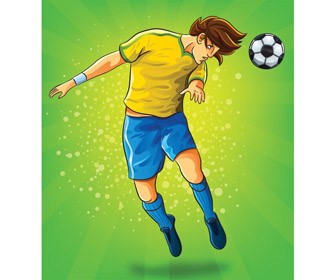
Over years of playing soccer in junior high, senior high,
college and semi-pro, not to mention countless pickup games, I have headed the
soccer ball thousands of times. No one knows what effect heading soccer balls
has on a player’s brain. Ankle injuries, not concussions, ended my playing
days. But if you had told me at age, say, nineteen, that if I kept playing
soccer I would have knees that always hurt, bone bruises up and down my shins, shoulder
injuries, and that eventually I would
(not just might, but definitely would) end up with CTE, none of that
information would have mattered to me. I would have continued to play. Crazy?
Yes, but that’s teenager logic, and teenagers aren’t really
the best risk assessors, so no surprise. But that’s not the biggest problem. I
will also admit that if you gave me the choice today to go back and change my past
behaviors, there are many things I would like to change; playing soccer is not
one of them. I was fully alive on a soccer field, and I would not take that
experience away from my younger self.
Money was not the motivator. I mostly played soccer for
free; I just happened to be good enough that after college I could play for
beer money. God knows that if the price of a million-dollar contract to professionally
play the game I loved was beating my head against a wall, I would surely have
done it for all I cared about the long-term consequences of that decision.
The problem is two-fold: Kids don’t care and society doesn’t
care. The NFL is a huge money-maker because enough of us, and I include myself
because I enjoy watching NFL football, don’t care strongly enough about player
safety to turn off the television. We know players are trading years of future
pain for our hours of TV pleasure. We wish for a magic pill that will make the
problem go away. It’s not just football, of course. Boxing is all about
knocking the opponent out, and society permits it. The only difference between
us in 2016 and the Romans at the Coliseum is that we no longer root for the
lions.
If you are a parent concerned CTE may affect your kids in
the future, you had better work very, very, hard to find a really attractive
alternative early in your child’s life to satisfy the needs sports currently
does. Society does not care about your child’s brain; it cares about
entertainment. It prefers to provide football fields and soccer pitches and
basketball courts for schools and fund them, while being perfectly willing to
eliminate art and music. Society lavishly rewards star athletes who cause
injury to others. NFL players command millions of dollars a year. Floyd
Merriweather reportedly made over $220 million for his fight on May 2, 2015
against Manny Pacquiao.
Parents, you will not get help from the larger world if you
want to protect your children from the negative effects of sports. Your kids
will fight back, and society will side with the kids.
If you are an author reading this and you write about a
teenage or twenties male, keep this in mind: males that age are invincible and
we will gladly trade forty old-age years for five good young years. In fact, as
long as today is good, life is good.
I’m fine, Coach; put me in.
~ Jim
