by Paula Gail Benson
Do you feel the excitement mounting? Can
you believe that after a two year absence, traditional mystery lovers from
around the world will be gathering this coming weekend in
Bethesda, Maryland, for Malice Domestic?
For many of us, it will be homecoming,
reunion, and party central all wrapped up in one!
Please enjoy some of the fellowship by
meeting or becoming reacquainted through this interview with the 2022 Agatha
nominees for Best First Novel and Best Short Story. If you haven’t already found
their work, I’m certain you’ll want to add it to
your to-be-read list. You can begin by clicking the links to read the nominated
short stories!
Congratulations to all the nominees and
thank you for spending time with us at Writers Who Kill!
Best Short Story
“A Family Matter” by
Barb Goffman (Alfred Hitchcock Mystery Magazine Jan/Feb
2021)
“A Tale of Two Sisters” by
Barb Goffman in Murder on the
Beach (Destination
Murders)
“Doc’s at Midnight” by
Richie Narvaez in Midnight Hour (Crooked
Lane Books)
“The Locked Room Library” by
Gigi Pandian (Ellery Queen Mystery Magazine July/Aug
2021)
“Bay of Reckoning” by
Shawn Reilly Simmons in Murder on the
Beach (Destination Murders)
How important is setting in a short story?
 |
| Barb Goffman |
Barb:
Setting is a key ingredient in the stew that is
a short story. Ideally, setting shouldn’t only show where the story takes place
but it should enable the reader to better understand the story’s characters as
it moves the plot forward.
To illustrate, in my story “A Tale of Two
Sisters,” the story takes place at a fancy beach resort a couple of miles from
a state park. I made use of that setting to move the plot forward in humorous
ways. A storm comes up off the beach, blowing sand onto maid of honor Robin. A
dog escapes from its owners at the state park and crashes the wedding, giving
Robin more headaches. The hotel has deserted stairwells and a
rectangular-shaped ballroom, both of which play a role in the story too.
Without this particular setting, the plot would have unfolded differently, and
without those plot events, Robin wouldn’t have suffered as she did and then, in
the end, she wouldn’t have come to a particular realization. So, the setting
was vital.
Setting is also vital in “A Family Matter.” If Doris had
lived in a different neighborhood, one with less exacting standards, she might
not have cared (as much) that the new neighbors moved in with chickens. She
might not have bothered to tell her new neighbor that a clothesline was a no-no
and that children don’t do yardwork, not in The Glen. Of course, Doris wouldn’t
have lived in such an easy-going neighborhood. Her personality drove where she
lived, which in turn drove the plot and allowed Doris to come alive off the
page.
 |
| Richie Narvaez |
Richie:
Setting gives you the four walls, floor, and
ceiling of a story. But besides the physical dimensions, which give you
verisimilitude, along with weather, infrastructure, travel snags, a setting can
carry with it history, which adds another kind of dimension.
In “Doc’s at Midnight,” most of the
story takes place in the Lincoln Center area of Manhattan, which had been a
poorer neighborhood that the city tore down to make room for this playland for
the rich. The story concerns two people who meet each other again after
decades—after the lead character has served time for killing the other’s first
love—and that setting adds subtext to the character’s personal history as well
as to where they are in life now.
Gigi:
It depends on the story, but in “The Locked Room Library,”
the setting of the library is key. The library devoted to classic mysteries is
housed in an old Victorian home, and the architectural details, such as a
bricked-up “door to nowhere,” allow for plenty of whimsy and misdirection. I
loved the setting of the story so much that it made its way into my latest
novel, Under Lock & Skeleton Key. (And yes, I wish this library
existed in real life, but sadly it’s fictional.)
Shawn:
To me, this all depends on the story and the project I’m working
on. In the case of my story “Bay of Reckoning,” the setting was part of the
theme of the anthology (Murder on the
Beach), so it was a big factor. While writing this story, the setting did
help me visualize the plot and characters before I began to write. I’m a total
beach person, having grown up in Ft. Lauderdale, and now as an adult, spending
several weeks every summer with my family in Ocean City, Maryland. Naturally, I
drew on my love of the beach for inspiration for the story, which is set in a
fictional town on the Chesapeake Bay. The main conflict revolves around two
families who have always had a rivalry regarding the recipe for a seafood
seasoning...if you’re a Marylander, you know how important seafood seasoning is
during crab season! So yes, the setting was key to this story in particular.
But I have written stories where it was less important or not important at all,
so it really does depend on the project.
What is your primary consideration when editing a short
story?
Barb:
I don’t have a primary consideration. Before I send a story out, I
work hard to make sure it works in all respects. The plot should be consistent,
intriguing, and entertaining. The characters should come alive off the page.
The writing should be clear and vivid and as free from errors as I can make it.
All these things go hand in hand in creating a solid story.
 |
| Gigi Pandian |
Richie:
Does it hang together as
a tale? Are the plot, the characters, the setting consistent and logical? What
could make it more interesting? Is it too late to add a twist? All this before
diving in to see if the sentences work and if I really need that comma.
With my story, since it
uses known characters from an old movie in a new context, I had to make sure
there were some callbacks to their West Side Story origins, but I also didn’t want to overdo it. The
story had to stand on its own.
Gigi:
How much can I cut but still tell the story I want to
tell in a satisfying way? That doesn’t mean cutting out unique details, but
rather taking a red pen to anything not adding to the atmosphere or plot.
Shawn:
I’m always on the lookout for extra words, unnecessary “filler”
phrases, or dialogue tags that add to the word count but not necessarily to the
enjoyment of the reader. Short fiction is not the place to luxuriate in
description, it’s a place to keep your writing lean and tight. The focus for me
is making each word of a short story as impactful as possible.
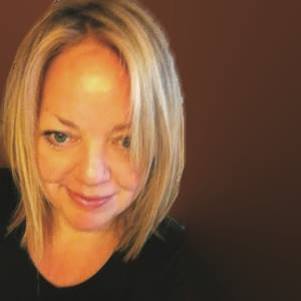 |
| Shawn Reilly Simmons |
Best First Novel
The Turncoat’s Widow by Mally Becker (Level Best Books)
A Dead Man’s Eyes by Lori Duffy Foster (Level Best
Books)
Arsenic and Adobo by Mia P. Manansala (Berkley)
Murder in the Master by Judy L. Murray (Level Best
Books)
Mango, Mambo, and Murder by Raquel V. Reyes (Crooked
Lane Books)
Who is your
protagonist?
 |
| Mally Becker |
Mally:
Of course you’ve heard the rumors about
Rebecca Parcell. Everyone has. Not a word is true, I assure you.
Recently widowed, Becca is too busy
struggling to maintain her farm to give a fig who wins the War for
Independence. But rumors are spreading that she’s a Loyalist sympathizer who
betrayed her husband to the British – quite a tidy way to end her disastrous
marriage, the villagers whisper.
Everyone
in Morristown knows that her husband was a Patriot. But “everyone” is wrong,
and George Washington – who spent the winter there – can prove it. When a mob
gathers to drive Becca from her home, Washington makes her an offer she can’t
refuse. He’ll save her farm if she uncovers the secrets her husband left
behind. That’s how she finds herself on an espionage mission through
British-held New York City on the trail of villains who threaten the new
nation.
%20.jpg) |
| Lori Duffy Foster |
Lori:
The protagonist of A Dead Man’s Eyes is Lisa Jamison, a
single mom who got pregnant at fifteen and is now a reporter at a
well-respected newspaper. She has not seen the father of her daughter in
sixteen years, not since the night she witnessed a fatal game of Russian
roulette and landed in foster care. Lisa was still pregnant then, so her
ex-boyfriend never saw his daughter. Now, he is back in her life as a murder
victim.
Mia:
The protagonist for Arsenic and Adobo (the first book in
the Tita Rosie’s Kitchen Mystery series) is Lila Macapagal, a 25-year-old
Filipino American woman from a (fictional) small Midwestern town just outside
of Chicago. Her life is in a bit of upheaval at the moment, and she’s returned
home to regroup and also help save her family’s failing restaurant.
Judy:
Helen Morrisey is quick-witted and determined. She’s a
real estate agent who needs
to make a living and, like most of us, finds life complicated. She’s a terrible
sleeper. She’s stubborn, a keen observer of people, hates to cook but loves to
eat, often Twizzlers from the back of her desk drawer. A recent widow, Helen
isn’t sure how to navigate romance. She doesn’t even know if she wants to. She
struggles to bite her tongue and not intrude on her children’s decisions. She
tends to put her foot in her mouth but is willing to laugh about it. She hates
taking orders and believes in defending the underdog. Living alone on a
Chesapeake Bay cliff, Helen is a Nancy Drew grown-up, good at assessing
personalities and furrowing out clues.
 |
| Judy L. Murray |
Raquel:
The protagonist of the Caribbean Kitchen Mystery
series is Miriam Quiñones, a Cuban-American food anthropologist turned cooking
show star.
What makes
that character such a good sleuth?
Mally:
It’s
certainly not her skill with a needle or with the banter that passes for
conversation in society. Becca is more comfortable with a bow and arrow than
with an embroidery needle, and she finds mathematics easier to understand than
people. She readily admits that she’s too stubborn, argumentative, and curious to be considered anyone’s
model of a fine 18th century lady.
You shrug: “What else do
you expect of a young woman raised in the northwest forests of the New Jersey
Colony?” Perhaps her skill with numbers comes as a surprise. But after her
mother’s death, a family friend taught her addition and subtraction. Becca
thought for the longest time that mathematics was a game invented solely to
entertain her. She still does mathematics in her head to calm herself when
stressed.
Becca’s qualities of physical courage, curiosity, logical
thought, and her skills in mathematics make her a great sleuth.
Lori:
Lisa is smart and savvy, but she is also driven by a need
to understand people, to dig to the core of their motivations. No story is ever
just a story. She is relentless. Some of that motivation comes from her own
life. She ran away from home at fifteen and her drug-addicted parents never
tried to find her. They didn’t even fight for her when she was handed over to
social services and she hasn’t seen them since. She tries not to think about
it, but the question is always there: Why?
%20.jpg) |
| Mia P. Manansala |
Mia:
She’s got the tenacity (and stubbornness) of youth plus an amazing
support network: on every case, she knows she can rely on her nosy godmothers
(who know everything about everyone), her nurse cousin, her ride-or-die best
friend, and her best friend’s older brother, who happens to be a lawyer (and
potential love interest). She’s also a fantastic baker, which is a worthy skill
here in the Midwest.
Judy:
If you were in trouble, you would want Helen Morrisey on
your side. An obsessed mystery lover, Helen quickly realizes solving a murder
mystery in real life is a lot more dangerous than reading about one. She decides to create her own Detection
Club of famous women, each bringing different talents to her crime solving.
Enter wily Jane Marple, methodical Jessica Fletcher, social Nora Charles,
wise-mouthed Agatha Raisin, and fearless Nancy Drew. Helen isn’t easily
deterred when law enforcement questions her unusual methods. She’s focused on
helping the underdog and catching the killer.
Raquel:
She isn’t that good of a sleuth. 😊 She is often in the
wrong place at the right time. But her degrees and doctoral training give her a
questioning mind and investigative skills that she puts into
use.
 |
| Raquel V. Reyes |
BIOS:
Barb Goffman, a short story author and a freelance crime-fiction editor, has won the Agatha Award twice and has also taken home the Macavity, Silver Falchion, and 2020 Readers Award given by Ellery Queen’s Mystery Magazine. She’s been a finalist for major crime-writing awards thirty-five times for her stories, including sixteen Agatha Award nominations (a category record), and multiple nominations for the Anthony, Macavity, and Derringer awards. www.barbgoffman.com.
Richie Narvaez is the award-winning author of the collection Roachkiller and Other Stories, the gentrification thriller Hipster Death Rattle, and the historical YA mystery Holly Hernandez and the Death of Disco. His latest book is the collection Noiryorican. https://www.richienarvaez.com/
Gigi Pandian is a USA Today bestselling mystery author, breast cancer survivor, and locked-room mystery enthusiast. Gigi is a co-founder of Crime Writers of Color, and she writes the Jaya Jones Treasure Hunt mysteries, Accidental Alchemist mysteries, and Secret Staircase Mysteries, beginning with Under Lock & Skeleton Key—which came out in March 2022. https://www.gigipandian.com/
Shawn Reilly Simmons is the author of seven novels in the Red Carpet Catering mystery series featuring Penelope Sutherland, chef-owner of a movie set catering company. She’s also written several short stories which have been published in various anthologies. Shawn serves on the Board of Malice Domestic and is co-owner/publisher/editor at Level Best Books. https://www.shawnreillysimmons.com/
Mally Becker combines her love of history and
crime fiction in mysteries that feature strong, independent heroines. In
addition to being nominated for a 2022 Agatha Award, The Turncoat’s Widow has also been named a Mystery & Mayhem
finalist in the Chanticleer International Book Awards. The next book in her
series will be published in June 2022 by Level Best Books.
https://www.mallybecker.com/
Lori
Duffy Foster
Lori Duffy Foster is a former crime reporter who writes
fiction and nonfiction from the hills of Northern Pennsylvania, where she lives
with her husband and four children. She was born and raised in the Adirondack
Mountains of New York State, where a part of her heart remains.
https://loriduffyfoster.com/
Mia P. Manansala is a writer
and book coach from Chicago who loves books, baking, and bad-ass women. She
uses humor (and murder) to explore aspects of the Filipino diaspora, queerness,
and her millennial love for pop culture. https://www.miapmanansala.com/
Judy
L. Murray is a real estate broker with a not-so-secret passion for deals,
divas, and danger. Her passion for mysteries began with smart girls like Nancy
Drew and Trixie Belden, grew deeper with not-to-be-ignored women like Miss
Marple and Nora Charles, and finally evolved into her own gutsy heroine - Helen
Morrisey. https://www.judymurraymysteries.com/
Raquel V. Reyes writes stories with Latina characters. Her
Cuban-American heritage, Miami, and the Caribbean feature prominently in her
work. Raquel is a co-chair for SleuthFest. https://rvreyes.com/


+(4)+(1).jpeg)


%20.jpg)

%20.jpg)
