Showing posts with label A Skeleton in the Family. Show all posts

Tuesday, September 24, 2013

WRITING THE MYSTERY SHORT STORY: TONI KELNER’S ANSWERS TO OUR SURVEY


In preparing this series, I solicited answers to ten survey questions from members of the Writers Who Kill blog and authors who are well-known for their wonderful mystery short stories. These authors have been so generous, detailed, and insightful in sharing their views and providing excellent information that I wanted the WWK readers to have the full benefit of their replies.

Today, Toni Kelner (also known as Leigh Perry) offers her perspective.

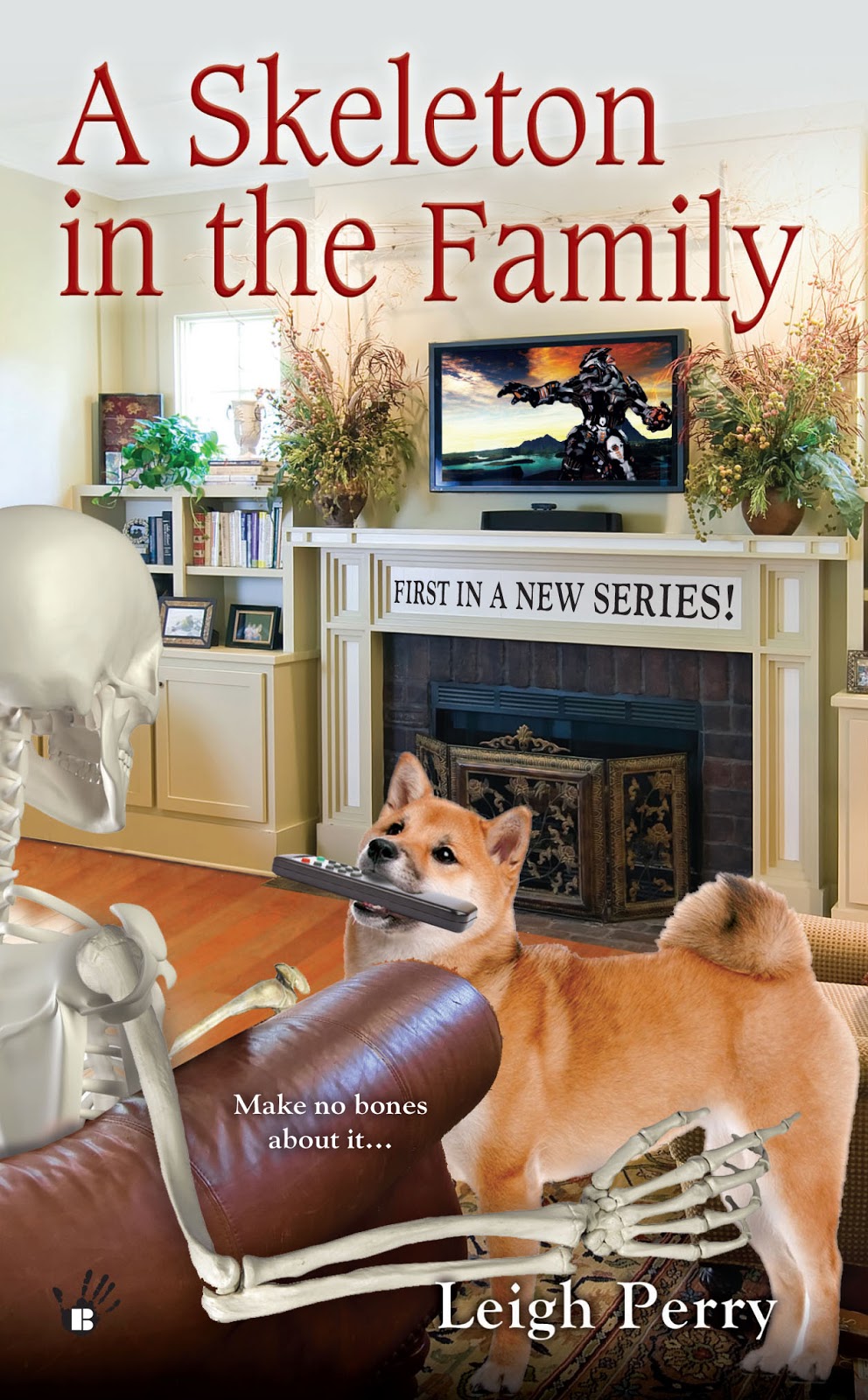
Previously, Toni has been with us on WWK in an interview about her new novel, written as Leigh Perry, A Skeleton in the Family, and also with her own blog message about her new endeavors. Her Leigh Perry website is: http://leighperryauthor.com/

As an author of short stories, Toni has been nominated for the Agatha, Anthony, Derringer, and Macavity awards, and has won the Agatha award for “Sleeping With the Plush” published in May 2006 in Alfred Hitchcock Mystery Magazine. Charlaine Harris is her co-editor on five anthologies, featuring both the mysterious and paranormal. They have a sixth anthology due out next year.

In addition to her short story anthologies, Toni L.P. Kelner has written the Laura Fleming mysteries and “Where are they now?” novels. She has been nominated for RT BookClub awards and received an RT BookClub Career Achievement Award. Toni has a B.A. in English. Her website is http://www.tonilpkelner.com/
Toni, thank you for being with us and taking the time to answer the survey questions.
How has being part of a short story writing community influenced your writing?
If you mean the Short Mystery Fiction Society, I don't think it's affected my writing per se, but it sure has made me aware of the challenges facing short story writers.

It's funny, back when I first started writing, all the writing books I read said to start with short stories to build a reputation, then move on to novels. (Advice that did not work for me, by the way.) Now I think it's easier to sell short stories when you've published a novel first! 

What is your thought process when you submit or select stories for a themed anthology?

When writing for a themed anthology, I always try to do something that nobody else would. So when I was trying to sell to Midnight Louie's Pet Detectives, edited by Carole Nelson Douglas, I wrote an elephant story. When I was writing a story for Jeffrey Marks's Criminal Appetites, which required a recipe, I wrote about marijuana brownies. And when I was trying to write for an MWA courtroom drama anthology, I tried two stories: a trial aboard a pirate ship and a mock trial at a high school. (For what it's worth, I sold the stories to Carole and Jeff, but didn't make it into the MWA anthology, though I sold those stories elsewhere.)

As for selecting, the anthologies I've co-edited with Charlaine Harris have all been invitation only. So we're selecting writers we know can write good stories. We aren't terribly systematic in how we put together a list of people to invite. We just invite people whose work we like and who we think we can work with. Our contract does say that we need a certain number of big-name authors per book, but otherwise, it's our choice. We pull from mystery, thriller, science fiction, fantasy, urban fantasy, paranormal romance, even comics. Charlaine is extremely well-read in all those genres, and that really helps.

When do you know an idea is suited for a short story instead of a longer work?

It's a matter of scope: an instant in a person's life, not a year; one locked room, not a town; a few characters, not an extended family; a gimmick that makes a great "gotcha" moment for a story, which wouldn't carry a whole novel. And often, I get an idea that could be a novel and melt it down to the best part to make a short story. Plus if it's a historical or anything that would require tons of research, I'll do it as short fiction so I don't have to do that much work. I'm kind of lazy.

Have you written “flash fiction”? What do you think of flash fiction as a literary form?

If you'd asked me a month ago, I'd have said no, but I saw that a publisher I admire was looking for flash fiction. So I got an idea one night and wrote one. Then I checked with the publisher and found out one discouraging fact and one deal-breaker. It was to be online only, which I didn't love but would have accepted, and they weren't paying, which was the deal-breaker. I still have the story, and a market in mind, but I need to read it over a couple of more times to polish it.

How many characters can be in a short story?

For fully realized characters? Maybe three or four. You can mention a lot more, of course, but they're going to be background characters.

How long have you been writing short stories?

Since high school. I have this gimmicky short story I wrote and submitted to Isaac Asimov's Science Fiction Magazine back when George Scithers was the editor. It came back with my very first rejection slip, but it was a good one--he really encouraged me. And yes, I still have that slip somewhere around here.

What is good/bad about the current short story market?

The good part is that with electronic publishing, there are some interesting markets out there. Also short stories, though not the entree into the field my old writing books promised, are excellent for promotion. I've had stories reviewed by readers who add, "I can't wait to check out her books," and I was approached by an Italian publisher purely because of a short story in Alfred Hitchcock Mystery Magazine. (In fact, it was one of the ones rejected for the MWA anthology I mentioned in Question #2.)

The bad are (1) readers who flat out refuse to read a short story because it's short, (2) so many markets that expect me to write for free, (3) so few markets that pay decently.

Should an unpublished author self-publish short stories?

I wouldn't. 

The reason I write short stories is:

They are so much FUN! I can try things I'd never try in a novel. Pirates, elephants, noir, PI, male POV, carney lingo... I can run wild.

The most important aspect of writing a mystery short story is:

The ending. Please, give your story one. I read short stories for a contest a few years back, and despaired at how many stories just stopped or dwindled. Something has to happen. In best cases, the main character affects change or changes himself or herself, but I'll settle for a bad joke if I have to. I need a payoff, darn it!  

Again, thanks for joining us and providing us with such terrific insight, Toni. Best wishes for your continuing success.

Wednesday, August 7, 2013

An Interview with Toni (Leigh Perry) Kelner


Toni L.P. Kelner is a delightful woman; nurturing wife, mother, and family member; shrewd editor; and savvy writer. Her own background as a displaced Southerner with an academic spouse living near Boston made her a natural for penning the eight Laura Fleming mysteries, about a North Carolina-born computer programer who lives in Boston with her Shakespearian professor husband. Toni says, “My husband was in academia when I started the series, but he left that world long, long ago. For which our bank account is very grateful.” Toni also was a natural for writing the "Where are they now?" books because she’s a popular culture addict. Toni’s novels have been nominated for RT BookClub awards, and she has received an RT BookClub Career Achievement Award.

As an author of short stories, Toni has been nominated for the Agatha, Anthony, Derringer, and Macavity awards, and has won the Agatha award for “Sleeping With the Plush” published in May 2006 in Alfred Hitchcock Mystery Magazine. Charlaine Harris is her co-editor on five anthologies, featuring both the mysterious and paranormal. They have a sixth anthology due out next year.
In the midst of all her myriad activities, Toni has taken on a new challenge, and a new nom de plume. Welcome, Toni. Thanks for visiting with Writers Who Kill.

Now, who is Leigh Perry, and what has she done with Toni Kelner?

When I started a new mystery series, Ginjer Buchanan, my editor at Berkley Prime Crime, delicately broached the subject of a pen name since the new stuff isn't much like my Laura Fleming or "Where are they now?" books. Well, they're all traditional mysteries, but there's a paranormal element in the Family Skeleton series that wasn't in those other books. Anyway, I think Ginjer thought I'd hate the idea, but it didn't bother me. If it'll help the sales for it to be a "new" author, that's fine. And my dual identity isn't exactly a big secret.

As far as the name itself, we tried a few variations, but this one is my middle name and my maiden name. In other words, now you know what the L.P. of Toni L.P. Kelner stands for.

Your new series, beginning with A Skeleton in the Family, to be released in September, has a number of unique characters. Its protagonist, Georgia Thackery, is an adjunct instructor who has traveled from one college to the next to maintain employment, before landing her latest position in the town where she spent her childhood and where her parents are tenured professors. How would you characterize Georgia’s approach to life and her life experiences?

 
Georgia, bless her heart, has always had to scrape by. She's a single mother, and had her daughter Madison before finishing her doctorate. Her intention had always been to work in academia, but having a new baby made it harder for her to find a tenure track job, so she took adjunct faculty positions instead. Later, when she was ready to try for something more permanent, she'd been typecast as adjunct and she's been stuck there ever since.

She's not bitter about it though. She wanted Madison more than she wanted tenure. She enjoys teaching, too, but she's still hoping she might get tenure some day. She'd like the bigger paycheck, but mostly she wants to make sure Madison gets the home she deserves.

Georgia’s unique companion is a skeleton named Sid who was found in a carnival, and followed the family home. Most people would think of a skeleton as having a left-over personhood, but that’s not the case with Sid. Tell us about Sid. How did he come to be, and how did you determine his “creature” characteristics (including his sense of humor)?

Sid remembers nothing about his former life before "waking" as a skeleton. Georgia really has no idea why he's alive and kicking, and since he's been part of her family for so long, she doesn't worry about his existence, any more than I wondered why I had two great-aunts who were no relation to me. (They later decided they weren't my aunts after all, but that's another story.) Anyway, Sid is Sid. He's been Georgia's best friend since she was a little girl.

Georgia's parents did speculate when Sid first showed up, and their best guesses were that he's a ghost haunting his own skeleton or a very skinny zombie. Or perhaps he was bitten by a radioactive spider skeleton. Wait, do spiders have skeletons?

As for his being humerus... I mean humorous, that was part of him from the day he appeared in my brain as a character. Skeletons smile all the time because of that whole no lips issue, so why wouldn't he make jokes?

A Skeleton in the Family is a novel that is very much about coping with family issues in a modern world. It spans generations and disciplines. How did you learn what you needed to know about such diverse subjects as anime, forensics,  detection, and adjunct faculty members?

I steal from other people.

My daughters are anime and manga fans, and we've attended a huge convention called Anime Boston for the past few years. I'm not overly conversant with the field, but the girls are, and it was Maggie who suggested using Lord Shinigami from Soul Eater for Sid's cosplay. 

Forensics is something I've picked up over twenty years plus of writing mysteries, and some people I've met via Facebook and web hunting. I doubt I'd be able to do the research I need without the web. Also, Dana Cameron helped me with some of the background about how bones are treated and handled in academic settings -- she's a recovering archeologist herself.

As for adjunct faculty, a friend of mine was a perennially untenured psychology professor for years. She'd get a job, teach a slew of intro courses, but after a certain point the colleges would say, "Hey, we can't keep you unless we give you tenure and we can't afford to do that, so...bye!" (I'm happy to report she did eventually get tenure.) I thought it would be a good background because I could keep Georgia in place for a book or two, and then change settings. I've been in touch with a few other adjuncts and I'm trying to show that it's really a tough life -- low pay, skimpy benefits, and very little chance of making tenure. I was worried I'd get it wrong, but was reassured when I found out my copy editor's wife is an adjunct. He corrected a few minor points for me, but overall, said I did them justice.

When we were at the Malice Domestic convention, you told me an interesting progression of how Georgia’s dog kept “evolving” from one type to another. Could you tell our readers a little about that process?

Poor Byron. Early on, my editor Ginjer suggested I put a dog into the books for humor value. Dog, bones... I do love dogs, though I haven't had one for years, so I liked the idea. My first thought was to have a poodle because I grew up with a house full of poodles, but Laurien Berenson does an excellent poodle series. Besides, I couldn't see Georgia and Madison with a poodle. So I decided on a Keeshond, because a friend of mine had an adorable Keeshond named Byron who had passed away. I thought it would be an homage to a sweet dog. Ginjer was fine with that, and the cover people at Berkley Prime Crime made up several versions of the cover with a Keeshond -- Prime Crime readers seem to like dogs and cats on their covers. But they couldn't get a Keeshond that looked cute enough. So Ginjer and I went back and forth on other breeds, and we finally settled on a Shiba Inu. They're cute and kind of trendy, and the personality seemed right for Georgia and Madison. But when I got the cover, It was an Akita. Apparently the Shiba was too small to look right on the cover. So Byron is an Akita now.

I know this sounds insane, but honestly, I'm okay with it The breed of the dog didn't make a huge difference in the story, and if the people at Berkley think a cuter, bigger dog will make a better illustration, I'm happy to trust them. People really do judge a book by its cover, and having a skeleton on mine might scare people off. That cute Akita will lure them right in.

You have excelled in writing both short stories and novels. How do you approach writing each discipline?

Thank you, but please, never use the D word. I'm not a disciplined writer at all. I procrastinate, I miss deadlines, I'm awful.

That being said, I'm pickier with novels. You see my novels have been series, so I need a protagonist I can live with for a long time. (At least, I hope it's a long time.) That means I have to like her, but there still has to be room for character growth and change. Plus I need a milieu in which I'll be happy: lots of characters to play with, different settings I can use, stuff thrown in to use later. I want growing room, and that's tough to set up.

On the other hand, I'm more experimental with short fiction. I'll write about anybody: obnoxious, snarky, male, alien, vampire, werewolf, witch, zombie raiser. I'll try settings like carnivals or circuses. I'll go noir, or historical, or erotic. I'll try just about anything in a short story.

Do you have a writing routine or schedule?

Um. Not a good one. I gravitate toward writing into the wee hours, which is a terrible way to work. 

Oh, if I lived alone it would be fine. Work late, sleep late, repeat as necessary. But I've got a husband with a real job, and we have to coordinate schedules. Plus I've got two daughters to get to school, drama class, art club, summer camp, and back again. So I end up with short nights and daily naps to try to get the right amount of sleep. 

Your writing has spanned genres. What advice do you give to people who want to write mysteries and does it differ from advice you offer to authors of paranormal stories?

Actually, both my mysteries and my paranormal stuff rely heavily on the same kind of world-building. I always start with the real world. Admittedly, I might be writing about worlds less familiar to people: Southern mill towns, entertainment reporting, adjunct faculty life, carnivals, juke joints. Or I might add paranormal stuff -- vampires and werewolves exist, or people can raise the dead, or witches have specific powers, or there's a skeleton walking around. No matter what, the setting includes something that's going to be unfamiliar to most readers. So my advice is to sneak the needed exposition in as you go, with dialog or very short explanations. Don't stop the story for big expository lumps.

The one piece of advice I would particularly impress upon paranormal writers is to be consistent. If your witch can't cast spells during the full moon in one book, don't have her doing it in the next. Readers want to accept the world you're creating -- make it easy for them!


What’s the subject of the new anthology that you’re editing with Charlaine Harris? How do you select your anthology topics and what is your process in soliciting and selecting stories?

Up next is sports and games! The title is Games Creatures Play, and it'll be out in April 2014. We've got a great team, too: Jan Burke, Dana Cameron, Adam-Troy Castro, Brendan DuBois, Caitlin Kittredge, William Kent Krueger, Ellen Kushner, Mercedes Lackey, Joe R. Lansdale, Laura Lippman, Seanan McGuire, and Brandon Sanderson. And Charlaine and I both have stories in the book too.
When we start an anthology project, we brainstorm a bunch of ideas, and narrow it down to two to four we really like. We run these past our agent, Joshua Bilmes, and he may make suggestions or may just pass them all on to Ginjer. (She edits my novels and the anthologies.) The idea that makes Ginjer snicker is the one we go with. 

Once we've got the theme and a working title, we make up a list of the people we want to invite, pulling from mystery, science fiction, urban fantasy, paranormal romance, and thriller writers. We want people we know will write good stories and who we can work with. Often this is somebody we know, but sometimes it's somebody we've never met but whose work we like. On a practical level, we try for several bestselling authors per book. I know that sounds mercenary, but anthologies can be a tough sell, and it's easier if you have recognizable names on the cover. 

Once Ginjer approves the list, we start sending notes to those people. If we get any turn-downs, we come up with more names until we get the whole book filled up. Soliciting and selecting stories is pretty much the same process. We very rarely reject a story we have solicited.
I never expected to be an anthologist, and I had no idea how much fun it would be. Charlaine and I have been honored by the people who have trusted us with their stories.

How do you enjoy attending conferences for different genres and what is some of the best information that you’ve learned at a conference?

I have been to a wide variety of conferences -- conventions for romance, science fiction and fantasy, anime, comic books, even one for circus fans -- and enjoy all of them, but I feel most at home at mystery conventions. Funny how a group so devoted to murder can be so friendly.

One of the best pieces of advice I got was at the science fiction convention Readercon. My husband and I were talking to the writer Barry Longyear and his wife Regina, and though I was unpublished, they both knew I was writing. Regina asked what I was working on, and I told her and followed it with the admission that I really should have been working instead of attending a convention. And Barry said, "Don't shit on yourself!" In other words, he explained, don't attach guilt and negative feelings to the writing. You don't have to slave away every second of every day to be a successful writer. You have to have a life.

But honestly, though various bits of information have been invaluable, it's the networking that has really made conventions continue to be worthwhile. I met my co-editor Charlaine at a Bouchercon in Seattle, never guessing that we'd be working together someday. I also met my agent and my editor at conventions, and plenty of booksellers and librarians and forensic experts and other writers and just fascinating people. I don't go in with the idea of  meeting somebody useful -- I just want to meet other fans. It's always great fun.

E.B. Davis always likes to ask our guests if they prefer the mountains or the beach. Do you have a preference?

Beach! Without hesitation. I was born in northern Florida, and lived in Gulf Breeze, where I could get to beaches in every direction. Nothing soothes me like listening to waves at the beach.

Toni, thank you so much for being with us. Best wishes to you, Leigh Perry, and Sid!