

The
ants go marching one by one, hurrah, hurrah,
The
ants go marching one by one, hurrah, hurrah,
The
little one stops to suck his thumb,
And
they all go marching down in the ground
To
get out of the rain, Boom! Boom! Boom!
The
ants go marching two by two, hurrah, hurrah,
The
ants go marching two by two, hurrah, hurrah,
The little one stops to tie his shoe,
And
they all go marching down in the ground
To
get out of the rain, Boom! Boom! Boom!
And
the song goes on and on although these weren’t the exact words I remember from
when my Cub Scouts and later my Girl Scouts sang it. The last two lines have
changed.
 |
| These are 10 or more times larger than my ants. |
Ants
have invaded my kitchen – little teeny, teeny ants I can barely see. They
shouldn’t be here now because there is snow on the ground. However, a few weeks
ago it warmed up, and maybe they have a home in the crawl space under my
kitchen. I don’t know, but I even found them in my microwave where those died,
but not the tiny ones behind the clock on the microwave that look like little
pieces of black thread. And even though I keep washing my counter tops and
spray them with window cleaner, they keep returning.
I’ll
worry about taking care of those little critters later. What I want to write
about today are ants, a fascinating insect. I first got interested in them when
what looked like termites outside our house years ago. I looked them up to see
if they were termites and found out they were a type of ant. That morning I
spent an hour or more reading all about them in volume one of The World Book Encyclopedia. And before I wrote this article I read it
again.

Every
year I get ants in my house. It’s an old house and even though it’s been
remodeled, these little critters still have a way to get in. Just as annoying
is when they build nests in my flower gardens. Still ants are interesting in
that they have communities much as people do. Well, we don’t live underground,
but they have a social order and their communities are organized. Each
community may be as small as a dozen or so, or hundreds or thousands of ants. Each
colony has one or several queens. I imagine it depends on the size of the
colony. The queen’s job is to lay eggs. Most of the ants are workers, and most
of those workers are females, too. The
workers build the nest, search for food and fight off enemies. The male’s
job? It’s only to mate with the queen.
What a life for him! Although not so much, really because after he mates with
the queen he soon dies. I guess I’d rather be a worker if I were an ant.

There
are so many different kinds of ants. Army ants, for instance, live by hunting
other insects. Some kinds of army ants march across the land in enormous swarms
eating most of the insects they meet. Some ants are slave makers invading other
ant nests and steal the young which they raise as slaves. Harvester ants gather seeds and store them in
their nests, while dairying ants keep insects that give off a sweet liquid when
the ants milk them. There are fungus growing ants that carry pieces of leaves
to their nest to fertilize gardens of fungus. Weaver ants make nests from
leaves. Several ants hold two leaves together while others carry silk-spinning
larvae (developing ants) across the edge.
Ants
live everywhere on land except in very cold areas. There are at least ten
thousand different kinds of ants and probably more. In spite of their small
size, they are stronger than one would imagine. Some can lift objects ten times
the size of their bodies.
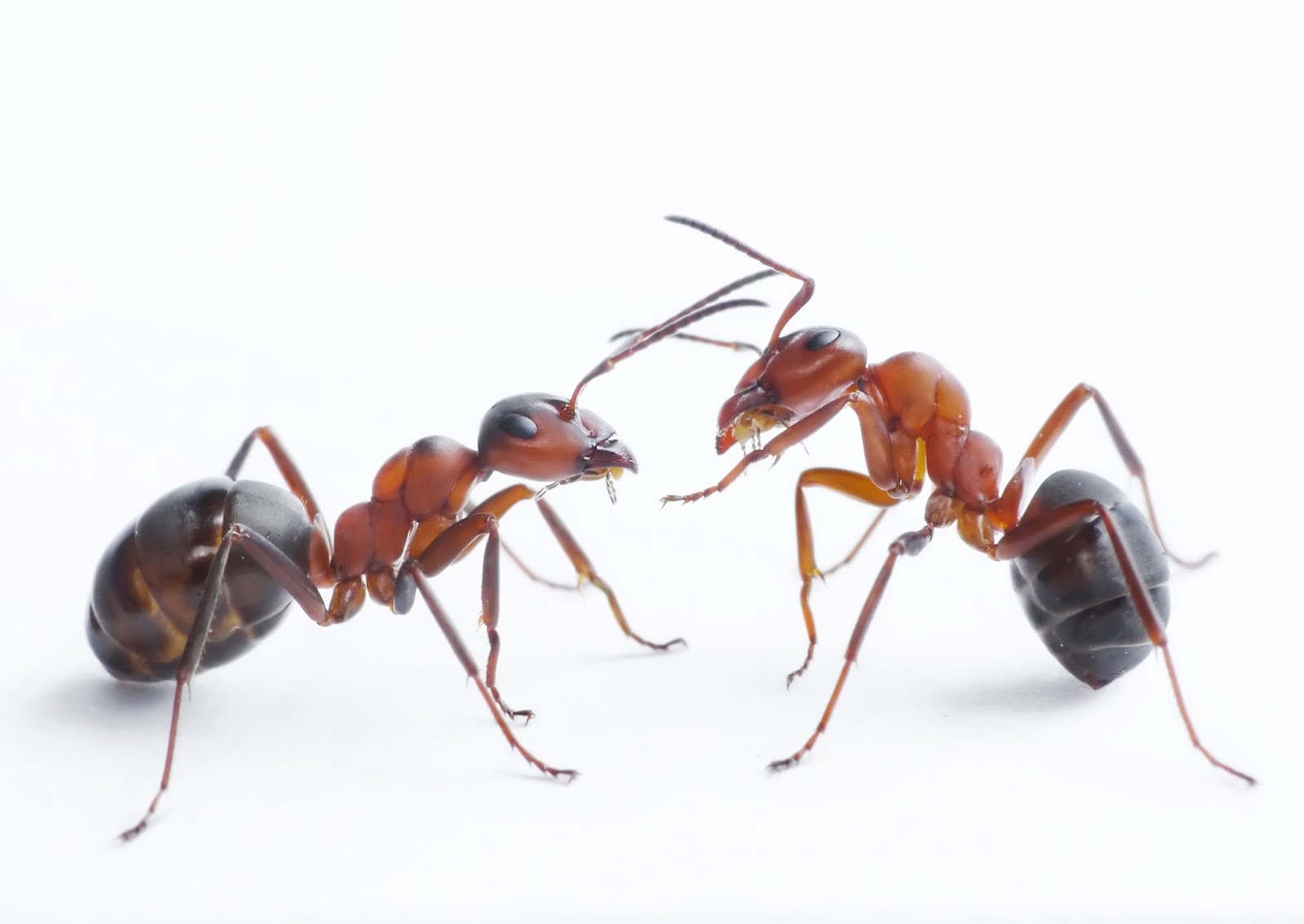
Ants
use their antennae to communicate by smelling one another to see if they’re
nest mates. They are organs of touch, taste, hearing and smell.

In
1994, I ordered the book Naturalist by
Edward O. Wilson, who had been interested in ants since he was a child. It was
a fascinating book and someday, I hope to read it again. He won a lot of praise
for that book. If you want to learn more about ants, I highly recommend reading
Naturalist by Edward O. Wilson. It
was more than just a book about ants, but his life story of how he became a
University Professor at Harvard, won two Pulitzer prizes, and worked as a
scientist who has written more books than just this one.
On
the back cover – “One of the greatest scientific autobiographies ever written.
An extraordinary self-analysis of a scientist and what makes up his emotional
and intellectual psychic, it is at once passionate, honest, and beautifully
written.” Alan Lightman, author or Einstein’s
Dreams

What
do you know about ants? Do you ever have
problems with ants?
Are
there any other insects you find interesting?
