Showing posts with label M. E. Browning. Show all posts

Wednesday, October 13, 2021

An Interview with M. E. Browning by E. B. Davis


In an idyllic Colorado town, a young girl goes missing—and the trail leads into the heart and mind of a remorseless killer.

The late summer heat in Echo Valley, Colorado turns lush greenery into a tinder dry landscape. When a young girl mysteriously disappears, long buried grudges rekindle. Of the two Flores girls, Marisa was the one people pegged for trouble. Her younger sister, Lena, was the quiet daughter, dutiful and diligent—right until the moment she vanished.
 
Detective Jo Wyatt is convinced the eleven-year-old girl didn’t run away and that a more sinister reason lurks behind her disappearance.  For Jo, the case is personal, reaching far back into her past.  But as she mines Lena’s fractured family life, she unearths a cache of secrets and half-lies that paints a darker picture.
 
As the evidence mounts, so do the suspects, and when a witness steps forward with a shocking new revelation, Jo is forced to confront her doubts, and her worst fears. Now, it's just a matter of time before the truth is revealed—or the killer makes another deadly move.

Amazon.com


M. E. Browning’s main character Detective Jo Wyatt finds clues that twist and change the theories of how the child went missing and where she may be found. This case development spurs the reader through the pages of Mercy Creek. As a mom, I shy away from reading about child abductions or whenever a child is harmed, but Micki (M. E.) blunts the raw emotion with facts, logic, and the interplay among police department personnel—for which I am grateful.

The complication is the child’s parents and Jo’s history together, which makes all of them conflicted. It’s a small place where everyone knows one another, and yet the new police chief is an outsider, and he operates as if he’s got blinders on.


This is the second book in the Jo Wyatt mystery series, and it intrigues just as the first book did. The cases are very different. Here’s a link to my interview with Micki on the first book.


Welcome back to WWK, Micki!                                                                         E. B. Davis 


We know from how you structured the book that the older sister lied. Then Jo finds out the child’s father lied. As an officer, was it your experience that everyone lies?


First, I’d like to thank you for inviting me back to Writers Who Kill! It’s a pleasure to be here.

As to your question, the answer is absolutely not. Sure, there are always going to be those who have a vested interest in misleading an officer, but the majority of people want to be helpful. The kicker is that everyone has their version of the truth—and there are a lot of reasons why someone might say something that doesn’t align with other known facts. Trauma is certainly one reason. Crisis, PTSD, eye witness recall, group think, fear, embarrassment, ignorance, and embellishment can all unintentionally skew the truth as the individual believes it to be. That’s why witness statements are only one facet of a comprehensive investigation. 


What is Calliope music?


The short answer? Creepy. A calliope is a musical instrument that has a keyboard, looks a bit like an organ, but the musical notes are produced by forcing steam or compressed air through whistles. It’s the amusement ride music at most traveling fairs.


Where were the 4-H leader and her fellow 4-Hers when Lena, the missing girl went missing?


Everyone was outside the livestock pavilion watching the fireworks at the end of the night.
 

In high school, Lena’s mother, Tilda, and her father, Lucero, had a fight. Tilda accused Lucero of abusing her, which Jo reported to her cop father. Tilda backed down and said Lucero was not the cause of her injuries, but even though not convicted, Lucero lost college scholarships. Why are both of them mad at her? Why is it that the person doing right is always wrong?


I know there are people who are convinced that no good deed goes unpunished, but that’s not Jo’s mindset—even though in this instance it destroyed her relationship with her childhood friends. In reality, it's not uncommon for officers to respond to a domestic dispute and have two people who were moments ago at each other’s throats, now a united front against the officers. The stakes are high—most domestic violence offenses are felonies—emotions are raw, and the consequences of an arrest are real. Jo did what she thought was right, but it was Tilda and Lucero who had to deal with the repercussions—both individually and as a couple. They scapegoated Jo.


“Squint tended to focus on the facts at hand. Jo dwelled on what seemed to be missing.” (Kindle Loc. 306) What does this say about Jo and her partner’s personalities?


The strength of any police department is in their diversity, be it in terms of gender, ethnicity, or interests. While everyone is trained to the same standards, there are a lot of career paths in law enforcement that capitalize on an individual’s strengths and focus. SWAT team members and crisis negotiators have different skill sets. Some officers are wonderful investigators, others want to stay in patrol their entire careers. Squint is a very pragmatic person and deals with what is in front of him as issues crop up. Jo is more idealistic, capable of seeing things that may not actually be there. Together, they make a great team.


What’s a pancake holster?


It’s a no-frills holster that sandwiches the gun between two pieces of material and tends to be more concealable than the typical retention holsters many officers carry on patrol.


For a father of a missing child, Lucero is quite hostile. Even if he had a beef with Jo (which seems to be a case of convenient transference), doesn’t he want his child found? Can’t he cooperate?


Lucero has a lot of secrets and initially believes Lena is with her mother. After that? Now we’re moving into spoiler territory…


What are 5.11 cargo pants?


5.11 Tactical is a tactical gear and apparel company that caters to law enforcement and the military. Their 5.11 tactical duty uniform pants are a staple in many departments. The cargo pants are great to wear on the range and have an abundance of pockets. They are a favorite item of clothing for off-duty officers and those who want to give the impression they have tactical training—whether or not they actually do.

Why are German Shepherds just as good of trackers as hounds?


Oh, I’m not going to wade in the middle of that argument! Handlers gravitate towards favorite breeds and can cite chapter and verse as to why, but the individual animal is more important than its lineage. Hounds have the best nose, but there is far more to search and rescue tracking than merely following a scent trail. Jo, however, is personally partial to German shepherds.


Why doesn’t Jo leap for joy when the new Chief wants to promote her to Sergeant? After all, she lost out on the promotion to her ex previously.


Every police department has policies and procedures in place regarding who is eligible to test for promotion and what the process entails. Circumventing those policies would open her up to accusations of favoritism, or being handed a job she wasn’t qualified to hold at the expense of a better candidate who was denied the opportunity to test. It’s hard enough being a woman in law enforcement without inviting mean-spirited and sexist speculation that she slept her way to the top.


During a meeting about the case with the new Chief, the detectives and close associates read each other’s expressions and body language. Why the politics and pressure?


Getting a new boss is a lot like dating. There’s a period of getting to know each other, seeing how the new person settles in, what different expectations they bring to the job. Chief Prather came from another state and a much larger jurisdiction. Rural and urban police agencies share many similarities, but there are considerable differences as well. The new chief is trying to make a name for himself without understanding the small-town dynamics, and he shows no indication he wants to listen to the input of his staff officers or investigators. It’s behavior that wouldn’t bode well on a date nor in the command post.


Marisa, Lena’s older fifteen-year-old sister, helps her mother Tilda with a press conference. It’s her idea, and she knows all about leveraging. How did she become so media savvy?


Experience. Marisa’s first brush with fame happened when she was eleven. A film crew had descended on Echo Valley and Marisa was tapped to be an extra. At the end of the shoot, a crewmember told her she was a natural. His comment confirmed something she already suspected—she was meant to be famous. That required the internet. She’d discovered plenty of people who had made names for themselves just by posting photographs or tutorials on how to apply makeup or style outfits. Armed with her mother’s credit card, Marisa ordered her first outfit from H&M. The day it arrived, she dragged Lena outside and staged a photo shoot in the backyard, making sure the price tags were hidden. Once they finished, she brushed the dirt from the clothes, packaged them up, and sent them back. Then she did it again. And again. By the time her mother found out, she’d already amassed an impressive following on two social media sites. Soon, vendors were sending her products, and an influencer was born. 
Are children who go missing most often with a family member at the time?


No. Most missing children either left their home voluntarily by running away, or were thrown out by their parents. If a child was abducted, however, it’s most likely the child was taken by a family member. Stranger abductions happen rarely, but they generate the most attention because they often end in tragedy. Statistically, most children are found or return home on their own, but that’s cold comfort to the family of a child who doesn’t.


How is chaos the great equalizer?


Most people don’t train for crisis management and when they find themselves in a critical incident, higher reasoning goes right out the window. It doesn’t matter what your net worth is, your level of education, or who your friends are, in a life-threatening situation, we all tend to either fight, flee, or freeze. 


Lena was not put on an AMBER Alert. Why?


The AMBER Alert Plan is a voluntary partnership between law enforcement and the media and not all agencies or media outlets participate. For those that do, law enforcement is tasked with determining if a missing person case meets the requirements for triggering the alert, and many do not. First, law enforcement must believe an abduction occurred (versus a voluntary missing such as a runaway). Additionally, the child must be seventeen years old or younger, and the officer believes the child is in imminent danger of serious bodily harm or death. The most difficult requirement to meet is that there must be sufficient information known to the officer about the circumstances of the abduction—this means there is actionable information such as the identity of the abductor or information about the vehicle used in the abduction. In Mercy Creek, there was not enough information about Lena’s disappearance to trigger the alert—much to her mother’s dissatisfaction. Even though an AMBER alert wasn’t triggered, the information regarding Lena’s disappearance was still shared with the media.


At one point, Jo resists the urge to hip check a reporter into a lake. At another, she has to suppress her glee at taking down a suspect. Is suppressing emotion elemental in police work?


Actually, no. Officers needs to be compassionate, understanding, and fair in order to be effective on the job. They also need to acknowledge their fear—it’s an early warning device that should be heeded. That said, officers need to control their emotions. Those who don’t risk overreacting and making poor decisions because they’ve allowed their fear or anger to dictate rather than inform their actions. Police work is full of emotionally charged calls that require officers to compartmentalize their feelings. The emotions I chose to display on duty helped build bridges between me and the person I was with—victim or suspect. Then there are the calls that follow officers home, and may take days or weeks to sort out. So, while Jo wanted to hip check a reporter into the lake, she didn’t. And after mentally likening the arrest of a suspect who fled from the officers to a team roping event and suppressing a whoop, Jo changed gears and went to help another officer. The trick is finding the balance.


What is next for Jo?


That’s the beauty of police work. There’s always another case!


Wednesday, October 7, 2020

An Interview with M. E. Browning by E. B. Davis


Squint’s eyebrow shot up, and Dr. Ingerslebgen’s brows scrunched. Funny how one piece of anatomy could go in two different directions and still convey the same WTF expression.

M. E. Browning, Shadow Ridge, Kindle Loc. 3835


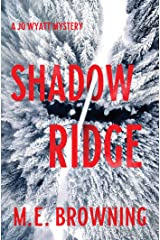
Echo Valley, Colorado, is a place where the natural beauty of a stunning river valley meets a budding hipster urbanity. But when an internet stalker is revealed to be a cold-blooded killer in real life the peaceful community is rocked to its core.

It should have been an open-and-shut case: the suicide of Tye Horton, the designer of a cutting-edge video game. But Detective Jo Wyatt is immediately suspicious of Quinn Kirkwood, who reported the death. When Quinn reveals an internet stalker is terrorizing her, Jo is skeptical. Doubts aside, she delves into the claim and uncovers a link that ties Quinn to a small group of beta-testers who had worked with Horton. When a second member of the group dies in a car accident, Jo's investigation leads her to the father of a young man who had killed himself a year earlier. But there's more to this case than a suicide, and as Jo unearths the layers, a more sinister pattern begins to emerge--one driven by desperation, shame, and a single-minded drive for revenge.

As Jo closes in, she edges ever closer to the shattering truth--and a deadly showdown that will put her to the ultimate test.

                                    Amazon.com


Micki Browning, former president of the SinC Guppy chapter and retired police captain after serving twenty-two years, writes under the name M. E. Browning. Shadow Ridge, the first Jo Wyatt mystery, was released yesterday. Jo is a police detective who was recently passed over for promotion. Her successful competitor? Her husband, soon-to-be—ex.


In Shadow Ridge, Micki shows how Jo’s personal and professional relationships impact each other, and sometimes in surprising ways. As a female professional in a male-dominated field, the presumptions of her peers and superiors get in the way of doing her job, which she does extremely well, catching clues others have missed. And it’s not because she is female, it’s because of her persistence, her loyalty to the victims, and her vow to serve and protect, even when those very people tick her off and display attitude.


Shadow Ridge is a page-turner, and the first in what I think will be a very long series. Please welcome Micki Browning back to WWK.                                  E. B. Davis


I admit it. I’ve never heard of mood DVDs. They really are real? Really? What types of moods do they evoke?

They are real! Imagine reclining in your living room and basking in the snap and pop of burning wood as your television instantly becomes the fireplace you don’t have—or if you’re outdoorsy, consider a campfire.  In the doldrums of summer, you can swap fire for aquarium fish. Just want to chill? Your screen can morph into that lava lamp you threw away about five decades ago.


When I looked up RP, the acronym stood for Receive Pronunciation. Is that right? Are those who call in the crime referred to as RPs?

RP stands for reporting party. Radio transmissions should always be as brief as possible and to accomplish that, cops draw upon a whole host of acronyms. Radio 10-codes, however, are falling out of favor as agencies move towards “plainspeak” (which is exactly what it sounds like). Plainspeak reduces confusion in situations involving more than one agency as not everyone uses the same codes. Regardless, airtime is valuable.


Student Quinn is the RP. Why is she evasive with Jo?

Quinn hasn’t always been on the right side of the law. She has trust issues.


On your website, you said that Echo Valley isn’t a real town in Colorado. Have you lived somewhere similar?

I have! I lived in Durango, which is an amazing place that’s tucked in the southwest corner of the state and is the inspiration for Echo Valley. I like to joke if you erase about 50 years, halve the population, and squint, you’ll see Echo Valley.


Jo has only worked on two homicide cases in her twelve years in the force. Is Echo Valley so small that the detectives have to do their own CSI processing? Do small town detectives get training on how to do all that?

Forensics is covered in the police academy and every officer learns how to process a crime scene. How much they actually process as a patrol officer depends on the size and resources of the agency. For example, the agency I served in California had sworn CSI officers who processed crime scenes, plus two lab techs who handled the major calls and processed nearly all the agency’s evidence in their department lab. The Echo Valley Police Department fields about three officers per shift. That requires officers to be fairly self-sufficient. Officers conduct their own basic crime scene investigation—photos and fingerprinting, mostly—and depending on the crime, may not even request a detective for assistance. On more serious calls, detectives will respond. Detectives receive advanced CSI training and have additional equipment that patrol officers don’t carry. Colorado agencies can request assistance from the Colorado Bureau of Investigations for major incidents. As a state agency, it has regional offices and considerably more resources and expertise, plus it operates the state crime lab. Finally, if an agency finds itself dealing with a terrorist or plane crash, the feds will have jurisdiction and the initial local agency will assist.


Why does Jo need a search warrant? Doesn’t the scene of a crime automatically give them authority to search and process?

There are entire books written about search and seizure, so this is going to be a very down and dirty explanation. The 4th Amendment protects people from unreasonable search and seizures. At its most basic, it requires officers to get a warrant from the court before they have the authority to search. That said, there are numerous exceptions: consent searches, vehicle searches, inventory searches, and searches incident to arrest to name a few. Responding to a murder scene gives officers authority to enter the scene, render aid if appropriate, and check for additional victims or suspects. But once it’s obvious that the scene is stable, it’s time to get a warrant. When in doubt it’s always advisable to get a warrant. Without one, a defense attorney may file a motion to suppress and if the challenge prevails, the evidence may be deemed inadmissible. (The court case that covers murder scenes is Mincey v. Arizona.)


Jo’s husband, and soon-to-be ex, Cameron, got promoted to sergeant over Jo. My first thought after Squint MacAllister enters the scene is—why hasn’t he been promoted to sergeant? He was Jo’s training officer, older, more experienced than either Jo or Cameron.

Echo Valley, like most agencies, requires a person to test for a promotional position, and Squint never has. Simply put, he doesn’t want the job and he’s very happy as an investigator. For the record? He’d be a great supervisor.


Dakota Kaplan is Jo’s best friend. She means well when she tells a reporter about how Jo was passed over for promotion, but...in the long-run, is she more of a detriment to Jo than an asset?

One of the things I wanted to do in this story was explore the complexities of relationships: marriages, parental, friendships, and

partners. Dakota meant well, but her actions crossed a line. Jo put her on notice. What happens now is up to Dakota.


Why are prison tattoos always blue?

Prison tattoos usually fall into the greenish-blue hues because of the materials used to make the ink. It is illegal to give or get a tattoo in prison, and the items used to create tattoos are considered contraband.


What does “Bogart it” mean?

It’s a slang term that means to selfishly take or keep something—especially something meant to be shared among people who know each other. 


I was amazed to find out that the whole gaming industry was steeped in sexism. Please explain the history for our readers.

The notion that gaming is an overwhelmingly male pastime isn’t true; nearly half of all gamers are female. Game designers, however, still skew overwhelmingly male. Early in the development of the industry, several gaming tropes evolved in regards to female characters. They were often cast in the role of damsel in distress, garbed in skimpy outfits, and possessed physiques that highlighted sexuality over intelligence. In comparison, women designers were more likely than their male counterparts to focus on creating games that had more cooperative storylines and characters that were more diverse in regards to ethnicity and sexual orientation. In 2014, a controversy erupted over sexism and progressiveness in the industry that resulted in an online harassment campaign targeting women gamers (and to a lesser extent, people of color and members of the LGBTQ community). The viciousness of the hate mobs prompted industry leaders to tackle online harassment, but sadly, that battle has yet to be won.


Who is Aiden? Why isn’t Jo with him?

Aiden and Jo grew up together and have an enduring bond. While they may have come close, they never took that final step to become lovers despite their love for each other. Neither wanted to risk the friendship for a different type of relationship that might not last. Fear? Probably.


How old is Quinn? She seems wise beyond her years.

Quinn has a lot of street smarts. She’s in her last year of college, but she got a late start as she dealt with putting her life back together. She’s just shy of twenty-five.


Are Australian cattle dogs used to help ranch? What is a blue Australian cattle dog?

Australian cattle dogs are medium-sized herding dogs that are tough, muscular, and smart—which makes them popular ranch dogs. They can be pretty territorial, so if you see one in the back of a truck, best walk on by…. Blue refers to the color of their coat which is a moody gray-blue.


Why did Jo agree to pin the sergeant’s badge on Cameron during the ceremony? I really hated that.

That moment was more about Jo than Cameron. She loved the man enough to marry him, and she’s going to continue to work with him on the department. Perhaps it was an olive branch—but who was extending it to whom? After all, Jo agreed to participate in the badge ceremony, but Cameron asked her first.


After the ceremony, Jo ends up choosing the cop bar to have a drink with Dakota. Why didn’t she choose a noncop shop?

There are essentially three watering holes in Echo Valley—four if you count the Elks Lodge. Cowboys drink Coors at the Hitching Post, the bikers slake their thirst at Valhalla, and the cops? They relax at Finnegan’s Irish Pub. And honestly, when one of the choices is an Irish pub, why would you go anywhere else? Or maybe that’s just the author talking.


What is sinsemilla? Is it legal in Colorado?

Colorado legalized recreational marijuana in 2012 for adults 21 years and older. They can sell, possess, or transport up to an ounce, but consumption still must occur behind closed doors (or specific smoking establishments). You can even have it delivered to your home. Sinsemilla describes buds without seeds—which purportedly makes the marijuana more potent.


Do firefighters often mess up evidence? Can they do better or is it the nature of their job?

Cops and firefighters have a long history of busting each other’s chops. They call us blue canaries; we call them evidence destruction teams. Dragging hoses across a crime scene and dousing it with water destroys a lot of evidence, but letting something burn to the ground isn’t that great of an option either. When prioritizing a response, safety is the primary concern, evidence will always be secondary.


What does a “Jar Jar Binks” of games mean?

Jar Jar Binks was an annoying character in the Star Wars saga. Quinn compares a character in a video game her friend designed to Binks as a way to say the character was not a fan favorite.


What does doxing, trolling, spoofing, and SWATting people mean?

Email spoofing is when the information in the From section in the header is falsified and hides the origin of the person who actually sent it. Spammers do it all the time, but so do harassers who wish to remain anonymous.


Trolling is when a person seeks to become a pest of murder-hornet magnitude. We’ve all heard of internet trolls. This is the person who hijacks a social media thread and starts by playing the role of a devil’s advocate to indicate all the ways a post is wrong, and then quickly escalates into posting racist, sexist, or threatening comments.


Doxing is the acquisition of someone else’s personal information and then making it publicly available. This includes home and email addresses, phone numbers, employment locations, credit card information, and more. It’ a way for an abuser to strip a person of their privacy and provides anyone with a grudge the ability to target the person either online or off.


Armed with doxxed information, a harasser can escalate yet again and initiate a fake emergency requiring a SWAT response. Depending on the trumped-up hoax, officers may respond expecting to be greeted by a heavily armed suspect while the unsuspecting victim is unaware of the dangerous situation unfolding all around her.


Does insulin have an aroma of Band-Aids?

Insulin smells slightly different to everyone, but the most popular description likens it to adhesive bandages, which may stem from a compound called phenol that is used to stabilize and disinfect insulin.


When did suicide become a verb as in suicided? Is that cop-speak?

In the Merriam-Webster dictionary, the entry for suicide shows the word can be used as a noun, adjective, or verb. I first encountered its usage as a verb while in policing. I was a hostage negotiator, and as such I had a lot of behavioral and mental health training. I suspect it is more commonly used as a verb in clinical and medical circles.


Tell me that in one moment of weakness, Jo slept with Cameron, not that she’s still in love with him?

You can rest easy. That ship has sailed.


What’s next for Jo?

Thank you for asking! Jo is called out to investigate a missing child, but as she digs into the fractured family life, she unearths a trove of secrets and half-lies that paints a different picture of the two parents she’s known since high school.